Barker Dam Trail Guide: History, Petroglyphs & Wildlife in Joshua Tree
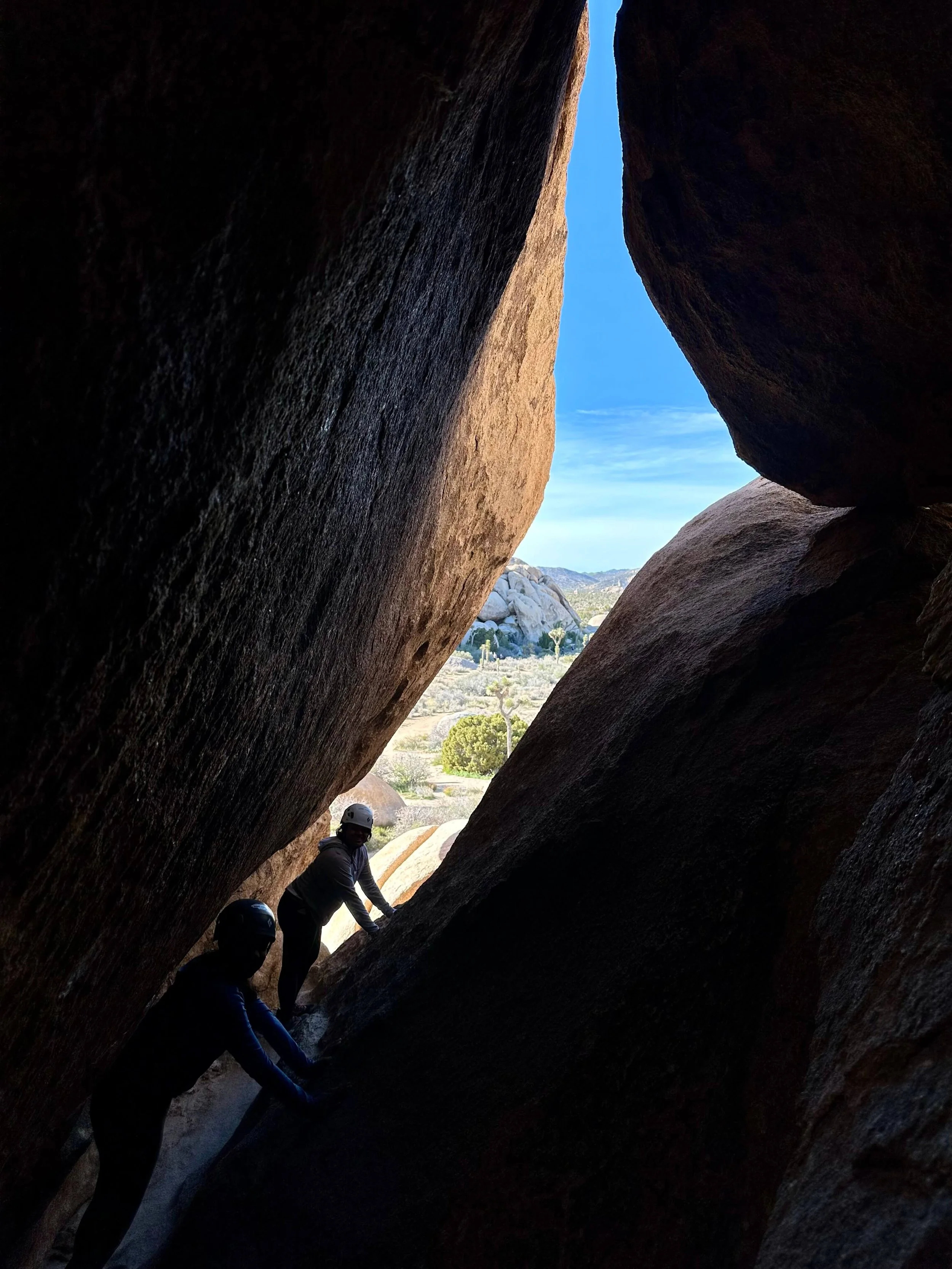
If you only have time for one hike in Joshua Tree, Barker Dam Trail packs more history, geology, and wildlife habitat into 1.3 miles than almost any trail in the park. You walk through towering Wonderland of Rocks boulders, arrive at a century-old cattle dam, visit 2,000-year-old rock art, and move through prime bighorn sheep country — all on flat, well-marked trail.
.jpg)
History, Petroglyphs & Wildlife in One Easy Loop
If you only have time for one hike in Joshua Tree, Barker Dam Trail packs more history, geology, and wildlife habitat into 1.3 miles than almost any trail in the park. You walk through towering Wonderland of Rocks boulders, arrive at a century-old cattle dam, visit 2,000-year-old rock art, and move through prime bighorn sheep country — all on flat, well-marked trail.
The loop sits deep in the northern park near the Wonderland of Rocks and shares a parking area with Wall Street Mill, another historic site tied to legendary desert homesteader Bill Keys. Because the terrain is gentle and the rewards are enormous, this is one of the most-visited trails in Joshua Tree — plan an early start, especially on weekends and holidays.
The Dam: A Century of Desert Water History
.jpg)
Barker Dam — officially recorded as Big Horn Dam — was built around 1900 by rancher C.O. Barker, who needed a reliable water source to support cattle and the area's namesake bighorn sheep in the Wonderland of Rocks. The original masonry structure collected water in a natural rock basin, creating an oasis in an otherwise waterless landscape.
Decades later, homesteader and rancher Bill Keys significantly raised the dam's height in 1949–1950, enlarging its capacity and leaving an inscription in the concrete: "Big Horn Dam Built by Willis Keys, W.F. Keyes, Phyllis M. Keys, 1949–1950." Today the dam is listed on the National Register of Historic Places and stands as one of the most tangible remnants of the park's ranching era.
After significant rainfall the reservoir fills to create a beautiful, reflective pool among the boulders — a genuinely striking sight in the Mojave Desert. For most of the year, however, the basin is dry or holds only a shallow puddle. Read more about Bill Keys and the human history of Joshua Tree in our full history guide.

Trail Walk-Through: Step by Step
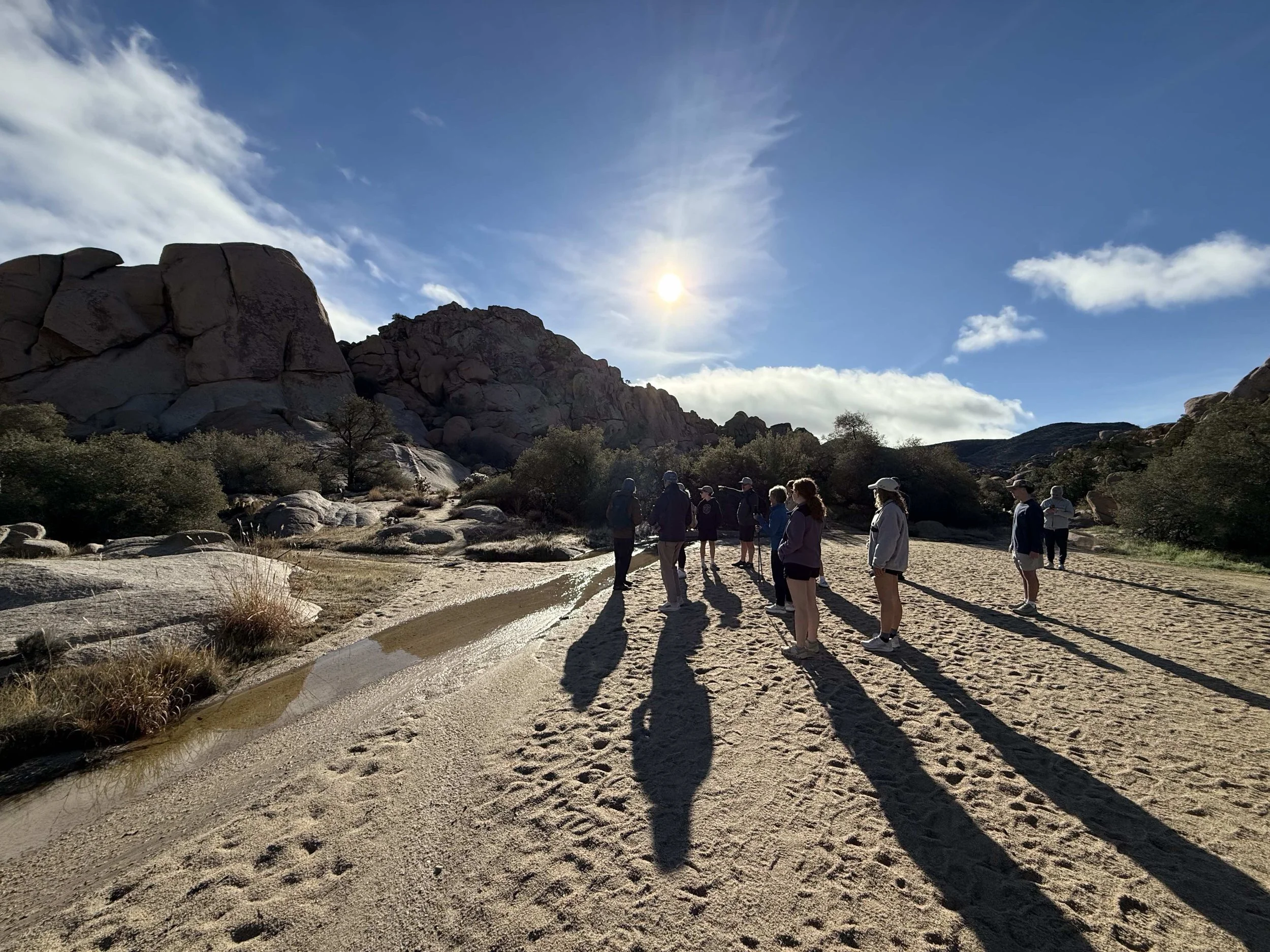
The Barker Dam Trail is a counterclockwise loop that begins and ends at the same trailhead parking lot. Signage is clear throughout. Here's what to expect at each stage:
The Petroglyphs: Ancient Art with a Complicated History
The Barker Dam petroglyph site preserves rock carvings estimated to be approximately 2,000 years old, attributed to the Chemehuevi and other indigenous peoples who lived in and traveled through this desert for millennia. The carvings depict geometric patterns, animals, and symbols — a record of human presence long before the park's establishment.
Despite this history, the site remains significant and worth seeing. Please follow all NPS guidelines: view from the designated area, do not touch or approach the rock face, and do not add marks of any kind. Leave No Trace principles apply throughout.

Wildlife: Bighorn Sheep and Desert Birds
Barker Dam is one of the best places in Joshua Tree to spot desert bighorn sheep (Ovis canadensis nelsoni). The reservoir is a rare permanent water source in this arid landscape, drawing sheep from miles around — especially when the basin holds water after winter or spring rains. Look for sheep on the surrounding boulder slopes, particularly in early morning and late afternoon. Stay quiet and give them space if you see them.
Bird watching is also excellent along this trail. Common sightings include common raven, red-tailed hawk, black-throated sparrow, Say's phoebe, and the greater roadrunner. Western fence lizards are ubiquitous on rocky surfaces, and desert cottontails are often seen at dawn and dusk. Learn more about Joshua Tree wildlife in our full desert wildlife guide.
Getting There & Parking
From the West Entrance Station on Park Boulevard, drive approximately 9 miles east, then turn left (north) onto Barker Dam Road. Follow it about 1.5 miles to the parking lot. The road is paved and accessible to standard vehicles. Plan to arrive by 8 a.m. on weekends — the lot is shared with Wall Street Mill visitors and fills well before midday from October through May.
Best Time to Visit
Extending Your Hike: Wall Street Mill
The Wall Street Mill Trailhead starts from the same parking lot. The out-and-back to the mill is about 1.4 miles total and visits a well-preserved gold-ore stamp mill that Bill Keys built and operated in the 1930s and 40s. Combining Barker Dam and Wall Street Mill gives you a full morning of history — roughly 2.5–3 miles depending on your exact route — and covers two of the most significant sites in the northern park. Read our Wall Street Mill trail guide to plan the combined outing.
What to Bring
More Joshua Tree Guides
.jpg)
Frequently Asked Questions