Flora & Fauna of Joshua Tree: A Guide's Guide to What You'll See
Joshua Tree National Park sits where the Mojave and Colorado deserts meet — which is why it supports over 750 plant species, 57 mammals, 46 reptile species, and more than 250 bird species in a single park. This guide covers the plants and wildlife you're most likely to encounter, what to do when you do, and how to move through the terrain without disturbing what lives there.
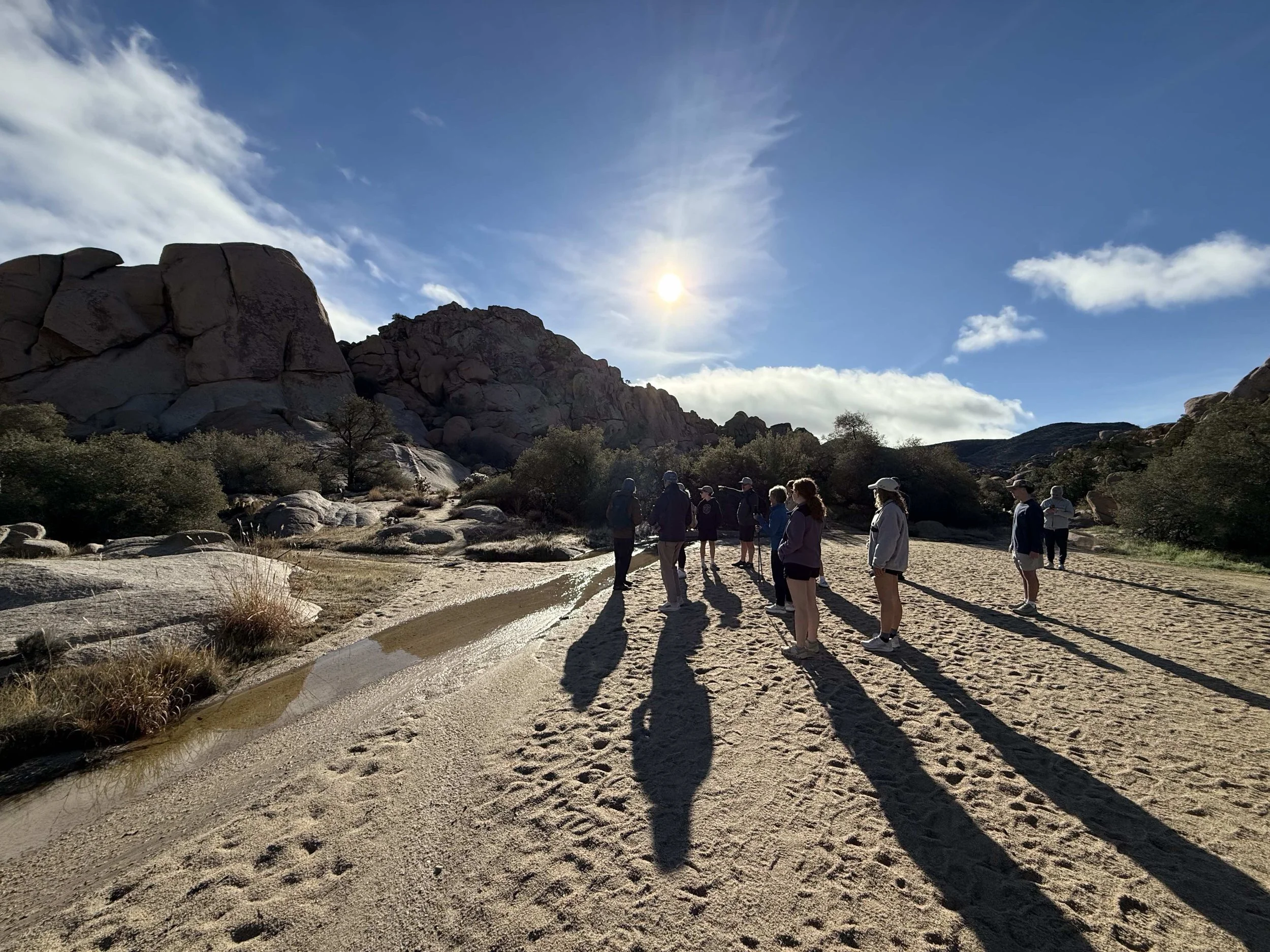
Most visitors drive through and see "desert." Guides who spend every week on the rock see something a lot more specific.
Joshua Tree sits where two deserts meet — the Mojave and the Colorado — which is a big part of why the park supports more than 750 plant species and wildlife you won't find together anywhere else in California. Here's what you're actually looking at out there, plus what to know if you cross paths with it. For what to bring on a day in this terrain, see our complete packing guide, and for the best trails to explore it all on foot, see our best hikes guide.
Two Deserts, One Park
Joshua Tree National Park sits at the overlap of the Mojave and Colorado deserts — higher, cooler Mojave terrain to the west, lower, hotter Colorado desert to the east. That overlap is why the species count here is so high for a desert park, and why the park's trail system passes through such dramatically different environments within a few miles.
| Category | Count | Note |
|---|---|---|
| Plant species | 750+ | Including 44 rare species |
| Mammal species | 57 | Coyotes, kangaroo rats, bighorn sheep |
| Reptile species | 46 | Lizards, snakes, desert tortoise |
| Bird species | 250+ | Roadrunners, golden eagles |
| Amphibian species | 2 | Rare — mostly near oases |
Source: nps.gov/jotr
The Joshua Tree Itself
The park's namesake isn't a tree at all — it's a yucca (Yucca brevifolia), part of the agave family. Mormon settlers crossing the Mojave in the 1800s reportedly named it after the biblical figure Joshua, arms raised in prayer. They grow slowly, often less than an inch a year, and some of the oldest in the park are estimated at 300+ years old.
Joshua trees bloom in late winter to early spring, usually after a wet year — a cream-colored cluster of flowers at each branch tip. The bloom depends almost entirely on winter rainfall and a hard frost, so it's unpredictable. If your trip lines up with a bloom year, it's worth pointing your camera up rather than just at the rock. The best time to visit guide covers what to expect in each season.
What Actually Covers the Ground
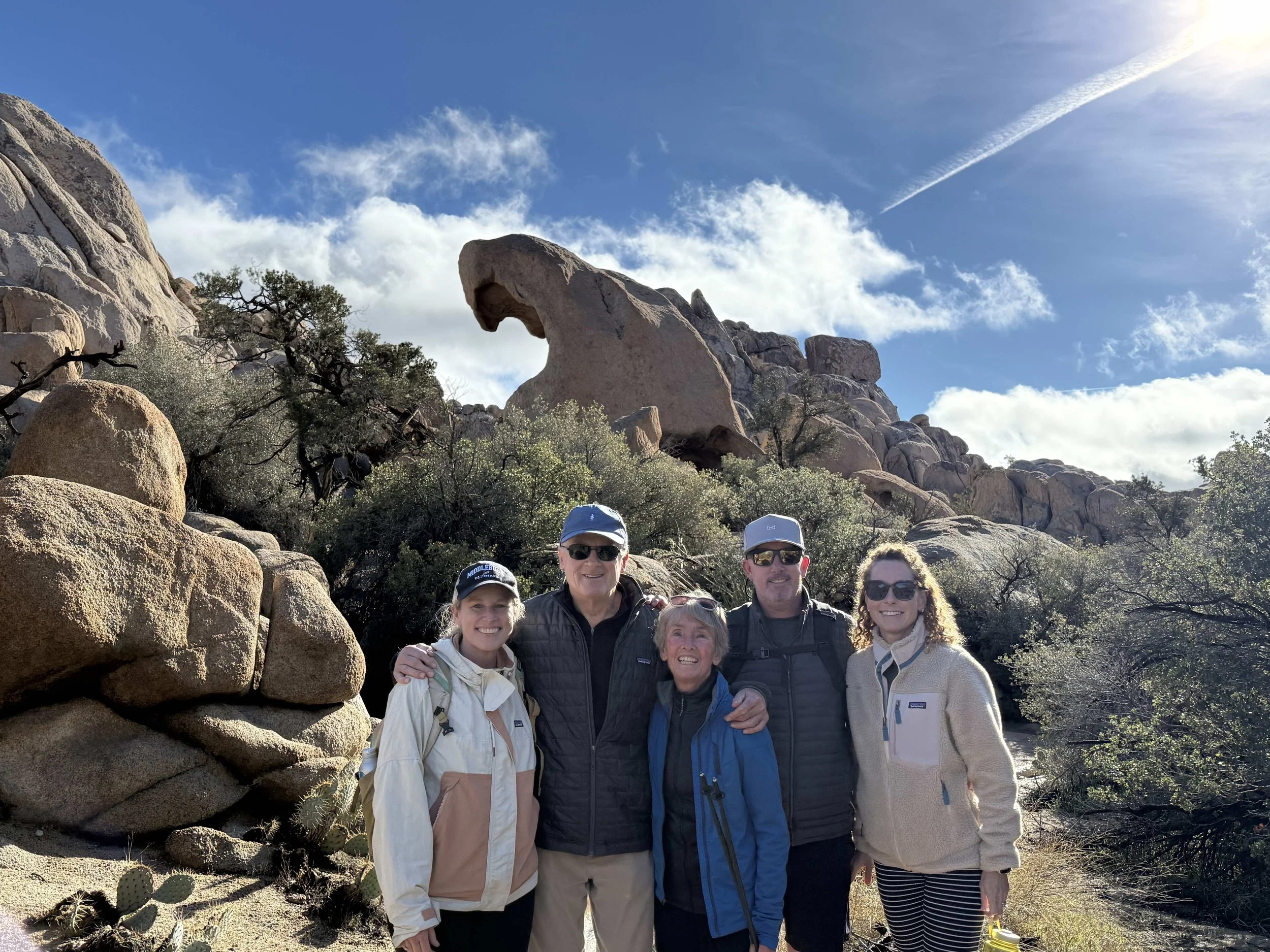
Despite the name, Joshua trees aren't the dominant plant here — most of the park's land cover is creosote bush and white bursage scrubland. You'll also spot California juniper scattered through higher elevations, and in the park's oases, the California fan palm, the only palm species native to the state.
The Caves & Corridors experience moves through some of the most plant-diverse zones in the park — the sheltered canyon bottoms and boulder corridors where different microclimates support species you won't find out on the open flats.
Wildlife You Might Cross Paths With
Most of the park's mammals are most active at dawn, dusk, and night — but climbers and hikers moving slowly through the terrain during the day still run into plenty. Here's what you're most likely to see on any guided trip or self-guided hike.
Slow-moving and easy to miss until you're right next to one. If you spot a desert tortoise, keep your distance and never pick it up — a startled tortoise can void its bladder, which can be fatal for it in desert heat since it loses stored water it needs to survive.
Not a guaranteed sighting, but one of the more memorable ones. Bighorn sheep favor steep, rocky terrain near natural water sources — Barker Dam's reservoir is one of the more reliable spots. They're most frequently spotted by groups moving quietly through the terrain rather than by hikers on busy trails.
Coyotes and kangaroo rats are among the park's most common mammals, along with white-tailed antelope ground squirrels. You're most likely to see coyotes at dawn or dusk trotting along a road or wash edge — they're generally uninterested in people who keep their distance.
Chuckwallas are large, harmless lizards you'll often see sunning themselves on rock mid-climb — when threatened, they wedge into rock crevices and puff up to lodge themselves in place. Along with 46 recorded reptile species, they're one of the most reliable wildlife sightings on any given Adventure Routes trip.
More than 250 bird species have been recorded in the park, from roadrunners darting across trails to golden eagles riding thermals above the rock formations. Oases like the one at Barker Dam are some of the best spots for concentrated bird activity.


A Note on Rattlesnakes
Joshua Tree is home to several rattlesnake species, most active in warmer months. They're not aggressive and almost always give warning before striking. Most encounters are non-events — the snake moves off and you continue.
Your guide will point out safe hand and foot placement on any Adventure Route or rappelling route where snakes are a realistic possibility — it's a routine part of how we move through the terrain, not a special precaution. If you're hiking on your own, stay on marked trails, watch where you place your hands on rock, and give any snake you see a wide, unhurried berth.
Wildlife & Plant Etiquette in the Desert
See It Up Close, With a Guide
Most of what's listed here is easiest to actually spot on foot or on rock, moving slower than a drive-through visit allows. Our guides point out what you're looking at in real time on every trip — chuckwallas on the wall, cholla patches to route around, Joshua trees in full bloom in a good spring.
Frequently Asked Questions
What plants grow in Joshua Tree National Park?
Is the Joshua tree really a tree?
What animals live in Joshua Tree National Park?
Are there rattlesnakes in Joshua Tree?
What should I do if I see a desert tortoise?
Is cholla cactus dangerous?
Can you see bighorn sheep in Joshua Tree?
Does Summit Climbing Guides point out wildlife and plants on tours?