Chasm of Doom Joshua Tree: The Complete 2026 Guide
Tight squeezes, chimney moves, and a route that requires your whole body — not just your legs. It's the kind of adventure that turns a good Joshua Tree trip into a great one. This guide covers what the Chasm of Doom actually is, who it's right for, what to expect on a guided tour, and how Summit's exclusive Great Chasm extensions take it even further.

The name is more dramatic than the danger. The Chasm of Doom is one of Joshua Tree's great surprises — a narrow granite slot canyon that looks intimidating from the outside and turns into pure, grinning fun once you're inside.
Tight squeezes, chimney moves, and a route that requires your whole body — not just your legs. It's the kind of adventure that turns a good Joshua Tree trip into a great one. This guide covers everything: what the Chasm of Doom actually is, who it's right for, what to expect on a guided tour, and how Summit's exclusive Great Chasm extensions take it even further.
What Is the Chasm of Doom in Joshua Tree?
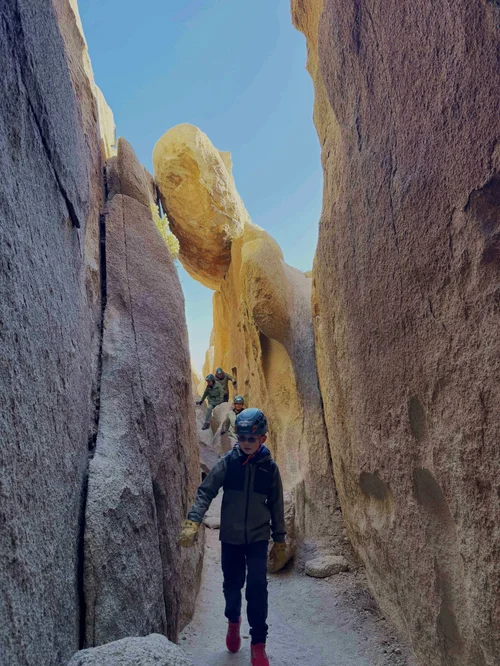
The Chasm of Doom is a natural granite slot canyon tucked inside Joshua Tree National Park — one of the park's most unique adventure experiences and almost completely invisible until you're standing at the entrance. It was formed by massive boulders wedging together over millions of years, creating a narrow corridor of passageways, chambers, and tight squeezes through the rock.
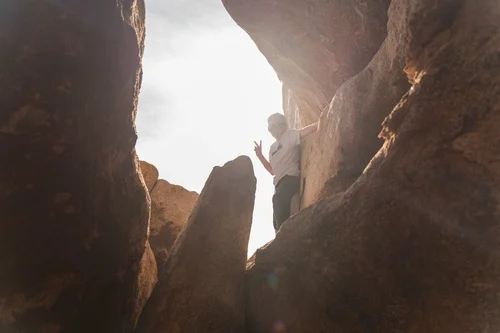
Unlike the park's hiking trails, the Chasm of Doom doesn't have a maintained path. Moving through it means using your hands and feet, chimneying between walls, crawling through narrow sections, and problem-solving your way through a granite maze. No ropes are required for most guided routes — this is hands-on movement, not technical climbing.
Despite the name, the Chasm of Doom is far more fun than frightening. The intimidating label is part of the appeal — most people walk out laughing, asking if they can go again.
- Tight passages and narrow squeezes through granite
- Short climbing and scrambling sections using hands and feet
- Chimney moves between towering rock walls
- A sense of exploration you won't find on any maintained park trail


The Great Chasm — Summit's Three Extensions
Summit Climbing Guides is the only guiding company in Joshua Tree that has extended the original Chasm of Doom with three additional route sections — turning what's already an exceptional adventure into something much longer, more immersive, and more physically demanding.
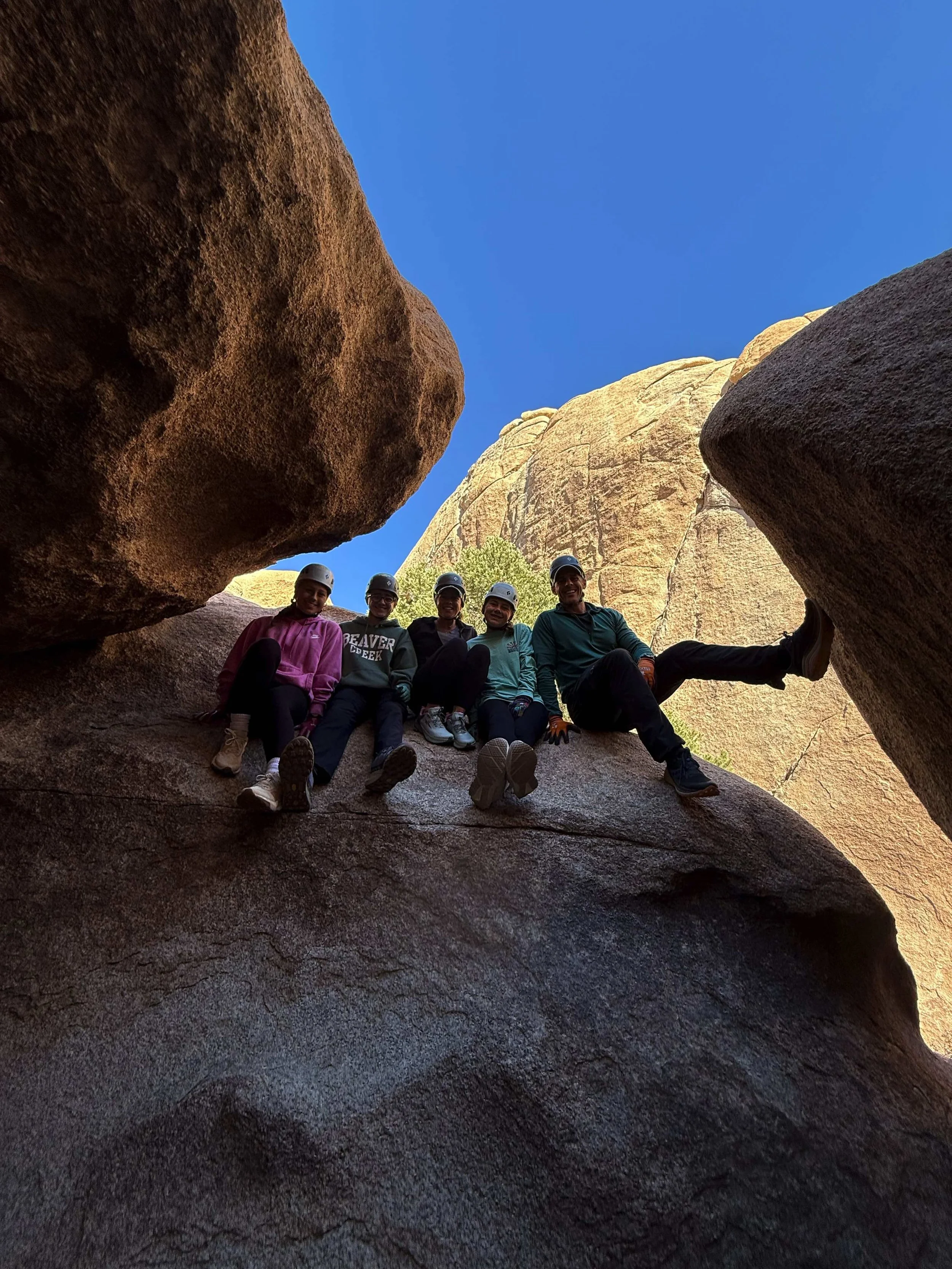
We call it The Great Chasm. Three numbered extensions beyond the original Chasm, each one offering new terrain, new movement challenges, and a deeper reach into the boulder maze. If you're looking for the full experience — not just the entry-level version — this is it.


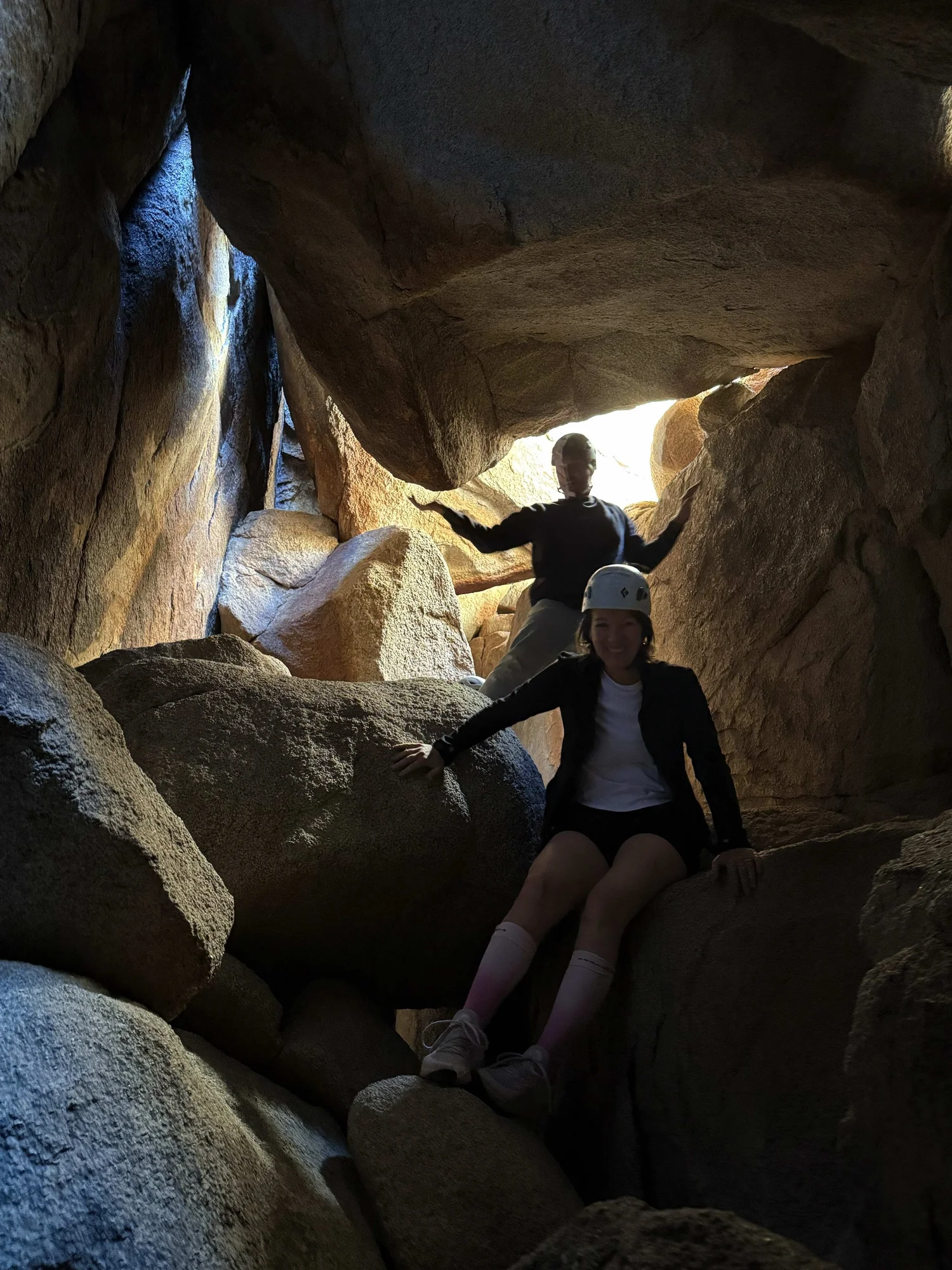
Ask about The Great Chasm when you book. We'll assess your group's fitness and comfort level and let you know which extensions make sense for you.
What to Expect on a Guided Chasm of Doom Tour
Every Chasm of Doom adventure with Summit is private — just your group and your guide. Here's what the experience looks like.
The Approach
Getting to the Chasm of Doom involves a short hike through characteristic Joshua Tree terrain — scattered boulders, desert scrub, Joshua trees doing their best impression of something from another planet. Your guide orients you along the way: what to watch for underfoot, how the Chasm formed, what the movement challenges will look like before you're face-to-face with them.
Inside the Canyon
Once you're in, the world changes. The walls close in. The light shifts. The temperature drops a few degrees. You're moving through a space that feels genuinely hidden — because it is. Your guide coaches you through each section: where to put your feet, how to chimney, when to turn sideways. Most guests find the first tight section the hardest — and then it clicks, and the rest comes naturally.
Logistics at a Glance
Duration: 2–4 hours, flexible to your group's pace. Location: Central Joshua Tree — Hidden Valley Nature Trail area. Difficulty: Easy to moderate scrambling; no prior climbing experience required. Gear: Comfortable clothes, closed-toe shoes, and water — all technical safety equipment provided.


Is the Chasm of Doom Right for You?
The Chasm of Doom is more accessible than its name suggests — we've guided guests from age 8 to their 70s through it. But it does involve confined spaces and physical movement, so it's worth knowing what you're getting into.
- Adventurous hikers ready to level up
- Beginner climbers wanting real rock experience
- Families with older kids (8+) and teens
- Anyone seeking a guided Joshua Tree adventure
- Visitors wanting more than a standard trail
- Those uncomfortable with confined spaces
- Visitors with significant mobility limitations
- Anyone looking for a casual walk
Not sure if it's right for you? Reach out before booking — we'll help you figure out if this is the right fit, or whether a Caves & Corridors adventure at a lower intensity makes more sense.

Why Go Guided Through the Chasm of Doom?
The Chasm of Doom can be entered without a guide — it's technically in the public park. But the experience of going in solo, without knowing the route, is substantially different from going with someone who's guided dozens of groups through every section.
- Route knowledge. The Chasm branches. Dead ends happen. A guide keeps you moving through the best lines and avoids the sections that are unnecessarily difficult or unrewarding.
- Movement coaching. Chimneying, stemming, and body positioning through tight passages are learnable skills. A guide coaches you in real time, which is how first-timers go from hesitant to confident.
- Safety management. Our guides assess conditions, provide spotting where needed, and carry first aid. Every trip is private — no strangers to wait for or defer to.
- The Great Chasm access. The extension routes beyond the original Chasm are Summit-exclusive. You can't access those sections on a self-guided visit.


What to Wear and Bring to the Chasm of Doom
No technical gear is required on your end — your guide brings everything safety-related. Here's what you need:
- Closed-toe shoes with solid grip. Trail runners or hiking boots. Sandals won't work.
- Long pants recommended. Granite is abrasive on bare skin inside the canyon.
- Water — at least 1 liter per person, more in summer.
- Headlamp recommended for deeper sections of The Great Chasm.
- Small pack or pockets — you don't need a big backpack.
- Sunscreen for the approach and any open sections.
All safety equipment is included. No technical climbing gear is required for most guided Chasm of Doom routes — your guide will let you know if specific extensions require additional equipment.
Best Time to Visit the Chasm of Doom
The Chasm of Doom can be visited year-round. Because much of the route is inside a canyon with shade from the surrounding rock, it stays relatively cool even when the park is warm. Here's how the seasons break down:
Ideal conditions. Moderate temperatures, great light, the park at its best.
Cool and comfortable. Occasionally chilly, so bring a layer. Often beautiful.
Early morning or evening only due to heat. The canyon shade helps, but the approach is exposed.

Frequently Asked Questions
What is the Chasm of Doom in Joshua Tree?
Is the Chasm of Doom a hike or a rock climb?
Do I need climbing experience to do the Chasm of Doom?
Is the Chasm of Doom suitable for kids and families?
How long does it take to do the Chasm of Doom?
What is The Great Chasm?
What should I wear and bring?
When is the best time to visit the Chasm of Doom?
Explore More Joshua Tree Adventures