Joshua Tree Caves & Corridors: The Complete Guide

Most people look at Joshua Tree's boulders. Caves & Corridors take you inside them.
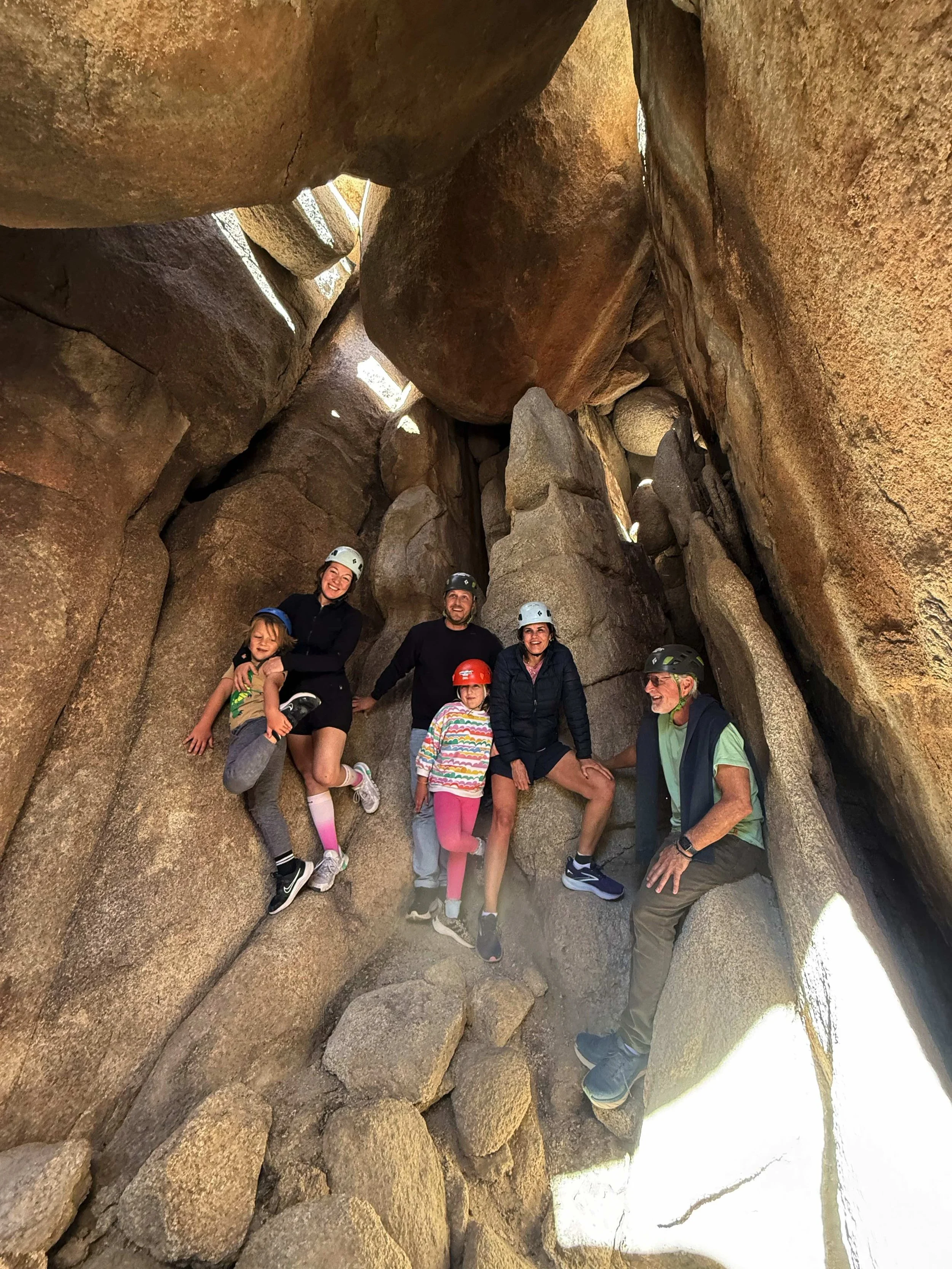
There's a hidden world threaded through Joshua Tree's granite — narrow passages between massive boulders, chambers formed by rock stacked over thousands of years, slots barely wide enough to squeeze through, and corridors that open into rooms you'd never know existed from the outside. This is the caves and corridors experience. It's unlike anything else in the park, and it's Summit Climbing Guides' most distinctive offering. This guide covers what these formations actually are, the specific cave systems we explore, how the Summit Squeeze Scale works, what to expect on a guided adventure, and who this experience is right for. Planning an overnight trip too? Pair it with a night at one of the park's campgrounds — our Joshua Tree Camping Guide covers everything you need.
What Are Joshua Tree's Caves & Corridors?
First, an important distinction: Joshua Tree does not have traditional underground caves. What it does have is something arguably more interesting — above-ground talus formations created when massive granite boulders shift, crack, and stack over thousands of years. As these monzogranite blocks settle against each other, they create:
- Tight squeeze passages barely wide enough for a person
- Hidden chambers and rooms accessible only through small openings
- Natural corridors winding between and beneath stacked rocks
- Chimney-style passages requiring hands-and-feet movement
- Slot-like gaps that catch dramatic light at certain times of day
Some of these systems are short and playful. Others are complex multi-passage routes that take a full hour to navigate properly. What they share is a sense of discovery that's completely different from anything you'll find on Joshua Tree's marked trails — you're not walking through a landscape, you're moving through the interior of it.
Summit Climbing Guides has spent years exploring, documenting, and building guided routes through Joshua Tree's cave and corridor systems. Many of what we offer aren't in any guidebook. They're the result of that on-the-ground time, and we know them better than anyone else operating inside the park.
Joshua Tree's caves are formed above ground by stacked granite, not carved underground by water. This means no stalactites, no true darkness, and no underground flooding risk — but plenty of tight passages, dramatic light, and the genuine thrill of squeezing through spaces that feel ancient and hidden. It's a very different experience from a traditional cave tour, and most people find it more exciting.

The Summit Squeeze Scale
Not all caves are created equal. Some are relaxed walk-through corridors. Others require army crawls, committed squeezes, and a willingness to commit to the passage before you can see the exit. To help guests choose the right experience, Summit Climbing Guides developed the Summit Squeeze Scale — a five-level rating system from S1 (wide open) to S5 (maximum compression).
Your guide will always brief you on the squeeze level before entering any passage. Nothing is sprung on you unexpectedly — every section is your choice. Take the Summit Squeeze Scale quiz to find out where you land before you book.
The Cave Systems: Hall of Horrors, Chasm of Doom & More
Summit Climbing Guides offers guided adventures through several of Joshua Tree's most remarkable cave and corridor systems. Here's what each one offers:
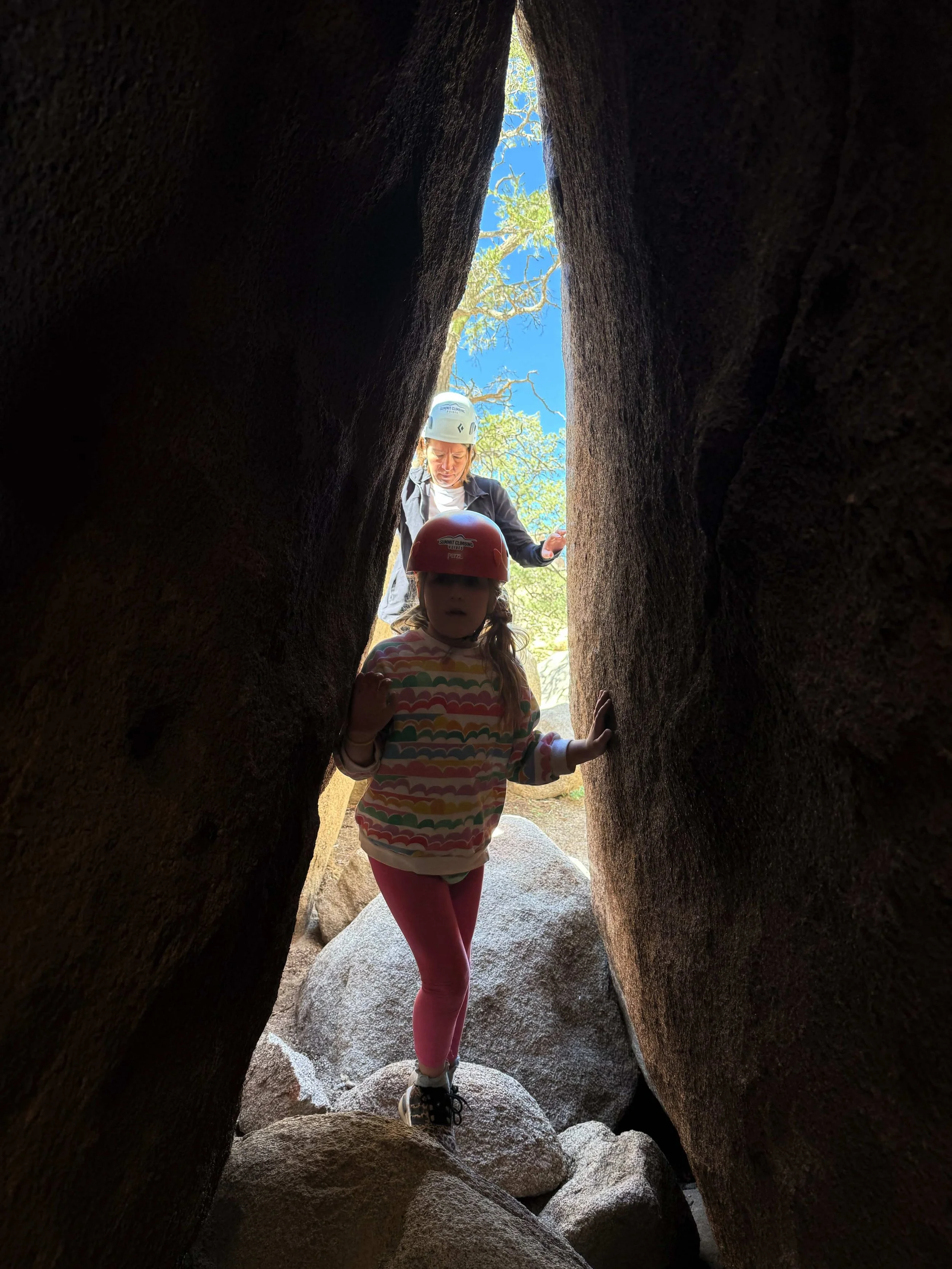
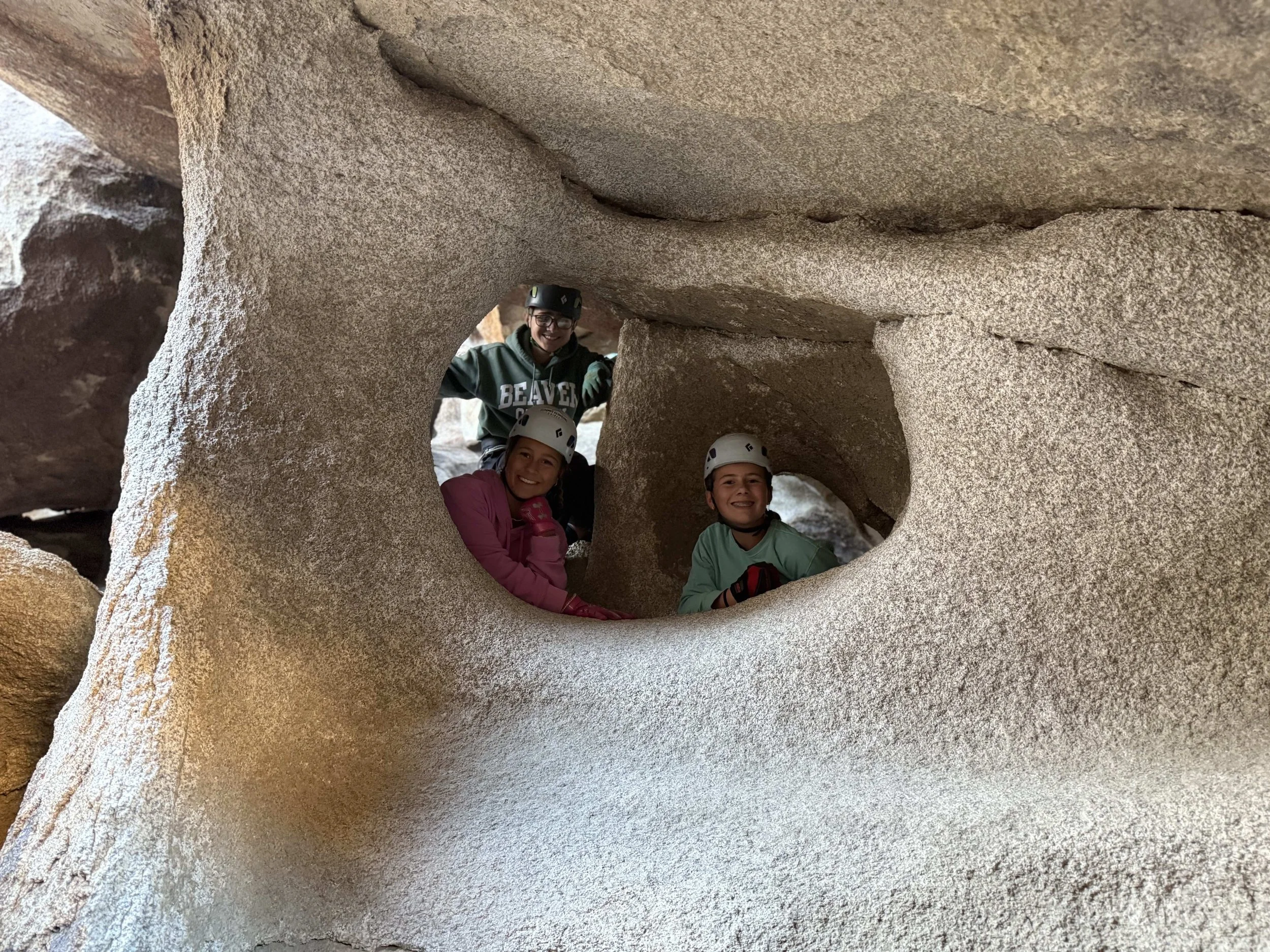
Beyond these named systems, Summit also guides through The Overlook and several cave and corridor routes that aren't publicly documented — the result of years of personal exploration inside the park. Your guide will match the system to your group's energy and comfort level on the day.
You can also combine cave exploration with the full Caves & Corridors experience, which weaves through multiple systems in a single guided adventure.
What to Expect on a Guided Caves & Corridors Adventure
Caves & Corridors adventures run 2–4 hours and are available as private guided experiences. Here's how a typical session goes:
Meet your guide
You'll meet at a designated point near the cave system you're exploring. Your guide will talk through the day, go over the squeeze level of the passages, answer questions, and get a read on your group's comfort with tight spaces. This conversation shapes the route.
The approach
Most cave systems involve a short approach across Joshua Tree's open desert terrain — 10 to 30 minutes of walking through boulder fields to reach the entrance. Your guide navigates. You enjoy the desert scenery and start getting your bearings in the landscape.
Into the cave
Once inside, movement becomes three-dimensional. You'll squeeze, chimney, crawl, and problem-solve your way through passages that are completely unlike anything you've experienced on a trail. Your guide leads, demonstrates, and assists — nothing is left to chance.
Reading the terrain
Part of what makes these adventures special is learning to read the rock. Your guide will teach you how to position your body, where to put your hands and feet, and how to move efficiently through tight spaces. It's physical and mentally engaging in equal measure.
Exit and debrief
Most routes have a clear exit point that opens back onto the desert. Your guide will walk you through what you experienced, answer any questions, and — if your group has energy — can extend the day with additional passages, an Adventure Route through the surrounding terrain, or a journey into the Wonderland of Rocks.
Who Caves & Corridors Experiences Are For
Caves & Corridors are one of the most adaptable experiences we offer — the same system can be a gentle exploration for a family or a serious physical challenge for an experienced adventurer, depending on which passages you take. Generally, they're a great fit for:
Caves & Corridors are not ideal for anyone with significant claustrophobia, those with mobility limitations affecting the ability to crouch or squeeze, or visitors looking for a relaxed sightseeing experience. The terrain is physical and the passages are real.
For families specifically, we recommend starting at S1–S2 level and letting your guide read the group's comfort before introducing tighter sections. Kids often surprise everyone — they're naturally comfortable in spaces that adults find challenging. See our family adventures page or our rock climbing for kids page for more on bringing younger guests.
What to Wear & Bring
All technical gear — helmets where needed, ropes for any optional climbing sections — is provided by your guide. Travel light. A small daypack or hydration vest is ideal; large backpacks become a liability in tight passages.
Why You Want a Guide for Caves & Corridors
Joshua Tree's more technical cave systems — Hall of Horrors, Chasm of Doom, The Mad Hatter — are genuinely easy to get lost in or stuck in without local knowledge. Entry and exit points are often non-obvious. Some passages have only one viable line through them. Others look passable but aren't. These aren't hypothetical risks — they're the reason guided experiences exist for this terrain.
Beyond safety, a guide dramatically changes the quality of the experience. Knowing which passages lead where, understanding the history of each system, being able to read your group's comfort and adjust the route in real time — that's what transforms a scramble through some rocks into a genuinely memorable adventure.
- NPS permitted — Summit holds a National Park Service commercial use authorization to operate inside Joshua Tree National Park
- AMGA and PCGI certified guides — professionally trained in technical terrain and group management
- Fully insured — proper commercial liability coverage for all guided activities
- Years of local knowledge — we've spent more time inside these cave systems than any other guide service operating in the park
Want to combine caves with an Adventure Route, a rappelling session, or guided rock climbing? We can build a full day that includes all three. Talk to us about what you're looking for or book directly here.
Frequently Asked Questions
Are there caves in Joshua Tree National Park?
What is the Hall of Horrors at Joshua Tree?
What is the Chasm of Doom at Joshua Tree?
Do you need experience to explore caves at Joshua Tree?
What is the Summit Squeeze Scale?
Are Joshua Tree caves safe to explore without a guide?
Are caves and corridors tours suitable for kids?
What should I wear to explore caves at Joshua Tree?