Joshua Tree vs Yosemite: Which National Park Should You Visit?
Both are California's most iconic national parks. Both have world-class rock climbing, dramatic landscapes, and a loyal following of repeat visitors. They are also remarkably different parks — and the right choice depends entirely on what kind of trip you're planning.
Both are California's most iconic national parks. Both have world-class rock climbing, dramatic landscapes, and a loyal following of repeat visitors. They are also remarkably different parks — and the right choice depends entirely on what kind of trip you're planning.
This guide compares Joshua Tree and Yosemite across every dimension that matters: location, crowds, rock climbing, camping, stargazing, family-friendliness, cost, and best time to visit. We write this from the perspective of a guiding company that operates in Joshua Tree — so we'll be honest about where Yosemite has the edge and where Joshua Tree wins.
The Parks at a Glance
| Category | Joshua Tree | Yosemite |
|---|---|---|
| Location | Inland desert, Southern CA | Sierra Nevada mountains, Central CA |
| From LA | ~2 hours | ~6 hours |
| From San Francisco | ~7 hours | ~3.5 hours |
| Annual Visitors | ~3 million | ~4 million (mostly in valley) |
| Entrance Fee | $35/vehicle | $35/vehicle |
| Best Season | Oct–Apr | May–Jun, Sep–Oct |
| Stargazing | Exceptional | Good (better at high elevation) |
| Rock Climbing | World-class (crack, bouldering) | World-class (big wall, trad) |
| Rappelling Tours | Yes Summit | Limited |
| Waterfalls | None | Iconic (spring only) |
| Camping Availability | Moderate–good advance booking | Very limited, books months out |
Location & Drive Time
This is the most practical difference between the two parks, and it matters more than most comparison guides acknowledge.
From Los Angeles
Joshua Tree is approximately 2 hours from downtown Los Angeles — a legitimate day trip and an easy overnight. Yosemite Valley is approximately 6 hours from LA, often closer to 7 with traffic through the Central Valley or construction season on Highway 120. The difference between a 2-hour drive and a 6-hour drive is the difference between a weekend trip and a trip that requires serious logistics.
From San Diego
Joshua Tree is about 2.5 hours from San Diego. Yosemite is closer to 7–8 hours. For anyone based in Southern California, Joshua Tree is the clear practical choice for any trip under four days.
From San Francisco and the Bay Area
The math reverses completely. Yosemite is about 3.5 hours from San Francisco — a classic Bay Area weekend destination for good reason. Joshua Tree from the Bay Area is a 7-hour drive. If you're coming from Northern California, Yosemite has the proximity advantage.
Southern California visitors: Joshua Tree wins on proximity. Northern California visitors: Yosemite wins. This one factor drives most of the decision for most people.
Crowds & Accessibility
Yosemite Valley in peak season is one of the most congested national park experiences in the country. The valley floor — where most of the iconic viewpoints are — can feel overwhelmingly busy in summer: gridlocked shuttle buses, crowded trailheads, and a general sense that you're sharing the experience with thousands of other people simultaneously.
The National Park Service has implemented a reservation system for Yosemite Valley during peak season, which helps manage the worst days — but even with the system in place, the valley remains extremely busy from late spring through summer.
Joshua Tree draws around 3 million visitors annually, but they're spread across 800,000 acres of open desert. Even on a busy spring weekend, you can walk five minutes from any popular trailhead and be genuinely alone in the landscape. The boulder formations and backcountry are accessible enough that solitude remains achievable throughout most of the year.
Joshua Tree wins on crowd levels — and it's not particularly close. If a less crowded experience is a priority, Joshua Tree is the stronger choice in any comparable season.
Landscape & Scenery
These parks look nothing alike. Understanding the landscape difference helps set expectations before you go.
Joshua Tree
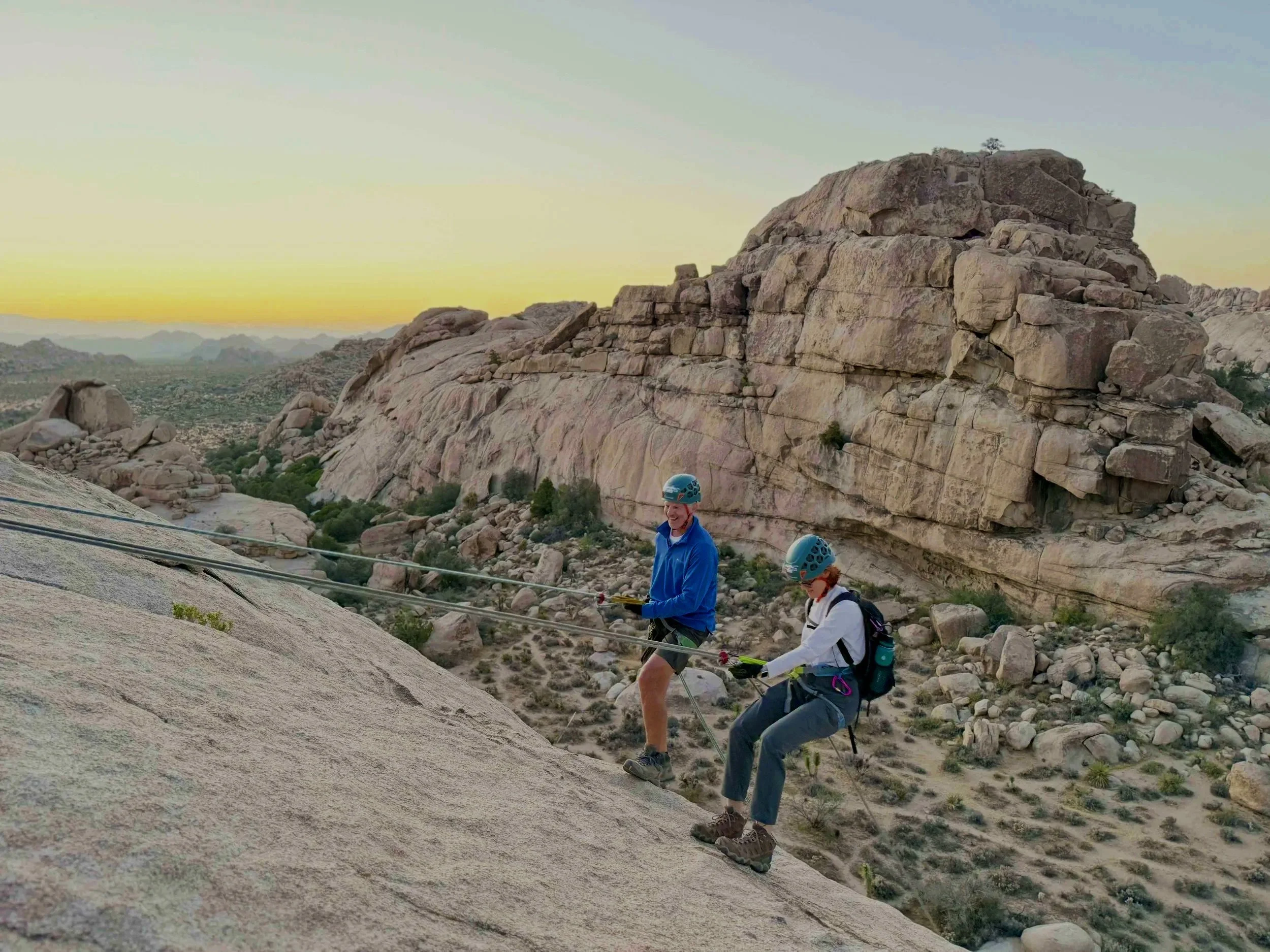
A high desert landscape at 4,000–5,000 feet elevation, defined by massive monzogranite boulders formed underground 100 million years ago and gradually exposed by erosion. The signature imagery is stark: rounded granite formations stacked improbably against an open sky, Joshua trees silhouetted against a golden horizon, and a vastness that reads differently from the cliffs-and-forests feel of most mountain parks. The beauty is subtle and accumulative — it tends to grow on visitors over time and across multiple visits.
Yosemite
A glacially carved valley with vertical granite walls rising over 3,000 feet from the valley floor. El Capitan, Half Dome, Yosemite Falls, Bridal Veil — the iconic images are immediate and undeniable. Yosemite has some of the most dramatic concentrated scenery in the world. It's a landscape that announces itself.
Yosemite's valley scenery is singular and justifiably famous. Joshua Tree's landscape rewards patience and repeat visits in a different way. Neither is objectively better — they're just different. If you've never seen either, Yosemite may be the more immediately striking first experience.
Rock Climbing: Two World-Class Destinations
Both parks are among the most famous climbing destinations in the world. The comparison is more about style and accessibility than quality.
Joshua Tree
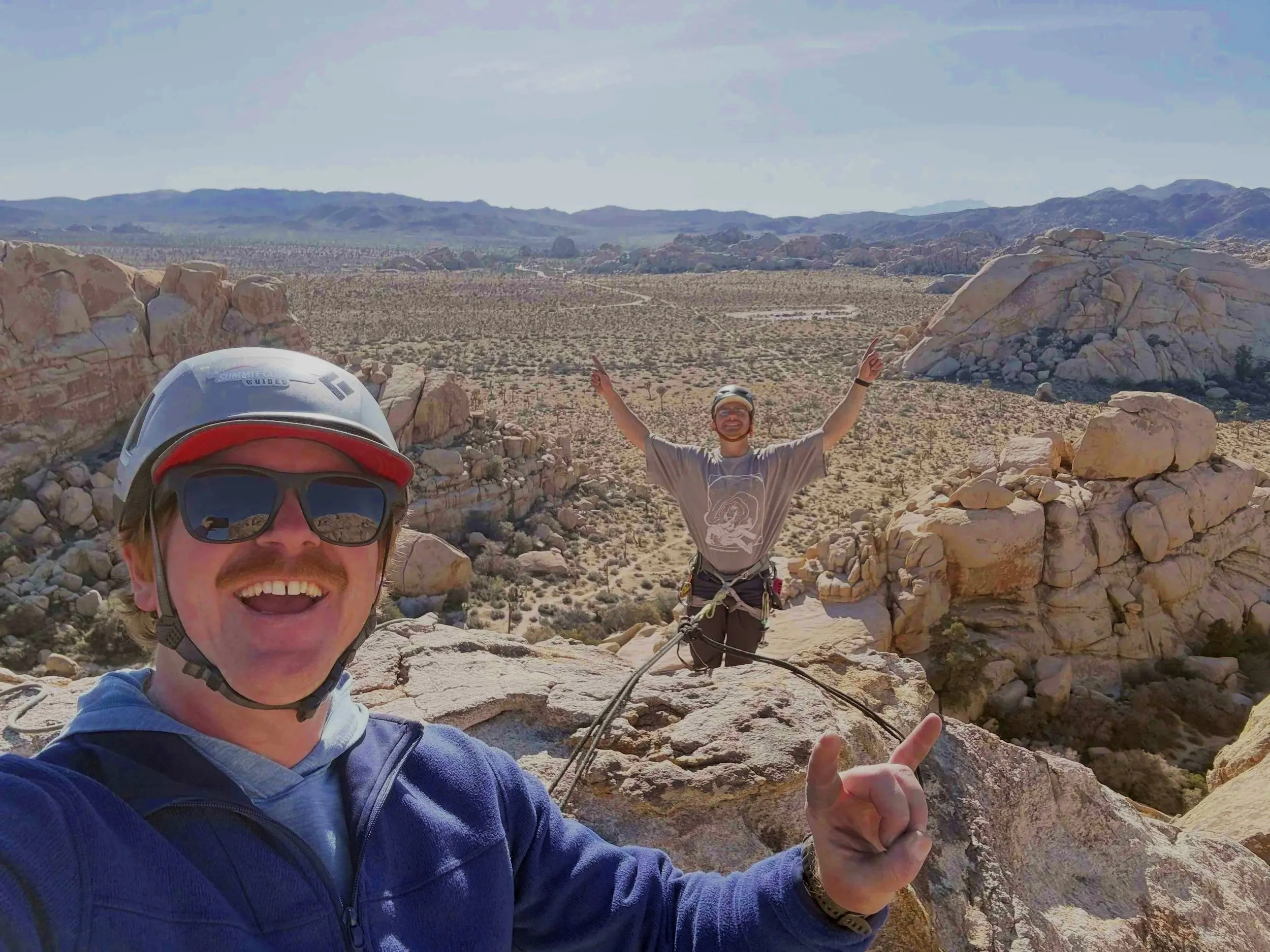
Over 8,000 documented climbing routes across a wide range of difficulty — crack climbing, face climbing, bouldering, and sport routes on the park's distinctive monzogranite. The approach hikes are short (often under 15 minutes), routes are spread across dozens of formations, and the moderate angle of much of the terrain makes Joshua Tree unusually accessible for beginners and intermediate climbers. Guided beginner climbing and rappelling tours are widely available — Summit runs private guided adventures year-round.
Yosemite
The birthplace of American big wall climbing, and still the gold standard for multi-pitch and aid climbing. El Capitan and Half Dome are the defining objectives in the sport. Yosemite's climbing culture is legendary, but the park's most famous routes are serious undertakings — not accessible to beginners without years of experience or an extended guided program. The average visitor can watch climbers on El Cap but cannot themselves participate in that style of climbing.
For beginners and intermediate climbers, Joshua Tree is the stronger destination — more accessible routes, better guided options, and terrain designed for learning. For experienced climbers with big wall objectives, Yosemite is irreplaceable.

Hiking
Both parks offer excellent hiking, but the experiences are distinct.
Joshua Tree Hiking
Mostly flat to moderate terrain, with some notable summit hikes (Ryan Mountain offers the best payoff for effort at 1,000 feet of gain). The trail network is dense in the boulder formations, and the appeal is largely about moving through the granite landscape at human pace — scrambling over boulders, exploring hidden corridors, and watching the desert light change throughout the day. For hiking and scrambling that leads to places most tourists never find, the Hall of Horrors and Caves and Corridors guided experiences are exceptional. See the weekend itinerary guide for the best self-guided hikes.
Yosemite Hiking
More elevation and more vertical — the valley floor is at 4,000 feet and the high country goes to 13,000. The waterfall hikes (Yosemite Falls trail, Vernal Fall via the Mist Trail) are genuinely spectacular in spring when snowmelt is at peak. Half Dome via cables is one of the great hike experiences in California but requires a permit ballot and significant fitness. The High Sierra backcountry is world-class for multi-day backpacking.
Yosemite edges ahead for classic trail hiking experiences — the waterfall hikes and high country are exceptional. Joshua Tree wins for guided exploration and scrambling experiences that are genuinely unique and less dependent on trail ratings.
Camping
Both parks require advance planning for popular campgrounds, but the difficulty level is very different.
Yosemite Camping
Yosemite Valley campgrounds (Camp 4, Upper Pines, Lower Pines, North Pines) are some of the most competitive in the national park system. Reservations open 5 months in advance at Recreation.gov and are often gone within minutes of availability going live. Valley floor camping in peak season is extremely difficult to secure without dedicated planning. High country campgrounds at Tuolumne Meadows are more obtainable but require longer drives into the park.
Joshua Tree Camping
Joshua Tree has nine campgrounds with a range of reservation and walk-up options. The most popular sites (Hidden Valley, Jumbo Rocks, Ryan) book out in advance for spring and fall weekends, but the system is considerably more accessible than Yosemite Valley. Several campgrounds remain first-come, first-served. During shoulder season, walk-up sites are available more often than not.
Joshua Tree wins on camping accessibility — easier reservations, more walk-up availability, and less competition for sites in most seasons.
Stargazing
Joshua Tree is significantly better for stargazing. The park sits in a high desert basin far removed from major city light pollution, with reliably dry air and clear skies that produce some of the darkest nights in Southern California. On new moon nights, the Milky Way appears as a dense band of light overhead — a genuine dark sky experience within two hours of Los Angeles.
Yosemite has good stargazing from higher elevations, particularly in the high country above 8,000 feet. The valley floor, however, has ambient light from facilities and is surrounded by high terrain that limits the horizon. Yosemite's best stargazing requires driving deeper into the park or up to Tuolumne Meadows.
Joshua Tree wins clearly. It's one of the best accessible dark sky destinations in the American Southwest, and the experience is available from the valley floor without a high-elevation drive.
Families with Kids
Both parks are excellent family destinations — the right choice depends on the ages and interests of the kids.
Joshua Tree for Families
Joshua Tree excels for families with kids who are ready for mild adventure. The boulder scrambling is accessible starting around age 6–7 and is genuinely exciting for children in a way that trail hiking often isn't. Guided beginner rappelling works well for kids ages 8 and up, and is consistently the most memorable family activity we run. The flat desert terrain between the boulder fields is also easy to navigate with younger kids. Rangers offer junior ranger programs and educational activities at the visitor center. See our Joshua Tree with kids guide for the complete family breakdown.
Yosemite for Families
Yosemite's valley floor has flat, easy trails to iconic viewpoints and waterfalls that work very well for families with young children. Mirror Lake, the valley loop trail, and the lower Yosemite Fall trail are all stroller-accessible or easy for small kids. The immediate visual drama of the valley — Half Dome, El Capitan, the waterfalls — tends to be immediately impressive to children of any age. The junior ranger program is strong.
Both are great. Yosemite's valley floor is easier for very young children. Joshua Tree's guided adventure activities (scrambling, rappelling, Caves & Corridors) are more memorable for older kids who want to do something, not just see something.
Cost
Park entrance fees are identical: $35 per vehicle, or covered by the America the Beautiful annual pass ($80), which is worth buying if you're visiting more than two parks in a year.
Accommodation Costs
This is where the parks diverge. Yosemite Valley lodging — particularly Ahwahnee Hotel and Yosemite Valley Lodge — is expensive, and valley floor camping is competitive enough that many visitors end up in lodging outside the park and paying for the drive in. Vacation rentals and motels in Mariposa, El Portal, and surrounding gateway towns range from mid-range to expensive depending on season.
Joshua Tree's gateway towns (Joshua Tree, Yucca Valley, Twentynine Palms) offer accommodation at a wider range of price points. Camping inside the park is affordable, vacation rentals range from budget to boutique, and the overall trip cost for a weekend is generally lower than a comparable Yosemite trip.
Joshua Tree is the more budget-friendly destination — particularly for accommodation and overall trip cost on a weekend trip from Southern California.
Best Time to Visit Each Park
The parks have very different seasonal logic — understanding this helps avoid common trip-planning mistakes.
Joshua Tree
Best visited October through April. Spring (February–April) is peak season with possible wildflowers and perfect temperatures. Fall (October–November) offers thinning crowds, warm days, cool nights, and exceptional stargazing. Summer is hot (110°F+ possible) — not impossible, but activity must shift to early morning and evening. Winter is cold but striking, and the park is very quiet. For a full month-by-month breakdown, see our best time to visit guide.
Yosemite
Best visited May–June and September–October. May and June bring peak waterfall flows from snowmelt, good temperatures, and the high country begins opening. Summer (July–August) is warm and extremely crowded. Fall is beautiful with fewer visitors, and the Tuolumne Meadows high country turns color in September. Winter closes Tioga Road and some facilities but offers a stunning snowy valley experience for those who plan for it.
Joshua Tree is a fall/winter/spring destination from Southern California. Yosemite is best in spring and fall from the Bay Area. If you're planning a summer trip, Yosemite handles heat better (cooler elevation) — but crowds are far worse. Summer Joshua Tree requires heat planning but offers a remarkably empty, dark-sky experience in the evenings.
Which Park Should You Choose?
Choose Joshua Tree if you…
- Are based in Southern California
- Want a weekend trip without a 6-hour drive
- Want to rock climb, rappel, or scramble
- Are a beginner to outdoor adventure
- Want exceptional stargazing
- Prefer a less crowded experience
- Are traveling with older kids who want adventure activities
- Are on a tighter budget
- Want a winter or fall desert trip
Choose Yosemite if you…
- Are based in the Bay Area or Northern CA
- Want to see iconic waterfalls (spring visit)
- Are an experienced big wall climber
- Want to backpack the High Sierra
- Are traveling with very young children (valley floor trails)
- Want dramatic, immediately striking scenery
- Are planning a longer trip (3+ days)
- Want to summit Half Dome
The honest answer for most Southern California residents making this comparison: visit Joshua Tree for the weekend, and save Yosemite for when you have the time to drive up and stay long enough to do it justice. They're not competing — they're different enough that the ideal approach is eventually both.
Frequently Asked Questions
Is Joshua Tree or Yosemite better?
Is Joshua Tree better than Yosemite for rock climbing?
Which park is less crowded?
Is Joshua Tree or Yosemite closer to Los Angeles?
Which is better for camping?
Which park is better for stargazing?
Which is better for families with kids?
What time of year is best for each park?