Joshua Tree Safety: What to Know Before You Go
Joshua Tree National Park is not a dangerous place — but it is an unforgiving one. The desert doesn't punish carelessness with dramatic warnings. It simply removes margin for error. The people who get into trouble here are rarely inexperienced adventurers attempting something extreme. They're day hikers who underestimated the heat, visitors who didn't bring enough water, climbers who didn't tell anyone where they were going. The problems are predictable, and for that reason, almost entirely preventable.
This guide covers the real risks at Joshua Tree — heat, dehydration, wildlife, flash floods, navigation, and falls — with specific, practical information rather than vague warnings. Read it before your first visit, or before any serious hike. The park is extraordinary and the vast majority of visitors leave without incident. A little preparation is all it takes.

The Six Real Risks at Joshua Tree
Most emergencies in the park trace back to one or more of these factors. Understanding each one is the most effective safety preparation you can do.
Heat & Hyperthermia
Summer temperatures regularly exceed 110°F in the lower elevations of the park. Even in spring and fall, midday temperatures can reach the 90s. Heat exhaustion and heat stroke can develop quickly, especially if you're also dehydrated. If someone stops sweating, becomes confused, or has hot dry skin, this is a medical emergency — get them into shade and cool them down immediately while calling for help.
Dehydration
The single most common cause of park rescues. The dry desert air and sun pull moisture from your body faster than you feel thirsty — by the time you're thirsty, you're already mildly dehydrated. Carry a minimum of 1 liter of water per person per hour of hiking in hot weather, more in extreme heat. There is no potable water on most trails in the park. Fill up at visitor centers before heading out.
Rattlesnakes
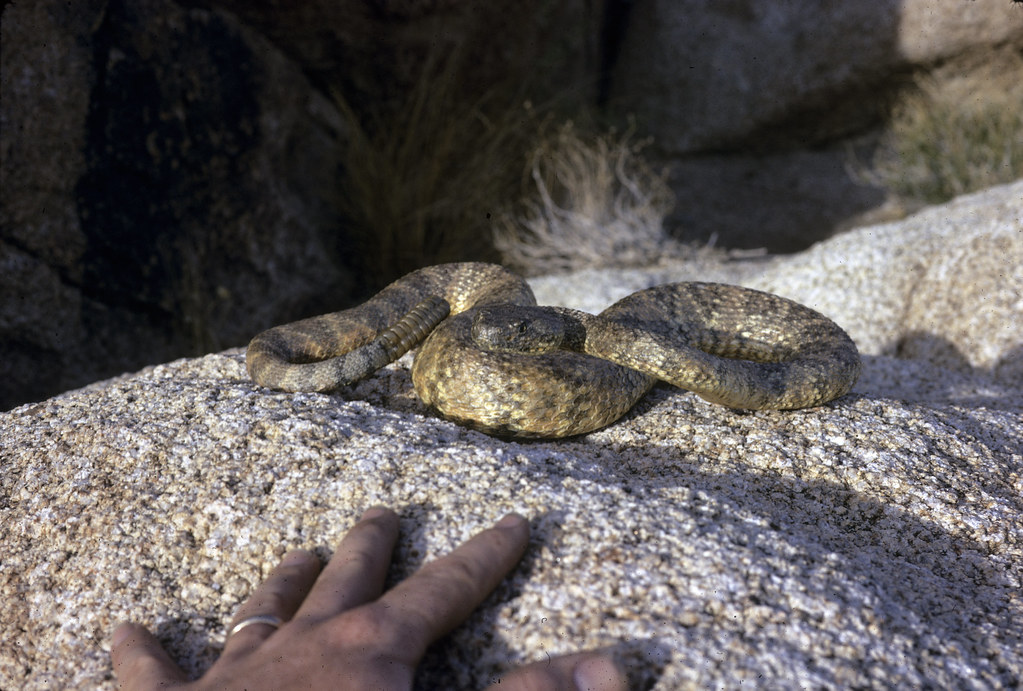
Joshua Tree has five rattlesnake species, including the Mojave rattlesnake (among the most venomous in North America). Bites are rare but do occur — almost always when a snake is accidentally stepped on or someone reaches into a crevice without looking. Never put your hands or feet somewhere you can't see. Watch where you step, especially on rocks. If bitten, stay calm, immobilize the limb, and get to a hospital immediately — do not cut, suck, or tourniquet.
Flash Floods
Desert washes can fill with fast-moving water within minutes of a storm — even a storm you can't see, miles away. Flash floods are most common July through September during monsoon season. Never camp in a wash or dry streambed. If you see dark clouds over distant mountains or hear a rumble upstream, move immediately to higher ground. The water can arrive as a wall with no warning.
Getting Lost
Cell service is spotty to nonexistent across most of the park, and GPS maps can be misleading in terrain where trails end abruptly or split without signage. Many trails are unmarked or use rock cairns that can be knocked over. Download offline maps before entering (Maps.me or AllTrails with offline mode), note your trailhead coordinates, and always tell someone outside the park your route and expected return time.
Falls on Rock
Joshua Tree's granite boulders are irresistible for scrambling — and genuinely dangerous without proper technique. The rock is coarser than it looks but also steeper. Descents are harder than ascents. Many visitors get stuck on rock faces they've climbed up but can't safely climb down. If you're not a climber, stick to established trails and avoid scrambling above terrain you can't safely reverse. Never boulder alone.
The Five Things That Cause Most Park Rescues
-
Not enough water
A half-liter bottle is not enough for a 3-mile hike in October. Most visitors dramatically underestimate how much water the desert requires. Plan for at least 2 liters for a half-day hike in mild weather, 3–4 liters in warm conditions.
-
Starting a hike too late in the day
A hike that begins at 11am in July puts you at the trailhead turnaround at peak heat. Start every hike before 8am in summer, before 9am in shoulder season. Afternoon in the desert means full sun with no shade and temperatures still climbing.
-
No plan communicated to anyone outside the park
When rescues are needed, the difference between a fast response and a prolonged search is whether someone knows where to look. Before any serious hike, tell a friend or family member: your trailhead, your route, your expected return time, and what to do if you don't check in.
-
Underestimating trail length and difficulty
A 7-mile round-trip on flat terrain in moderate temperatures is a full-day commitment. The same mileage in summer heat or over technical terrain is a very serious undertaking. Always verify trail length before setting out, factor in elevation, and turn back if you've used more than half your water at the midpoint.
-
Footwear that isn't adequate for desert terrain
Flip-flops and canvas sneakers fail on desert rock — the surface is abrasive, ankle rolls are common, and cactus spines go straight through thin soles. Wear closed-toe shoes with ankle support and a firm rubber sole at minimum. For anything off-trail or technical, use proper hiking boots.
Before You Go Checklist
Print this or screenshot it before your visit. Every item on this list has prevented a rescue.
In Your Pack
- Water (2+ liters per person)
- High-calorie snacks
- Sun hat & sunglasses
- Sunscreen (SPF 30+)
- Headlamp + extra batteries
- First aid kit
- Emergency space blanket
- Whistle
Navigation
- Offline map downloaded
- Trailhead coordinates saved
- Paper map as backup
- Battery pack for phone
- Trail described to someone
For Overnight & Backcountry
- Backcountry permit (free, required)
- PLB or satellite communicator
- Bear canister or hang bag
- Registered at backcountry board
- Emergency contact notified
- Water filter or purification
At the Trailhead
- Check weather forecast
- Sign in at register if present
- Note the time you're starting
- Note your car's location
- Check for flash flood watches
Wildlife Safety Rules
- Never approach, feed, or harass any wildlife. This includes the friendly-seeming ground squirrels at picnic areas — they can carry plague (yes, actual plague), and feeding them is both illegal and genuinely harmful to their health and behavior.
- Shake out boots and clothing left outside overnight. Scorpions, spiders, and occasionally small snakes seek warmth in shoes and clothing. This is especially important when camping. Check before you put anything on.
- Give rattlesnakes a wide berth and leave them alone. A rattlesnake on the trail is not an emergency — it's an animal doing its job. Back away, wait for it to move, or take a wide detour. Almost every rattlesnake bite in the park results from someone trying to handle or interact with the snake.
- Store all food and scented items in your vehicle or a hard-sided container. Coyotes are active and opportunistic. A cooler left outside your tent is an invitation. Coyote bites on humans are rare but do occur when animals have been fed and lost their wariness.
- Watch for cholla cactus — it doesn't actually jump. But it does detach easily and the barbed spines are extremely difficult to remove. Never try to pull cholla out with your hands. Use two sticks or rocks to flick it off. Watch where you step and where you sit.
In a park emergency: Call 911 (move to higher ground for signal if needed) or NPS Dispatch at (760) 367-5500. If cell service is unavailable, drive to the nearest visitor center or park entrance. Backcountry travelers should carry a PLB (personal locator beacon) or satellite communicator such as a Garmin inReach.
Go Out Prepared — Go Out With Us
Summit's guided experiences include full safety briefings, gear recommendations, and a guide who knows this terrain. No guesswork, no rescue calls.
Book a Guided Experience