Best Sunrise & Sunset Spots in Joshua Tree National Park
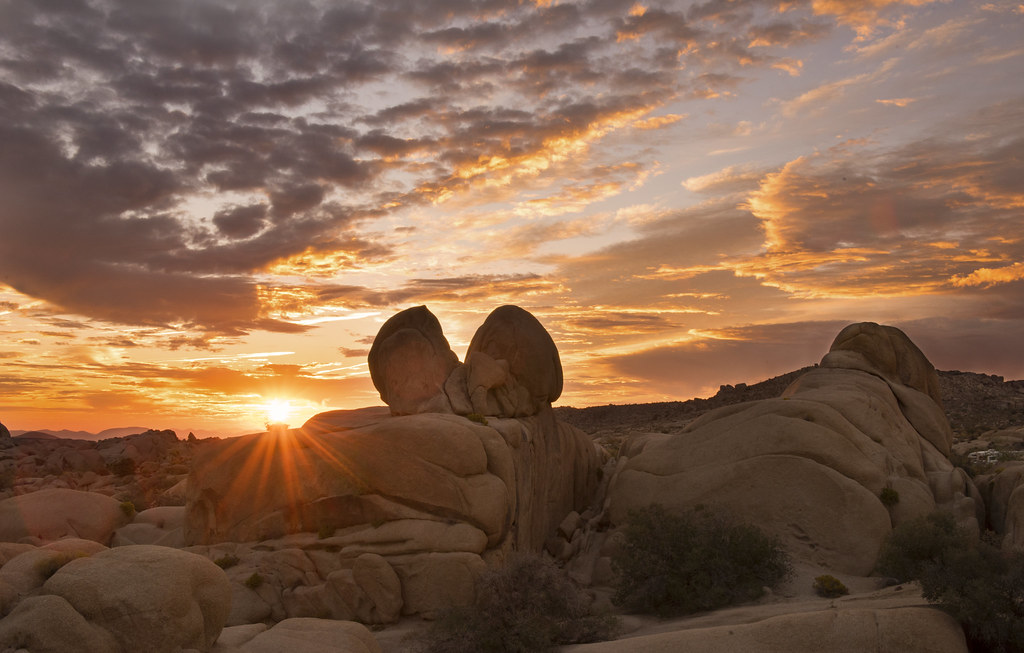
Joshua Tree is one of the best places in Southern California to watch the sun rise or set — and one of the most underutilized. Most visitors show up mid-morning and leave before dusk, never experiencing the park at the moments when its landscape is most alive. The low desert light at golden hour turns the granite formations amber and rust, the Joshua trees cast long shadows across the sand, and the sky above does things that keep photographers coming back year after year.
The park has no single "best" spot — the right location depends on whether you want sunrise or sunset, how much walking you're willing to do, and whether you want company or solitude. This guide covers the top spots for each, with practical details on how to get there and what to expect.
Best Sunrise Spots
Sunrise at Joshua Tree hits the east-facing boulder formations first, painting the rock faces in shades of gold and orange before the light becomes flat. The best sunrise spots put you in front of those formations before the sun clears the horizon.
Heartbreak Rock
Heartbreak Rock sits just east of Jumbo Rocks Campground and is widely considered the best sunrise spot in the park. The boulder formation faces directly east, catching the first light before anything else in the area. The scene — warm granite walls glowing against a gradient sky — is dramatic and accessible, with no technical hiking required. Campers at Jumbo Rocks can walk here in minutes.
Cap Rock
Cap Rock is one of the most recognizable formations in the park — a massive granite dome with a distinctive flat-topped boulder balanced on top. The short Cap Rock Nature Trail (1.6 miles, easy) loops through the area, and the main formation faces east, catching early morning light beautifully. It's accessible, the parking is good, and it's less crowded than Skull Rock at sunrise.
Hidden Valley
Hidden Valley's enclosed ring of boulders catches early morning light across its sandy floor, with Joshua trees casting long shadows inward. The 1-mile loop trail runs inside the formation. Arrive before sunrise and find a position on the west side of the valley looking east — the light builds gradually across the rocks in a way that's hard to replicate anywhere else in the park.
Skull Rock
Skull Rock is one of the park's most popular formations — and for good reason at sunrise, when the two eye-socket hollows in the boulder catch the first light in a way that justifies the name. The roadside location makes it easy to access before dawn without any hiking. Arrive 20 minutes early to claim a good vantage. Expect other photographers in peak season.

Best Sunset Spots
Sunset light at Joshua Tree sweeps across the open desert from west to east, illuminating the west-facing rock faces while the sky behind them deepens through orange, red, and purple. The best sunset spots face west or give you an unobstructed horizon.
Keys View
At 5,185 feet, Keys View is the highest accessible point in the park reachable by car. The panorama looks southwest over the Coachella Valley, the Salton Sea, and on clear days to the Salton Trough and beyond. Sunset from here is extraordinary — the sky turns from gold to crimson above a vast valley while the air cools quickly at elevation. It's the most popular sunset spot in the park; arrive 45 minutes early on weekends in October and November.
Lost Horse Valley
The wide open terrain of Lost Horse Valley — the flat desert expanse south of Keys View Road — is one of the best places in the park to watch the sun go down with almost no one else around. The valley floor is studded with Joshua trees that catch the low light perfectly, and the silence is absolute. There's no formal viewpoint; park anywhere along the road and walk out into the desert a short distance.
Cholla Cactus Garden
The Cholla Cactus Garden — a dense field of teddy bear cholla covering several acres — takes on a completely different character at sunset, when backlit spines glow golden against the darkening sky. The effect is genuinely otherworldly. The 0.25-mile loop through the garden is one of the most unique sunset walks in the park. Go in October or November when the angle of the sun is right.
Quail Springs Picnic Area
The Quail Springs area in the park's northwest offers wide open desert views with Joshua trees as foreground elements against the western sky. It's far less visited than Keys View and produces more intimate, less "viewpoint" images — the Joshua tree silhouettes against a colorful sky are what makes the park recognizable to most people, and this is one of the best places to capture that image without a crowd.
When the Light Is Best — By Season
October & November
The best months for light quality and crowd balance. The sun is lower, the golden hour lasts longer, and the air is clear after summer monsoons. Sunset comes early enough (around 5:30–6pm) that you can easily plan an evening out. October is consistently the best single month for photography in the park.
February & March
Spring brings longer days and warmer temperatures, with sunrise moving earlier and giving more time after first light. The desert floor can have green growth after winter rains, which adds texture to sunrise photos. March is unpredictable — storms can create dramatic cloud conditions or completely obscure the sun.
December & January
Winter days are short and the light is low and cool. Sunrise can occur as late as 7:15am, which makes it accessible for non-early-risers. The park is quietest in winter and the low-angle light can produce remarkable results on clear days. Cold nights mean you may be the only person at a sunrise location.
Summer (June–August)
Summer sunsets are late (8–8:30pm) and often spectacular after thunderstorms. The problem is that midday heat makes any hike to a viewpoint uncomfortable, and the park empties by late afternoon when the heat peaks — meaning less competition for spots, but also a genuine safety consideration. Bring water. Start any hike after 5:30pm.

Photography & Planning Tips
How to Get the Shot
- Arrive 30–45 minutes before the published sunrise or sunset time. The best light — soft, warm, directional — happens before the sun clears the horizon at sunrise and 10–20 minutes after it drops at sunset. If you arrive at the listed time, you've already missed part of the show.
- Use PhotoPills or The Photographer's Ephemeris to plan exactly where the sun will rise or set relative to your chosen formation. In Joshua Tree, which direction a boulder faces matters enormously. These apps show you exactly when the sun will be in line with a specific feature from a specific location.
- The best light at Keys View is often the 10 minutes after the sun disappears. The sky continues to deepen and color after sunset, and the valley below darkens while the sky remains bright. Stay at the overlook for at least 20 minutes after sunset.
- For sunrise, scout your location the afternoon before. Arriving at a formation you've never seen in the dark is harder than it sounds — especially for bouldering terrain. Walk to your preferred spot the day before so you can navigate it confidently in pre-dawn conditions.
- Tripods are allowed throughout the park for personal use. Commercial photography requires a permit. For sunset shots with low light, even a small travel tripod dramatically improves results.
- The weather after storms is exceptional. A day after rain or as a storm clears, the light quality at golden hour is unlike anything on a standard clear day — cloud formations, dramatic shadows, and washed air all combine. Keep an eye on the forecast and plan accordingly.
See It With Someone Who Knows Where to Stand
Summit's guides know every angle in this park. Book a guided sunrise climb or sunset photography hike and spend your golden hour somewhere remarkable.
Book a Guided Experience