Joshua Tree in Pop Culture: Music, Film, Art & the Desert That Inspired Them
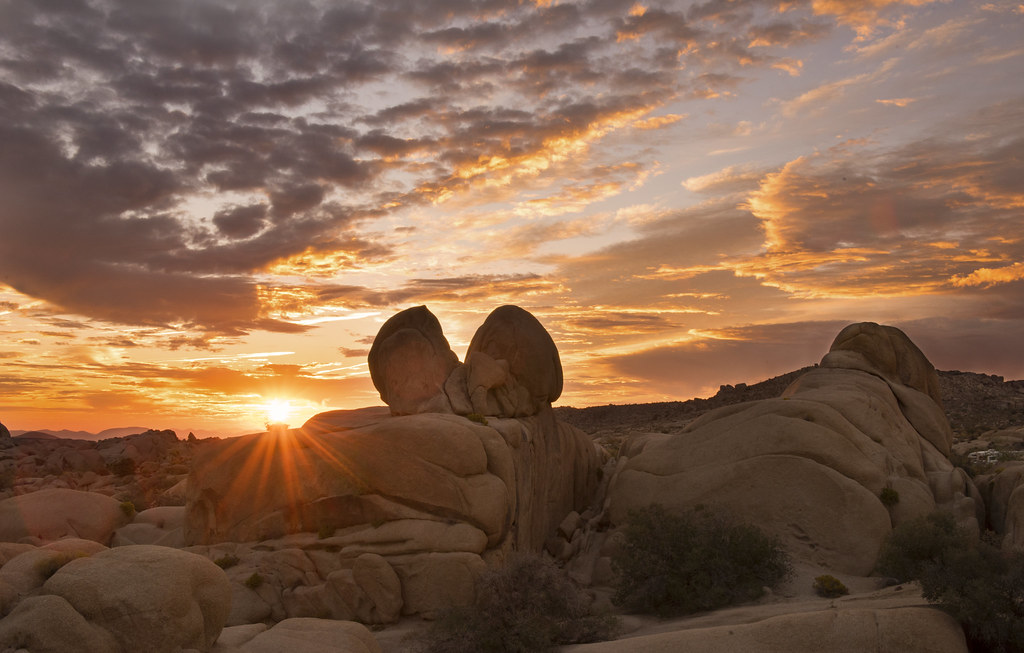
There are places in the world that carry a cultural charge disproportionate to their geography. Joshua Tree is one of them. A national park in the eastern Mojave — remote, spare, harsh — has accumulated a body of artistic, musical, and cinematic association that rivals landscapes ten times more famous.
Some of this is the light, which is extraordinary. Some of it is the silence, which is absolute in ways that urban and even rural landscapes rarely offer. Some of it is the desert's quality of making things feel stripped down to essentials — a quality that artists and musicians recognize immediately.
Music
U2 — The Joshua Tree (1987)
The most famous cultural artifact associated with the park is, ironically, not really about the park. U2's The Joshua Tree — which became one of the best-selling albums in history — drew its imagery from the American West broadly: the Mojave, the California desert, the road, the landscape as metaphor for spiritual searching.
The cover photograph, taken by Anton Corbijn, was shot near Darwin, California — not at Joshua Tree National Park. But the album's title lodged the park in the global cultural imagination so firmly that the association became permanent. Visitors still come specifically because of the album. The park's visitor center has to gently explain that U2 didn't actually record here.
It doesn't matter. The album brought millions of people to the idea of the desert as a meaningful place, and many of them eventually came to see the real thing.
Gram Parsons — Cosmic American Music
Before U2, before the desert became fashionable, Gram Parsons was using Joshua Tree as a retreat and a source. He spent his last years at the Joshua Tree Inn on Route 62, driving the park's dirt roads, and processing the dissolution and ambition of his musical life against the desert's indifference.
His death at Cap Rock in 1973 — and the attempt by his road manager to cremate his body at the formation per his alleged wishes — became one of rock music's most resonant stories. The desert absorbed him literally. Read the full Gram Parsons story →
The Desert as Production Location
The Joshua Tree area has served as backdrop for an enormous number of music videos, album covers, and recording retreats. The combination of accessible remoteness — two hours from Los Angeles, but another world — makes it a practical and atmospheric choice.
Artists ranging from Eagles to Chris Cornell to Lucinda Williams to contemporary indie acts have recorded or filmed in the Hi-Desert. Pappy & Harriet's in Pioneertown has hosted performances from Paul McCartney, Robert Plant, and Vampire Weekend. The venue — a honky-tonk in a faux Western movie set — is one of the stranger and more wonderful music spaces in America.
Film & Television
The Desert as Character
Joshua Tree's visual distinctiveness — the monzogranite formations, the namesake trees, the extreme light — has made it a recurring production location for films that need a landscape that reads as "other." The park has appeared in westerns, science fiction, road movies, and action films.
Notable productions include scenes from The Craft (1996), sequences from various Wim Wenders projects, and countless commercials that need to suggest the American frontier without being Yosemite or the Grand Canyon. The TV series Fear the Walking Dead used the Hi-Desert extensively for its post-apocalyptic landscapes.
Death Valley Daze & Desert Documentaries
The Hi-Desert has generated a parallel tradition of documentary filmmaking — explorations of the communities that have gathered here, from the Integratron to the art installations scattered across the desert to the climbing scene. The 2019 documentary Spaceship Earth, about Biosphere 2, draws on the broader culture of utopian desert projects in the American Southwest that Joshua Tree is part of.
Visual Art & Land Art
Noah Purifoy Outdoor Desert Museum
Ten acres of large-scale assemblage sculpture built from debris collected after the 1965 Watts Riots. Noah Purifoy — a pioneering African-American artist — moved to the desert in 1989 and spent the last fifteen years of his life building this extraordinary site. It's one of the great works of American Land Art and it's free to visit, located just outside the park near Joshua Tree town. Read our Noah Purifoy guide →
The Integratron
Built in the 1950s by George Van Tassel — who claimed the design came to him from extraterrestrials — the Integratron is a 38-foot-high, all-wood, acoustically perfect dome in Landers, about 20 minutes from the park. Van Tassel claimed it was designed for time travel and cellular rejuvenation. It now operates as a sound bath venue, where visitors lie on mattresses and experience concert-quality acoustics from crystal singing bowls. It's not a joke — it's genuinely extraordinary. Read our Integratron guide →
The Hi-Desert Art Community
The towns along Route 62 — Joshua Tree, Twentynine Palms, Yucca Valley — have developed one of the most distinctive artist communities in California. Low rents, extreme light, and proximity to Los Angeles have drawn artists, musicians, and makers for decades. The 29 Palms Art Gallery, Desert Art Center, and dozens of working studios populate the corridor. The annual Route 62 Open Studio Art Tour draws thousands of visitors each fall.
Photography
Joshua Tree is one of the most photographed landscapes in North America — and not just because it's famous. The light here does something specific: the low sun angle, the reflective monzogranite, the absence of atmospheric haze for much of the year, and the photogenic sculptural quality of the Joshua trees themselves combine to produce images that are immediately recognizable as from nowhere else.
Edward Weston photographed the park in the 1930s. Ansel Adams passed through. The desert's association with photography has continued through every era, from film to digital to Instagram, where the park routinely generates millions of tagged posts annually.
If you're visiting with a camera, our Joshua Tree photography guide covers the best spots, golden hour timing, and composition advice from people who know the park well.
Why the Desert Keeps Drawing Artists
The cultural resonance of Joshua Tree isn't an accident, and it isn't just marketing. The desert does something to perception. The absence of distraction — no city noise, no easy comfort, no familiar visual reference points — sharpens what remains. Artists who come here describe feeling like they can hear themselves think.
That quality attracts people who need to make things: musicians processing difficult albums, painters working through transitions, photographers chasing light that doesn't exist anywhere else. The desert doesn't care about careers or reputation. It offers a kind of honesty that's hard to find, and artists recognize it immediately.
The cultural accumulation — Gram Parsons, U2, Noah Purifoy, the Integratron, the climbing history, the desert community — is just the residue of all those people finding what they came for.
Find Your Own Connection to the Desert
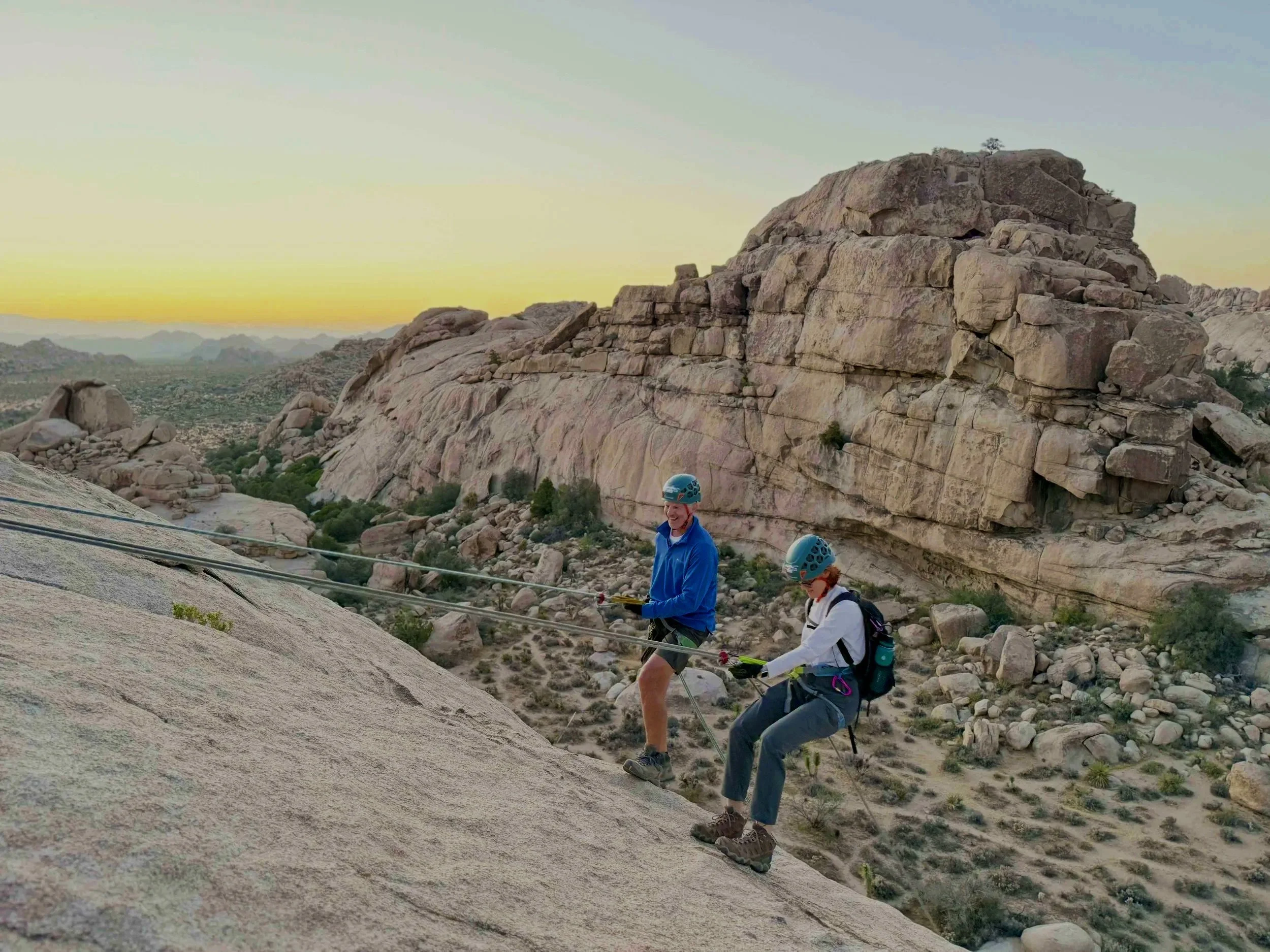
Summit's guided experiences take you into the landscape that has inspired decades of music, film, and art. All experience levels welcome.
Book a Guided Experience