Joshua Tree Adventure Routes: The Complete Guide

Most people experience Joshua Tree from a trail. Adventure Routes take you through it.
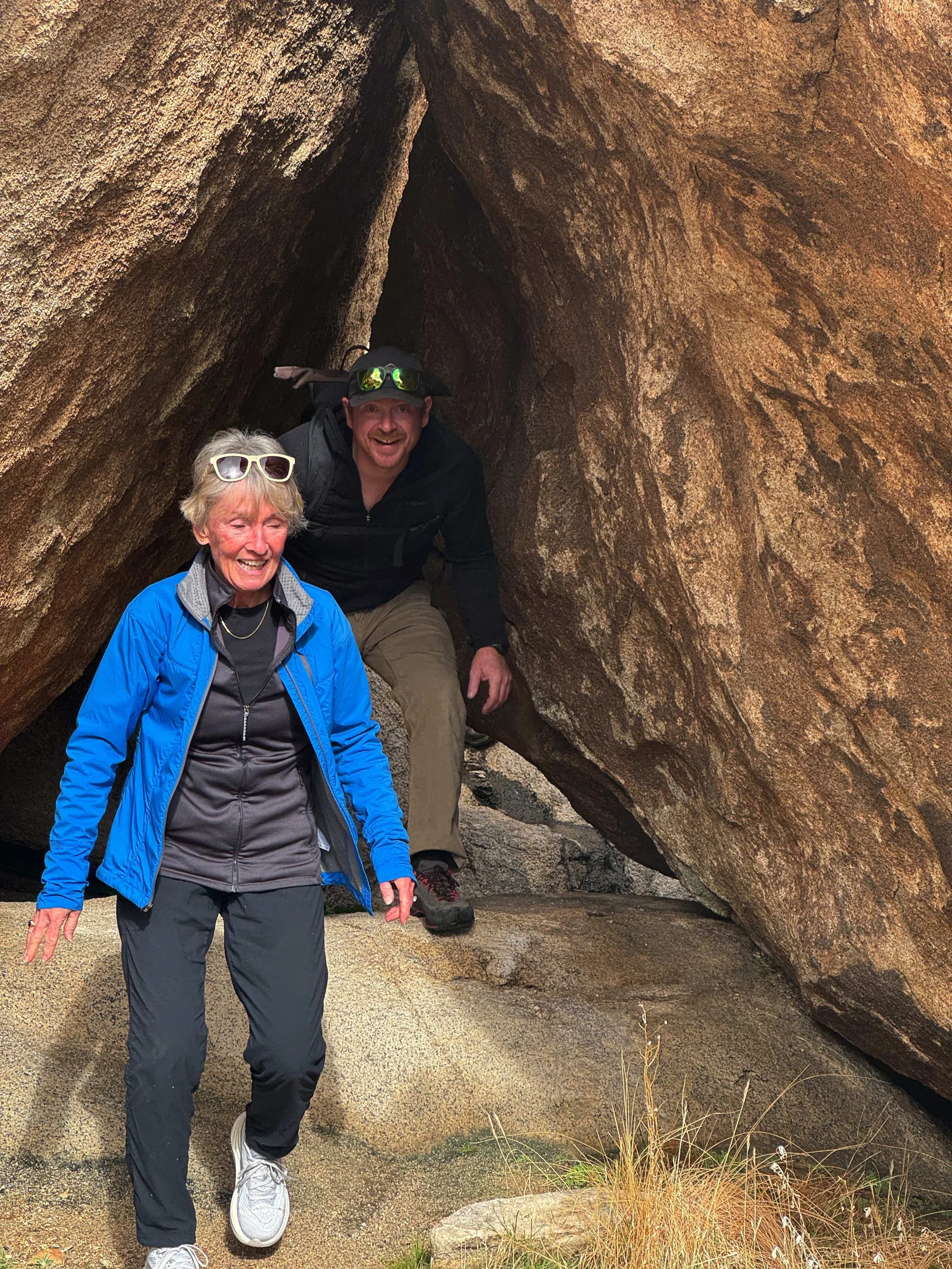
There's a version of Joshua Tree that most visitors never see — the hidden corridors between massive boulders, the caves formed by granite stacked over thousands of years, the summit viewpoints you reach by scrambling rather than hiking. That's the world Adventure Routes open up. They're Summit Climbing Guides' signature experience: immersive, guide-led backcountry journeys that go well beyond what any marked trail can offer. This guide covers everything you need to know — what they are, what to expect on the day, who they're right for, and how to book one.
What Is a Joshua Tree Adventure Route?
An Adventure Route is a guided backcountry experience in Joshua Tree National Park. They're designed to take you into the landscape rather than past it — through granite corridors, into hidden cave systems, up scrambling terrain, and onto elevated viewpoints that the park's marked trails simply don't reach.
A typical Adventure Route might include any combination of:
- Cross-country scrambling through granite boulder fields
- Exploring natural caves and passageways formed by stacked rock
- Route-finding through narrow corridors and alcoves
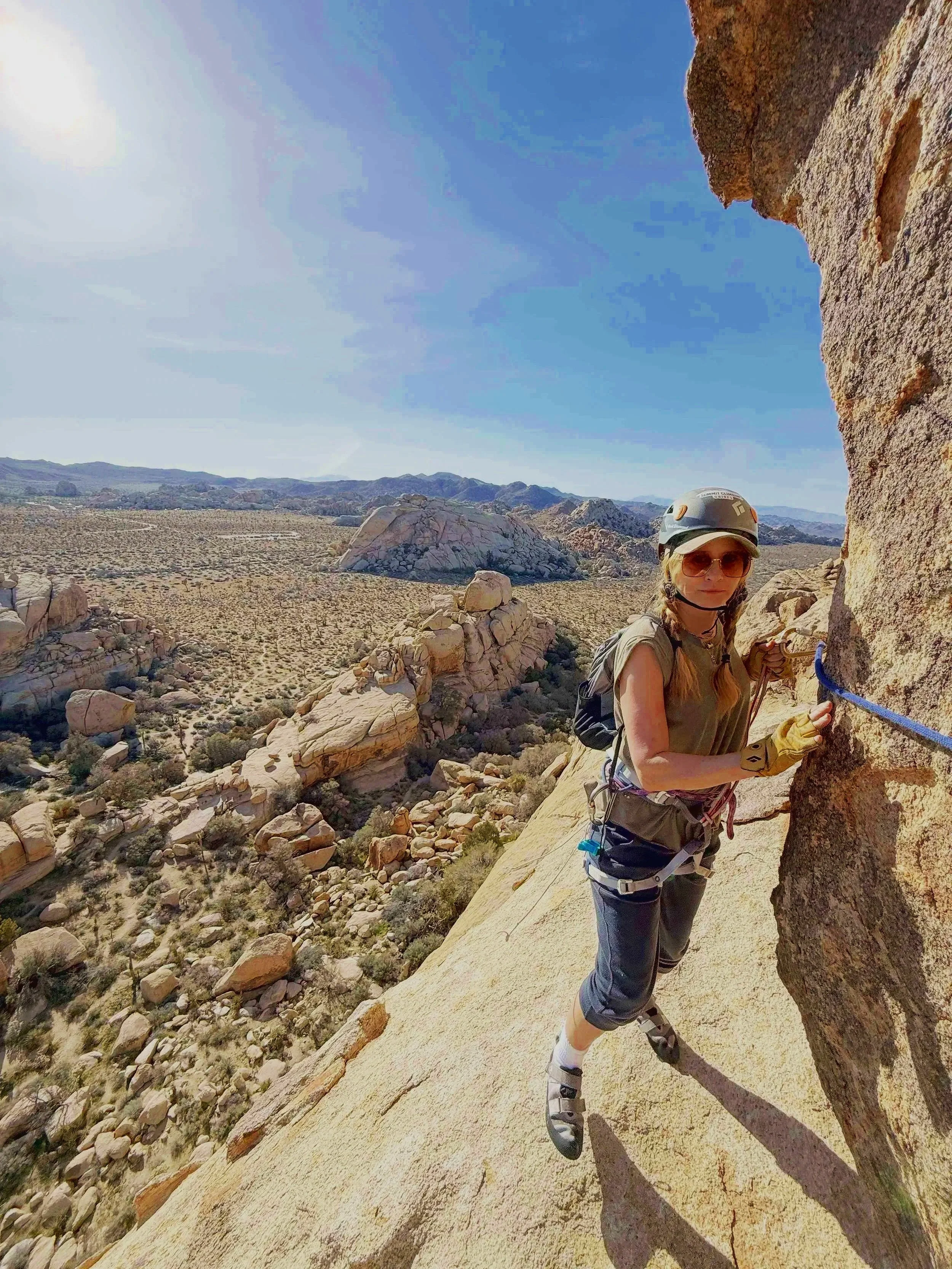
- Optional technical sections — short climbs or rappels — if your group wants them
- Summit viewpoints with sweeping desert panoramas
- Quiet, remote pockets of the park that most visitors never find
Every route is custom-built for your group. There's no fixed itinerary — your guide reads the terrain, reads your group, and builds the experience as you go. That's what makes them genuinely different from anything else available in Joshua Tree.
Adventure Routes vs. Hiking vs. Rock Climbing
Adventure Routes occupy a unique space between hiking and climbing — and they're worth understanding before you book. Here's how they compare:
- Follows marked trails
- Stays mostly on the ground
- Accessible to everyone
- Can be done without a guide
- Predictable, defined path
- Guide-led, beyond the trailhead
- Scrambling, caves, viewpoints
- Adapted to your group
- No experience required
- Dynamic, exploratory, unique
- Technical rope systems
- Skill-focused progression
- Vertical movement on rock
- More structured instruction
- Gear-intensive
The short version: if hiking feels too passive and rock climbing feels too technical, Adventure Routes are built for exactly that space in between. They're the most immersive, exploratory experience you can have in Joshua Tree with a guide — and they don't require any prior outdoor experience to enjoy. For a deeper comparison, see our full breakdown of Rock Climbing vs. Adventure Routes.
What to Expect on the Day
Adventure Routes don't follow a fixed script, but here's what a typical day looks like when you book with Summit Climbing Guides.
Meet your guide
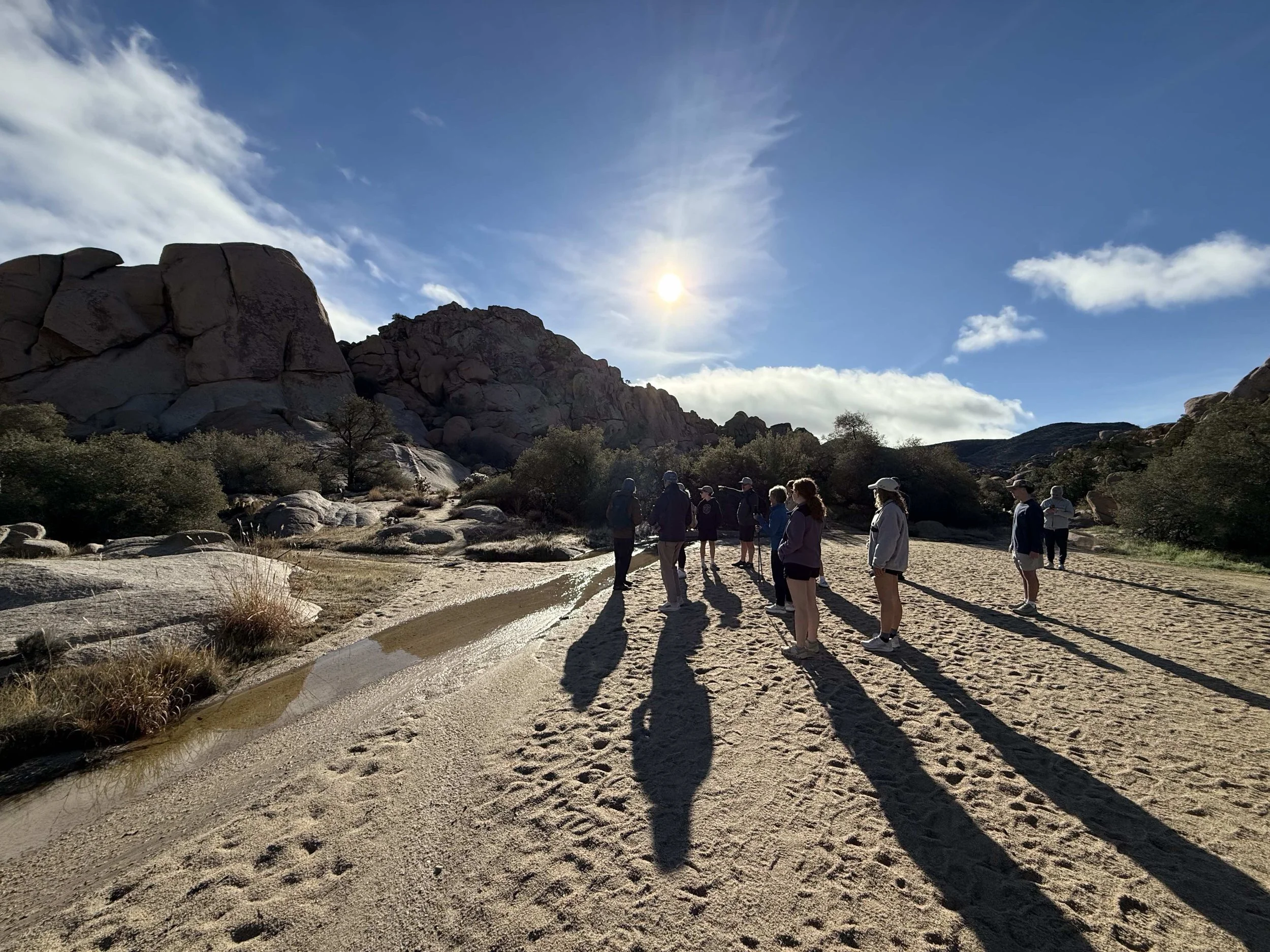
You'll connect at a designated meeting point inside or near Joshua Tree National Park. Your guide will go over the plan for the day, check gear, answer any questions, and get a read on your group's energy and comfort level. This conversation shapes everything that follows.
Head into the terrain
From the trailhead, you'll follow existing climber-use paths to reach the open granite. From there, movement shifts to durable rock surfaces — the native granite that makes Joshua Tree so well-suited to this kind of exploration. Depending on your route, this might mean dropping into a granite corridor, scrambling up a boulder field, or weaving through a landscape of Joshua trees and rock formations that few visitors ever walk through. Your guide navigates — you explore.
Dynamic movement through the landscape
This is the core of the experience. You'll use your hands and feet to move through the terrain — stepping between boulders, ducking into natural passageways, climbing short sections, discovering hidden pockets and views. It's physical and engaging in a way that trail hiking isn't.
Summit viewpoints and rest spots
Most routes include elevated terrain — granite domes, ridgelines, or boulder stacks that open up long views across the park. These become natural rest stops where you can take in the desert landscape, eat snacks, and appreciate where you are.
Back to the trailhead
Half-day routes typically run 3–4 hours. Full-day routes run 6–8 hours with more terrain, more depth, and a more complete backcountry experience. Your guide will time the return based on your group's pace and the conditions.

The Experiences: What Summit Offers
Summit Climbing Guides offers several Adventure Route experiences, ranging from exploratory half-days to full-day backcountry immersions. Each one draws on the same core concept — guided movement through Joshua Tree's granite landscape — but with different terrain, character, and intensity.
The cave systems at Joshua Tree — Hall of Horrors, Chasm of Doom, The Mad Hatter, and others — are above-ground formations created by massive granite blocks shifting and stacking over time. They're not underground caverns. They're some of the most unique terrain features in any national park, and Summit has mapped and guides more of them than anyone else operating in Joshua Tree.
Who Adventure Routes Are For
Adventure Routes are designed to be accessible without being watered down. The terrain adapts to your group — your guide reads your comfort level and adjusts accordingly. That said, they're especially ideal for:
For families specifically, Adventure Routes are one of the best options in the park. Kids take to the scrambling and exploration naturally — the hands-on, discovery-based movement is exactly what they love. See our family climbing page for more on bringing kids.
Adventure Routes are not ideal for visitors with significant mobility limitations, those uncomfortable with heights, or anyone looking for a casual stroll. The terrain is rugged and the movement is active.
How Technical Is It?
Adventure Routes span a wide range — from mostly scrambling and route-finding to optional technical sections with ropes. Here's how to think about the spectrum:
Beginner-friendly end
Most Adventure Routes start with scrambling — using hands and feet to move through the terrain without a rope. Think of it like a 3D puzzle through the landscape. No prior experience needed, and your guide handles all navigation and instruction. This is accessible to most reasonably active adults and older children.
Adding challenge
If your group wants more, guides can incorporate optional climbing sections, short rappels, or tighter cave passages that require more committed movement. These are always optional and introduced gradually based on your group's comfort.
Summit routes
Some Adventure Routes target specific granite domes or ridgelines that require more sustained scrambling and route-finding to reach. The Wonderland of Rocks and some backcountry areas involve more complex terrain navigation — still manageable without technical climbing experience, but more physically demanding.
You do not need prior climbing or outdoor experience to book an Adventure Route. Your guide will teach everything you need as you go. The most important things to bring are reasonable fitness, a sense of curiosity, and a willingness to move through the terrain. Everything else is handled.
Best Time to Go on an Adventure Route
Adventure Routes run year-round, but the experience varies significantly by season. Here's a quick breakdown:
- October–November (fall): Second-best season. Comfortable temps, manageable crowds, excellent light. One of the best windows to book
- December–February (winter): Cold mornings but clear skies and near-empty terrain. The park feels completely different — quieter, more dramatic. Read our full winter guide
- March–May (spring): Peak season. Wildflowers, perfect temps, stunning light — and the busiest crowds. Book early, especially for weekends
- June–September (summer): Extreme heat — daytime highs regularly exceed 100°F. Routes are shifted to early morning starts only. Experienced desert visitors only
For more detail on timing, see the full best-time guide for Adventure Routes.
What to Wear & Bring
All technical gear — helmets, harnesses, ropes if needed — is provided by your guide. Here's what you bring:
Why Summit Climbing Guides for Adventure Routes
Adventure Routes aren't a generic offering — the quality of the experience depends entirely on how well your guide knows the terrain. Summit Climbing Guides is locally based near Joshua Tree National Park and has spent years exploring, mapping, and refining the routes that make up our experiences. A lot of what we offer can't be found in any guidebook or on any map — it's the result of that on-the-ground time.
- NPS permitted — fully authorized to operate guided experiences inside Joshua Tree National Park
- AMGA and PCGI certified guides — professionally trained, not just locally experienced
- Fully insured — carrying proper commercial liability coverage for all guided activities
- Small groups — private, personalized experiences that aren't herded tours
- Genuine local knowledge — we didn't just move here. We've spent the time learning this park at a level most guides haven't
We take resource protection seriously — and that shapes how we operate every single day. We use established climber-use paths to access the terrain and transition onto durable granite surfaces as quickly as possible, keeping foot traffic off fragile desert soil and cryptobiotic crust. We never create or encourage social trails. Every guide follows Leave No Trace principles and all NPS rules and regulations, and we actively teach our guests about these practices throughout the experience — not as a disclaimer, but as part of what it means to really understand this place. We believe the best way to enjoy Joshua Tree is to understand it, and the best way to protect it is to move through it thoughtfully.
Frequently Asked Questions
What is a Joshua Tree Adventure Route?
Do I need climbing experience for an Adventure Route?
How is an Adventure Route different from hiking in Joshua Tree?
How long do Adventure Routes take?
What is the Wonderland of Rocks Adventure?
Are Adventure Routes suitable for families and kids?
What should I wear and bring on an Adventure Route?
Is Summit Climbing Guides permitted to operate in Joshua Tree?