Joshua Tree in Winter: The Season Most People Are Sleeping On

Most people write off Joshua Tree in winter. That's exactly what makes it so good right now.
The spring wildflower crowds haven't arrived. The summer heat isn't a factor. What's left is the park at its quietest, sharpest, and most atmospheric — crisp desert air, golden winter light, empty trails, and nights so dark and cold the stars feel close enough to reach. If you've been waiting for the right time to visit Joshua Tree, this might be it.
What the Weather Is Actually Like at Joshua Tree in Winter
Joshua Tree sits at an elevation of 3,000–5,000 feet across its main visitor areas, which means winter temperatures are noticeably cooler than the surrounding desert lowlands. Days are mild and often sunny; nights are cold — sometimes well below freezing.
| Month | Average High | Average Low | Precipitation |
|---|---|---|---|
| December | 57°F (14°C) | 32°F (0°C) | Low — occasional rain |
| January | 55°F (13°C) | 29°F (-2°C) | Lowest of the year |
| February | 60°F (16°C) | 33°F (1°C) | Slightly more rain possible |
Snow is rare but not unheard of — a light dusting a few times a year at higher elevations. Wind can be a factor, especially on exposed ridges and summits, and wind chill drops the effective temperature significantly. On calm, sunny days the park is genuinely comfortable in a light jacket by midday. On windy days, those same trails will feel 20 degrees colder.
Daylight is short. Sunset comes as early as 4:45pm in December — plan hikes and activities with that in mind, and always carry a headlamp.
Why Winter Is Worth Visiting Joshua Tree
Spring gets all the press because of wildflowers, and fall gets the Instagram attention. But locals and experienced desert visitors consistently rank winter as their favorite season — the park is a different place when the crowds are gone and the light is low and sharp.
Rock Climbing at Joshua Tree in Winter
If you're a climber, winter is arguably the best time to visit Joshua Tree. The cooler temperatures improve granite friction dramatically — moves that felt slick and insecure in summer conditions suddenly feel locked in. Classic routes feel different, better, more in your control.
The crowds at popular crags like Hidden Valley Campground, Intersection Rock, and the Wonderland of Rocks thin out considerably. On weekdays you can often have routes to yourself that would have a queue of parties in October.
What to expect on the rock
Morning conditions can be cold on north-facing walls — give the rock time to warm before jumping on routes in the shade. South-facing walls warm up quickly and can feel almost balmy by midday. Wind is the bigger variable to watch; exposed ridges and face climbs feel significantly more committing when gusts are moving through.
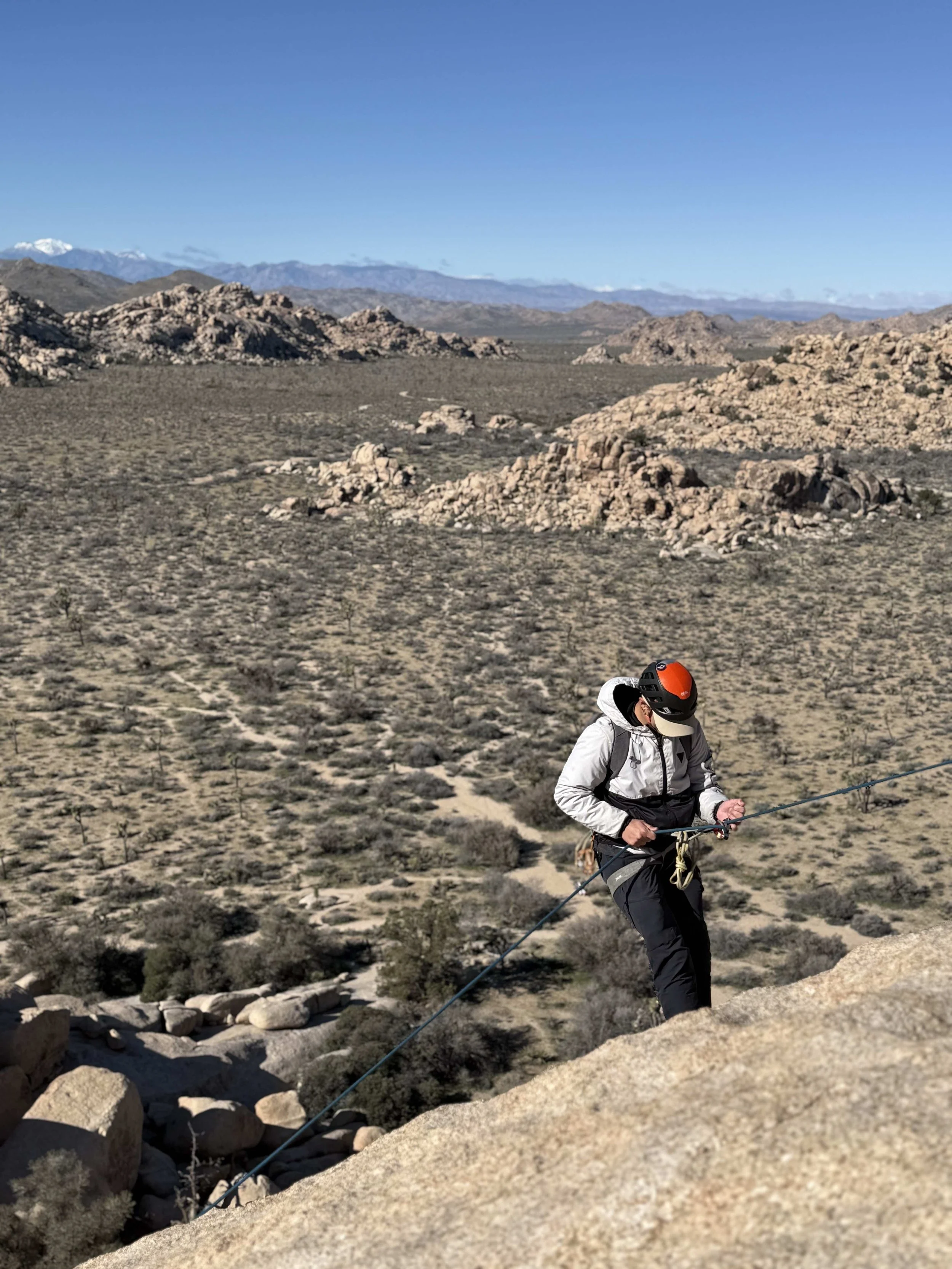
New to climbing? Our beginner's guide to rock climbing at Joshua Tree covers everything you need to know before your first day on the rock. A guided climbing session with Summit is one of the best ways to get started, regardless of the season.
Hiking at Joshua Tree in Winter
Every trail in the park remains open in winter, and the hiking conditions are genuinely excellent. Cooler temperatures make longer routes comfortable — hikes that feel grinding in summer heat become enjoyable in 55°F air. The lower visitor numbers mean you'll often have iconic trails to yourself.
Best winter hikes
- Ryan Mountain — the best summit view in the park, manageable 3-mile round trip, and spectacular low-angle winter light from the top
- Lost Palms Oasis — a longer 7-mile round trip that rewards you with the largest palm oasis in the park; genuinely pleasant in cool weather
- Barker Dam — short and easy, the water levels can actually be higher in winter after seasonal rains
- Boy Scout Trail — one of the most rewarding longer hikes in the park; the 8-mile traverse through the Wonderland of Rocks is magical in winter light
- Fortynine Palms Oasis — a moderate 3-mile round trip with a dramatic canyon approach and lush palm grove at the end
For a full breakdown of difficulty levels and what to expect on each trail, see our complete guide to the best hikes in Joshua Tree. If you'd rather go beyond the trail entirely, our guided Adventure Routes take you off-trail through hidden corridors, caves, and summit viewpoints that hiking trails don't reach.
Sunset comes as early as 4:45pm in December. Start longer hikes by 9am at the latest to ensure you're back before dark. Carry a headlamp regardless — conditions can change, and getting caught on a trail after dark in winter is genuinely cold.
Stargazing at Joshua Tree in Winter
Winter nights at Joshua Tree are some of the best stargazing conditions you'll find anywhere in the continental US. The nights are long — up to 14 hours of darkness in December — the skies are typically clear, and the cold air reduces the atmospheric haze that muddies summer viewing.
Joshua Tree is an International Dark Sky Park with very low light pollution. In winter, you're looking at Orion, the Pleiades, and the winter Milky Way arc. The Geminid meteor shower peaks in mid-December and is typically the most spectacular meteor shower of the year — up to 120 meteors per hour at peak.
Best spots: Skull Rock pullout, Keys View (drive-up accessible), Cholla Cactus Garden, and any of the campgrounds far from the park entrances. Bring a warm sleeping bag or blanket — temperatures drop fast after sunset, and sitting still for stargazing in 30°F wind chill is only enjoyable if you're properly layered.
For a full guide to stargazing in the park, see our complete Joshua Tree stargazing guide.
Guided Adventures at Joshua Tree in Winter
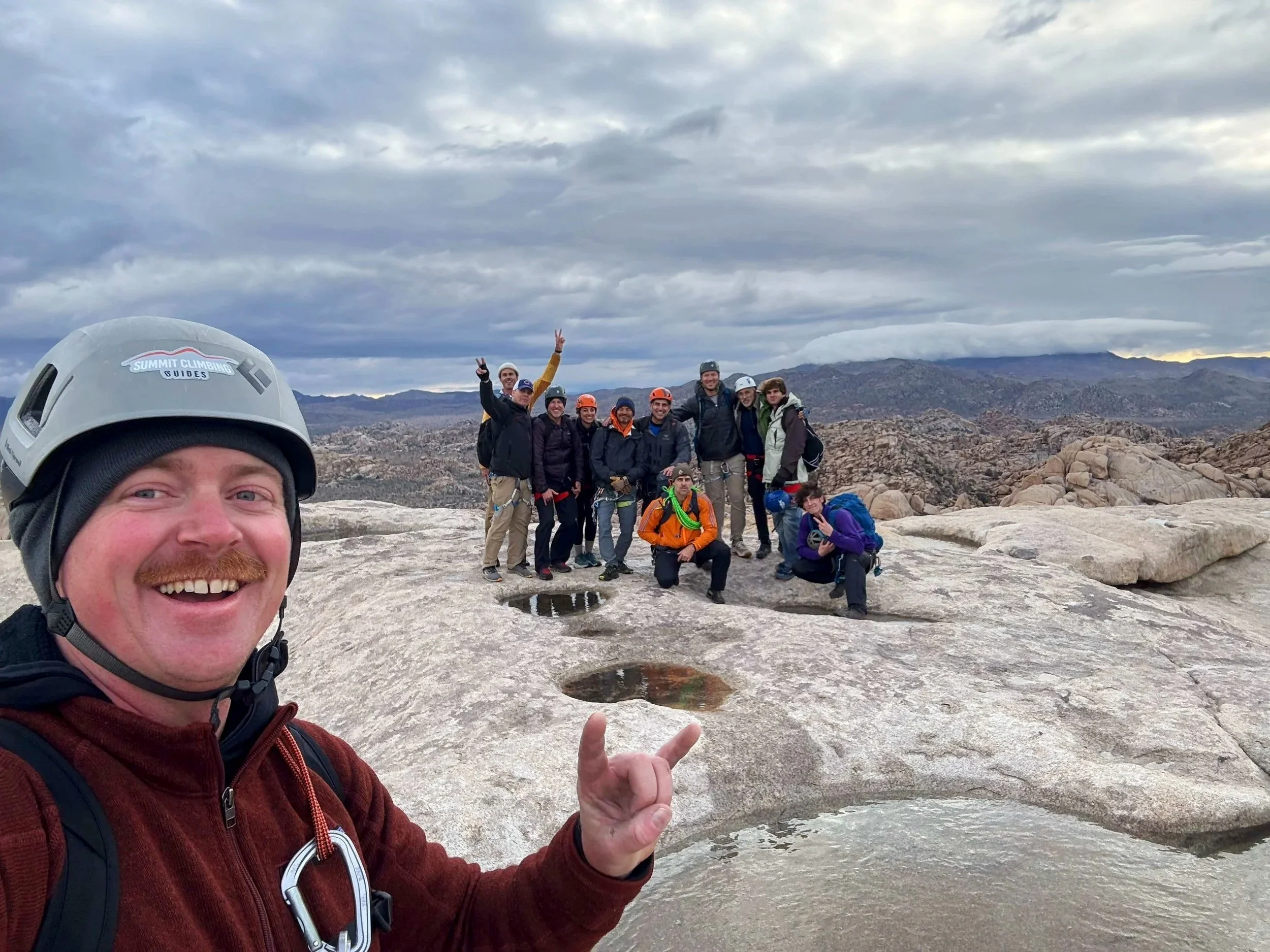
Summit Climbing Guides operates year-round, and winter is one of our favorite seasons to guide. The cooler temperatures make physical activity — scrambling, rappelling, cave exploring — more comfortable and the park significantly less crowded. You're likely to have sections of the backcountry entirely to yourself.


Adventure Routes
Our guided backcountry loop routes through Joshua Tree's granite formations are particularly rewarding in winter. The cool air makes the physical scrambling and cave navigation more comfortable, and the low winter light creates dramatic contrast across the rock surfaces. Learn more about Adventure Routes.
Caves & Corridors
Joshua Tree's talus cave systems stay cool year-round, making them a consistently comfortable experience in any season. In winter, the contrast between the cold exterior and the sheltered corridor interiors is particularly striking. We offer several distinct cave routes at varying difficulty levels — Hall of Horrors is the most popular introduction, while Chasm of Doom and The Mad Hatter push into more committing terrain. See all Caves & Corridors routes.
Wonderland of Rocks
The Wonderland of Rocks Adventure is one of our most immersive guided experiences — a deep loop through Joshua Tree's most dramatic granite landscape. Winter light through the Wonderland is genuinely spectacular, and the lower crowds mean you'll have the backcountry largely to yourselves.
Rappelling
Winter conditions are excellent for rappelling — cooler temperatures, less wind than spring, and a quieter park. Our guided rappelling adventures are available year-round and tailored to all experience levels.
Family & Kids Adventures
Winter is a great season for family rock climbing and kids' climbing adventures — mild daytime temps and no summer heat make it easier for younger guests to stay comfortable and engaged throughout the day.
All Summit adventures are guided by AMGA and PCGI certified guides, fully insured, and NPS-permitted to operate inside Joshua Tree National Park. Check availability and book here.
Camping at Joshua Tree in Winter
Winter camping at Joshua Tree is deeply rewarding for those who come prepared. The campgrounds are quiet, the stargazing is spectacular, and waking up to a cold, silent desert morning with a cup of coffee is genuinely one of the better experiences the park offers.
The catch: it gets cold. Genuinely cold. Temperatures below freezing are common, and wind can make it feel colder still. Come under-prepared and it won't be fun — come properly equipped and it'll be one of your better camping experiences.
What you need for winter camping
- Sleeping bag rated to at least 20°F (lower if you sleep cold)
- Insulated sleeping pad — ground contact pulls heat from your body faster than cold air
- Four-season or cold-weather tent, or a 3-season tent with a solid rain fly
- Multiple warm layers including a down jacket and hat for evenings
- Camp stove for hot food and drinks — critical for warmth and morale
Jumbo Rocks, Ryan Campground, and Skull Rock Campground are the most scenic winter camping options. Reservations are required from October through May at Recreation.gov — don't assume winter means walk-up availability on weekends.
What to Wear and Pack for Joshua Tree in Winter
The key is layering. Temperatures can swing 30–40°F between a cold morning start and a sunny midday, so the ability to add and remove layers throughout the day is more important than any single piece of gear.
Winter Visit Tips for Joshua Tree
- Start early — maximize your daylight window. A 7am start on a winter day gives you the best light and the most time before sunset
- Fill up on gas before entering — there's no gas inside the park, and the nearest stations are in Twentynine Palms, Joshua Tree village, or Yucca Valley
- Check weather before you go — windy days change the experience significantly. The NPS and Weather.gov both have Joshua Tree-specific forecasts
- Book campgrounds in advance — weekends book up even in winter. Recreation.gov lets you book up to 6 months ahead
- Download offline maps — cell service is nonexistent inside the park. Download the NPS Joshua Tree app or a mapping app offline before you arrive
- Holiday weeks are busier — Christmas week and New Year's see a significant uptick in visitors. If you're flexible, go the week before or after
- Let someone know your plans — remote backcountry in winter with no cell service and potential hypothermia risk means someone should know where you are
Frequently Asked Questions
Is Joshua Tree worth visiting in winter?
How cold does it get at Joshua Tree in winter?
Does it snow at Joshua Tree in winter?
Is rock climbing good at Joshua Tree in winter?
Are Joshua Tree hiking trails open in winter?
What should I wear hiking at Joshua Tree in winter?
Is camping at Joshua Tree cold in winter?
Are guided adventures available at Joshua Tree in winter?