Hall of Horrors Joshua Tree: The Complete 2026 Guide

The name sounds like a haunted house. The reality is one of the most joyful two hours you'll spend in Joshua Tree — scrambling through dramatic granite corridors, ducking through slot passages, and moving through terrain that makes you feel like you've found a secret the rest of the park doesn't know about.
The Hall of Horrors has been drawing climbers and adventurers to this corner of Joshua Tree National Park for decades. We've guided thousands of guests through it. Kids, first-timers, seasoned hikers who've never touched a rock face — they all come out the other side grinning. This is the guide that tells you what it actually is, what to expect, and how to make the most of it in 2026.
- What Is the Hall of Horrors?
- How to Find the Hall of Horrors
- What You'll Experience Inside
- Who Is It Right For?
- Difficulty: What the S1 Rating Actually Means
- What to Wear and Bring
- Best Time to Visit in 2026
- Guided vs. Solo: What's the Difference?
- Hall of Horrors vs. Other Joshua Tree Scrambles
- Frequently Asked Questions
- Book Your Hall of Horrors Adventure
What Is the Hall of Horrors?
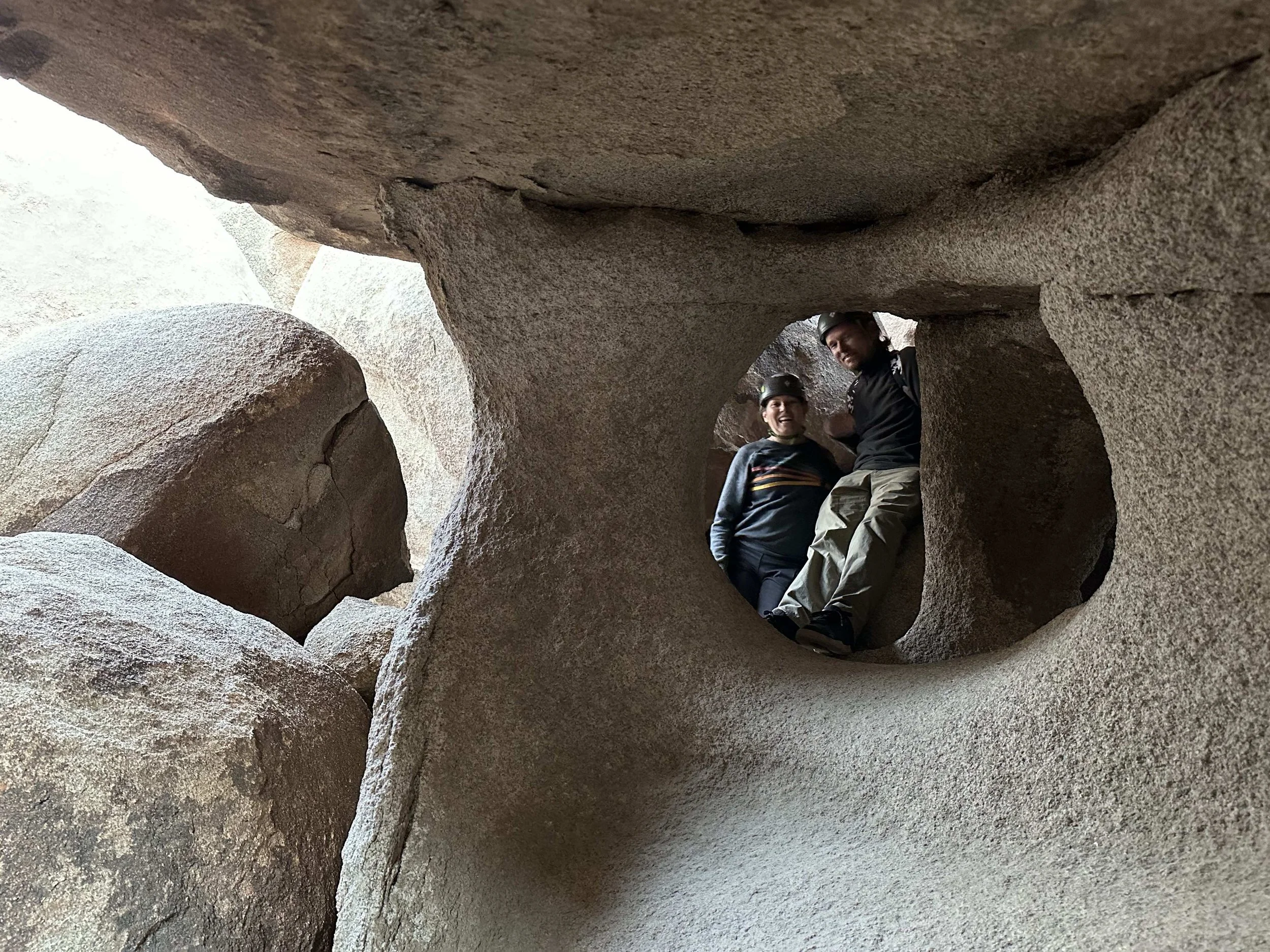
The Hall of Horrors is one of the most well-known scrambling and climbing areas in Joshua Tree National Park — a striking rock corridor formed by towering granite walls and massive boulders that create a natural hallway of climbable features, narrow passages, and dramatic open chambers.
Despite its name, there's nothing horrifying about it. The name comes from climbing culture — a nod to the exposed, committing moves that the area's technical routes demand from advanced climbers. For guided guests, the experience is something else entirely: accessible, playful, and genuinely unlike anything most people have done before.
What makes the Hall of Horrors distinct from a trail or a hike:
- Wide granite corridors and narrow slot passages that you navigate on foot and by scrambling
- Big, positive holds that let beginners move confidently through vertical terrain
- Stemming moves — bracing yourself between two walls — that feel like something out of an adventure movie
- Multiple route options at different difficulty levels within the same area
- A setting that photographs unlike anything else in the park
It's classified as an Adventure Route on our Summit Squeeze Scale — a rating system we built specifically for the non-technical, non-hiking experiences that Joshua Tree does better than anywhere. At S1, the Hall of Horrors is our most accessible rating: challenging enough to be memorable, never so committing that guests feel over their heads.

How to Find the Hall of Horrors
The Hall of Horrors is located in the central section of Joshua Tree National Park, in the Hidden Valley area near Barker Dam Road. It's one of the most recognizable rock formations in this part of the park — a dense cluster of stacked granite boulders rising above the desert floor, visible from the road once you know what you're looking at.
Unlike the Chasm of Doom, the Hall of Horrors doesn't require detective work to locate. There's a small parking area nearby and the formation is prominent enough that you can orient yourself visually once you're in the right area. That said, knowing which passages to enter, which routes match your group's ability, and how to navigate the interior without backtracking requires local knowledge — which is exactly what a guide provides.
The Hall of Horrors has multiple entry points and interior routes, and not all of them are equally safe or suitable for every group. Going in without a guide means making real-time route decisions without knowing what's on the other side. We've seen guests get turned around, commit to moves above their skill level, or miss the best parts of the area entirely. A guide solves all of this — and gets you to features that aren't obvious from any trail map.
What You'll Experience Inside
A guided Hall of Horrors adventure with Summit typically runs two to four hours, depending on your group's pace and how deep into the area you want to go. Here's what that looks like:
The Approach
The walk in from the parking area sets the scene — open desert, Joshua trees, and the granite formations growing larger as you get closer. Your guide will orient you to what you're about to enter and give you a brief on what to expect for your specific group's route.
The Corridor
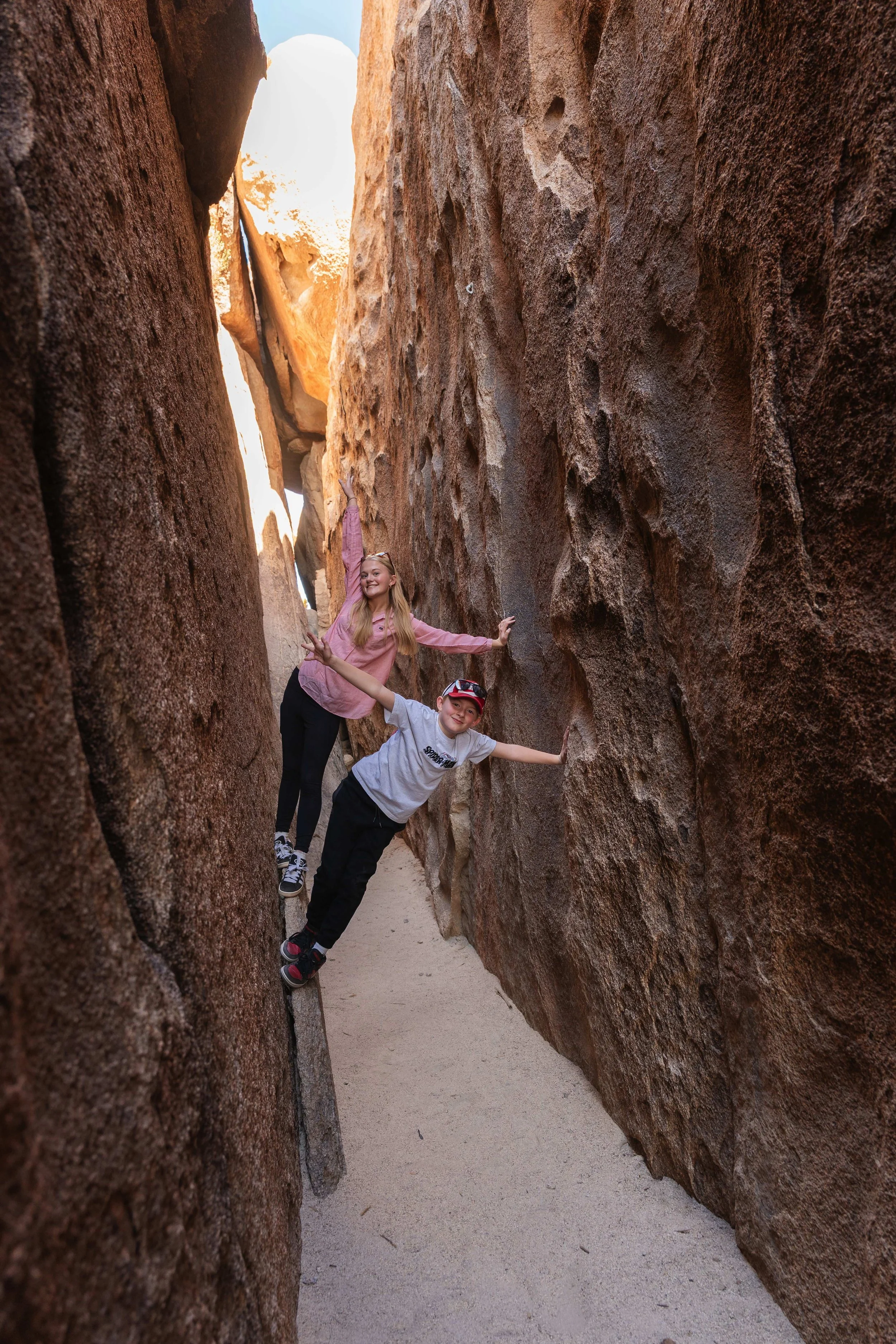
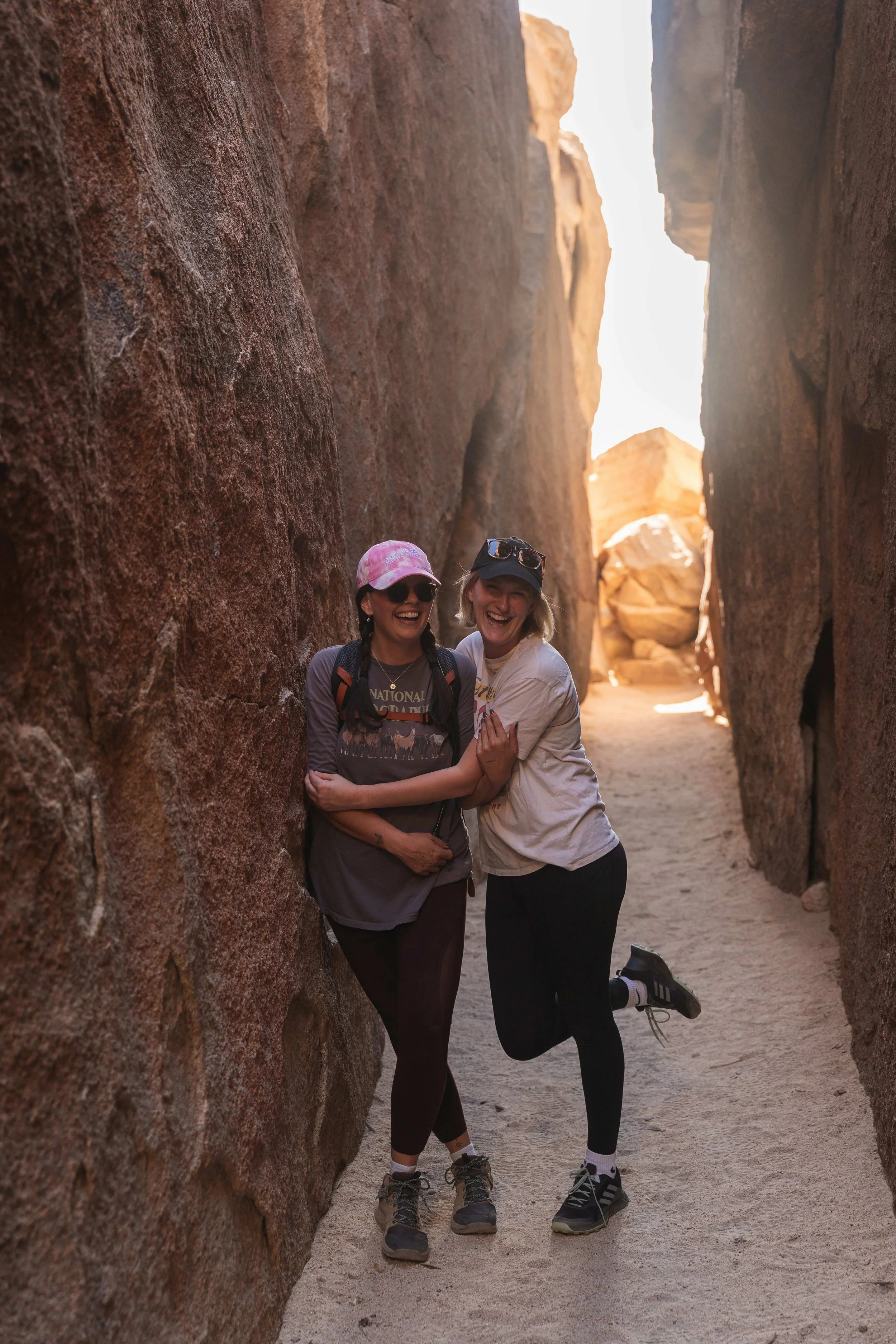
The main hall is exactly what it sounds like: a natural corridor formed by two granite walls close enough that you can touch both at the same time. You're moving through it by scrambling — using hands and feet together, finding natural holds, and reading the rock for the best path. Your guide coaches movement in real time, which is where most guests discover they're more capable than they thought.
Stemming and Slot Passages
Some sections of the Hall of Horrors require stemming — bracing your body between two walls and moving upward using opposing pressure. It's one of the fundamental techniques of climbing, and it's genuinely fun at the level the Hall of Horrors demands. Narrower passages appear throughout, some requiring sideways movement or creative problem-solving to get through. None of the guided sections require crawling or extreme squeezes — this is not the Chasm of Doom.
Summit Options
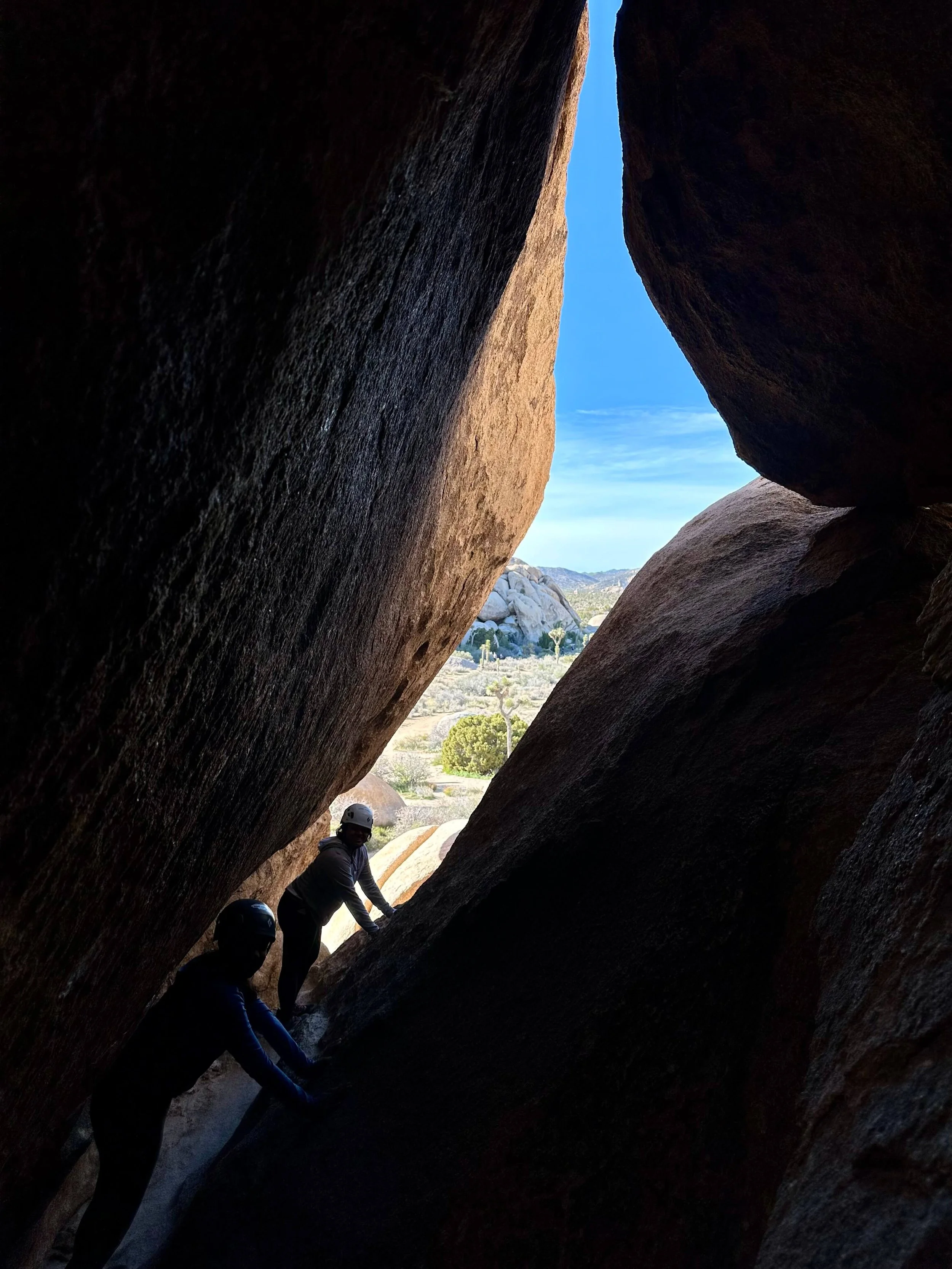
Depending on your group's ability and interest, your guide can take you to elevated vantage points within the formation that offer sweeping views over the Hidden Valley area. Getting there requires some genuine climbing movement — but with coaching and spotting from your guide, it's achievable for most guests.

Who Is the Hall of Horrors Right For?
The Hall of Horrors is one of the most versatile experiences we offer — which is why it's also one of our most booked. We've run this trip with guests who had never been off a paved trail, and with experienced hikers who wanted something with more movement and adventure. Both leave satisfied.
This experience is ideal if you're…
- A first-time adventurer or beginner
- Visiting Joshua Tree with kids (all ages welcome)
- An experienced hiker ready to add movement
- Curious about climbing but not ready for ropes
- Looking for something active and memorable
- A family wanting a shared adventure
Consider a different option if you…
- Want a flat, trail-based experience only
- Are uncomfortable with any heights or exposure
- Have significant mobility limitations
- Are looking for technical rock climbing with ropes
When families ask us what to do in Joshua Tree with kids, the Hall of Horrors is almost always our first recommendation. Children take to the movement instinctively — they're low to the ground, unafraid of tight passages, and genuinely delighted by the terrain in a way that adults sometimes have to work back toward. We've had kids as young as four move through sections of the Hall with total confidence.

Difficulty: What the S1 Rating Actually Means
The Hall of Horrors rates S1 on the Summit Squeeze Scale — our five-level system for rating Joshua Tree Adventure Routes. S1 is the entry level: the most accessible, the most forgiving, and the best starting point for guests who've never done anything like this before.
What S1 means in practice:
- Movement over and through granite terrain using hands and feet
- Some sections require stepping up or across gaps — nothing extreme
- Basic scrambling that most physically active adults and kids handle without difficulty
- No ropes, no harnesses, no technical climbing skills required
- Your guide spots you on the moves that need it and coaches footwork throughout
The Hall of Horrors is not a hike — you'll use your hands, you'll step across gaps, and there will be moments that require focus and commitment. But it's not rock climbing either. It lives in the space between the two: more engaging than a trail, more accessible than a roped climb. That's exactly why it works for such a wide range of guests.

What to Wear and Bring
The Hall of Horrors requires no technical gear — no harness, no helmet, no ropes. Here's what actually matters:
- Footwear: Closed-toe shoes with grip are essential. Trail runners or hiking boots work well. Sandals, flip-flops, and slick-soled sneakers are a hard no — you need rubber that sticks to granite.
- Clothing: Comfortable, athletic clothes you can move in. Long pants protect against granite abrasion on scrambling moves. Avoid anything too loose that could snag.
- Water: Bring enough for the full duration. The desert dehydrates faster than you expect, especially when you're moving actively. A liter per person minimum; more in warmer months.
- Sun protection: Sunscreen, a hat, and sunglasses. The approach to the Hall is exposed, and you'll be grateful for shade inside the corridors.
- Pack: A small daypack or waist pack works well. Leave the big hiking pack in the car — it can be awkward in tighter sections of the Hall.
On guided trips, your guide brings spotting equipment, first aid supplies, and emergency communication for the outing. If you want to add roped climbing to your Hall of Horrors adventure — we can do that too, and we bring all the technical gear. Just let us know when you book.
Best Time to Visit the Hall of Horrors in 2026
The Hall of Horrors is accessible year-round, and because of the granite corridors' natural shade, it holds up better in summer heat than most open-air activities in the park. Here's how the seasons break down:
Our favorite time to guide the Hall. Warm days, cool mornings, beautiful light in the late afternoon. Crowds thin noticeably after mid-October.
Peak season for Joshua Tree. Perfect temperatures, and the park is at its most beautiful — especially in a good wildflower year. Book early; spring fills up fast.
Cold but often crisp and clear. The corridors hold warmth surprisingly well and the park is at its quietest. Dress in layers and you'll be comfortable.
Hot, but the shaded corridors make the Hall one of the more manageable summer options. We schedule summer trips for early morning and are typically done before the heat peaks.
Guided vs. Solo: What's the Difference?
The Hall of Horrors is one of the more accessible spots in the park to visit independently — the formation is visible from the road, there's a parking area, and the main entry is reasonably obvious. So why go with a guide?
Route Knowledge
The Hall of Horrors has many more features than what's visible from the approach. A guide knows which passages go where, which routes are right for your group's ability level, and which sections to skip entirely. Without that knowledge, most independent visitors see a fraction of the area and spend part of their time backtracking or facing moves they're not ready for.
Movement Coaching
Scrambling isn't intuitive for most people the first time. A guide coaches footwork, body position, and route-reading in real time — skills that make the difference between feeling confident on the rock and feeling sketchy. Most guests notice a dramatic improvement in their movement by the end of a two-hour session, and that transfers directly to how enjoyable the experience is.
Safety and Spotting
The Hall of Horrors is S1 — accessible. But "accessible" doesn't mean risk-free. Your guide manages spotting on the moves that need it, carries first aid supplies, and makes route decisions that keep your group in terrain appropriate to their skill level. That's not something a trail map provides.
The Summit Extensions
On guided trips, we can take your group to elevated sections of the Hall of Horrors formation that require roped climbing to access safely. These summit options — with panoramic views over the park — are exclusively available on guided trips. If you want to go beyond what the scramble offers, this is how.
Hall of Horrors vs. Other Joshua Tree Scrambles
Joshua Tree has no shortage of places to scramble and explore. Here's how the Hall of Horrors sits in relation to our other signature experiences:
If you're trying to decide between experiences, the Hall of Horrors is almost always the right starting point. It's the clearest introduction to what Joshua Tree's granite terrain actually feels like to move through — and most guests who do it come back wanting more.
Frequently Asked Questions
What exactly is the Hall of Horrors?
Is it a hike or a climb?
Is the Hall of Horrors safe for kids?
How difficult is the Hall of Horrors?
Do I need any special gear?
Can I combine the Hall of Horrors with other activities?
How is the Hall of Horrors different from the Chasm of Doom?
Why go with a guide instead of exploring on my own?