Beginner's Guide to Rock Climbing in Joshua Tree (2026)
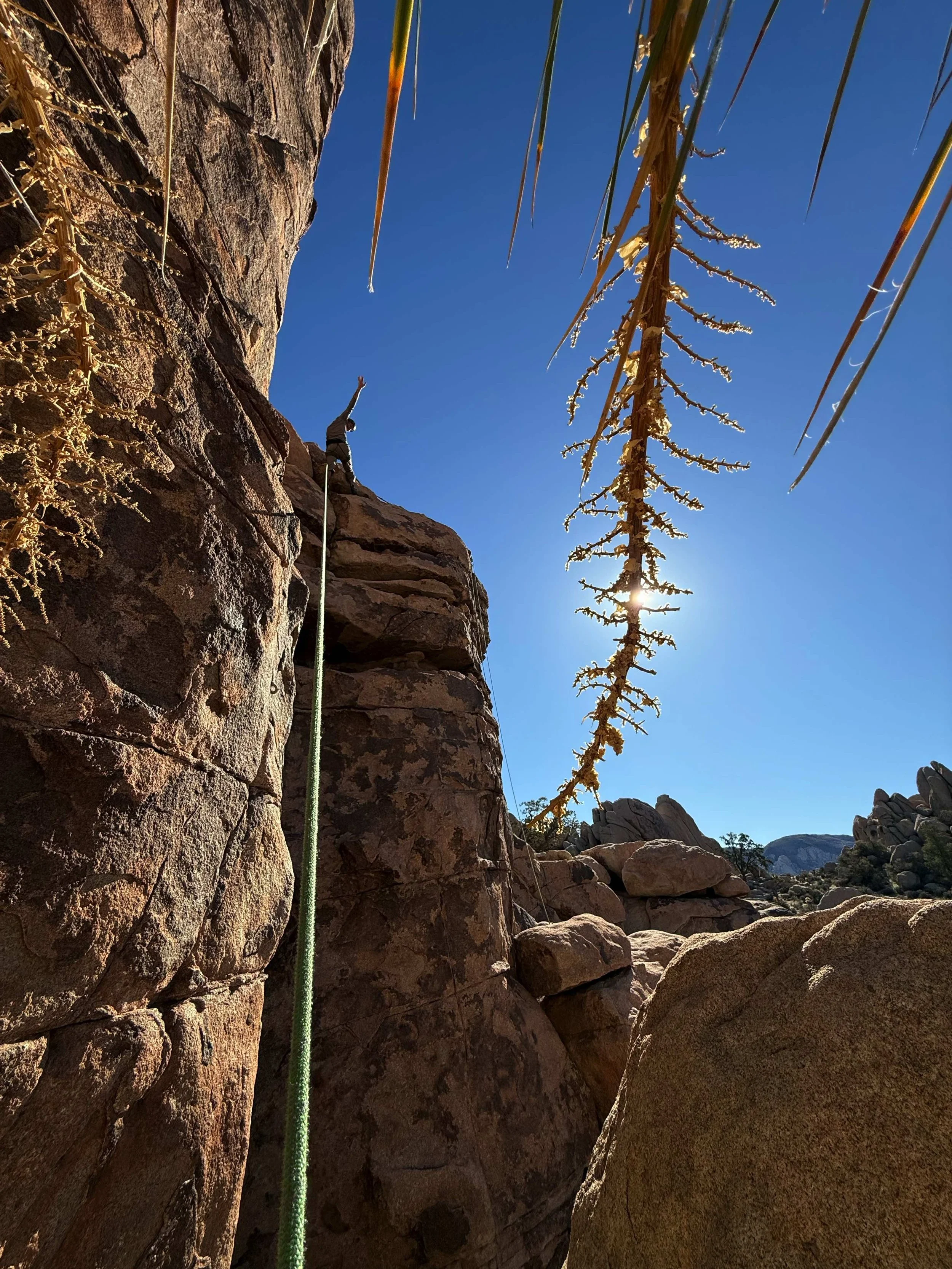
Most people who try rock climbing for the first time say the same thing on the way down: "I didn't think I could do that." That's not a coincidence. It's what Joshua Tree granite does to people — and it's what a good guide unlocks.
Joshua Tree is one of the best places on Earth to learn to climb. The rock is exceptional, the routes for beginners are genuinely good, and the learning curve is faster here than almost anywhere else. This guide covers everything you need to know before your first climb — what to expect, what to bring, how we run a beginner's day, and why this particular place is worth doing it.
Why Joshua Tree Is the Best Place to Learn to Climb
There are climbing gyms everywhere. There are crags within driving distance of most major cities. But Joshua Tree is different — and if you're going to try rock climbing for the first time, it's worth understanding why this particular place matters.
The Rock
Joshua Tree is famous for its monzogranite — an unusually coarse-textured granite that formed underground and eroded to the surface over millions of years. That texture is critical for beginners. The friction it provides is exceptional: you can trust your feet on holds that would feel invisible on other rock types. This makes the first day of climbing significantly less intimidating and significantly more successful. Beginners make moves here that would take weeks to develop the confidence for elsewhere.
The Routes
Joshua Tree has over 8,000 documented climbing routes. The beginner-appropriate routes aren't just adequate — they're genuinely excellent. They progress logically, the holds are well-positioned, and they lead to real summits with real views. You're not learning on a practice wall; you're climbing the same formations that have drawn climbers from around the world for seventy years.
The Setting
Learning something new is easier when the environment is doing its part. Joshua Tree's high desert landscape — the Joshua trees, the boulderscapes, the open sky — creates a focus that's hard to find indoors. Most guests tell us they felt more present on a climbing day than they have in years. That's the place working on you.
What a Beginner Climbing Day Actually Looks Like
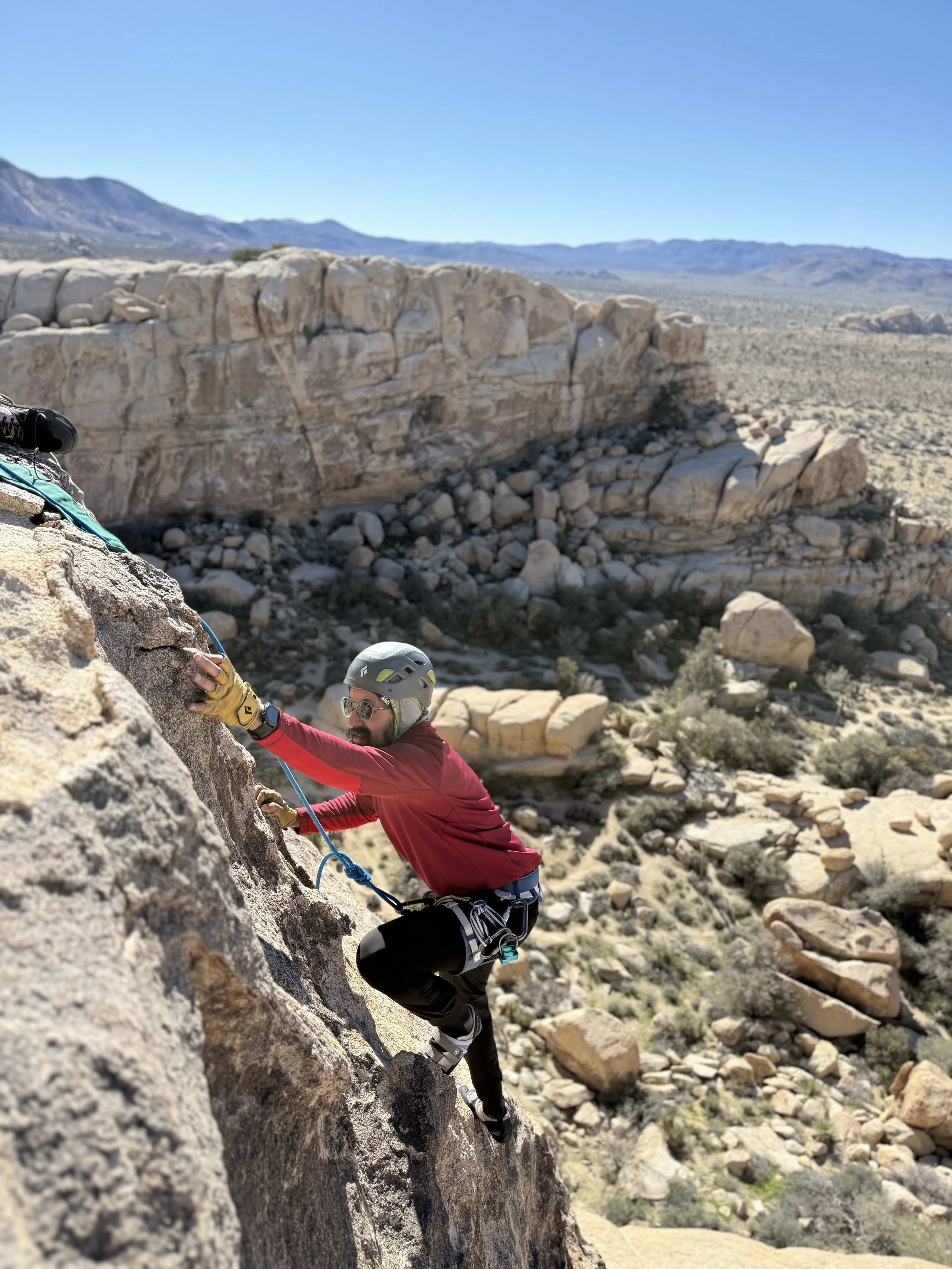
Most guests arrive at Joshua Tree with a combination of excitement and nerves. By the end of the day, the nerves are gone and the excitement is the only thing they're taking home. Here's how a guided beginner climbing day unfolds:
Meeting Your Guide
We meet at a designated spot near the park entrance and walk in together. Your guide will spend the first few minutes getting to know your group — who's been active, who's less comfortable with heights, what everyone is hoping to get out of the day. This isn't small talk; it's how your guide calibrates the day to the people in front of them.
Gear Setup
Your guide sets up the anchor at the top of the route before you touch the rock. You get fitted with a harness, introduced to the belay system, and given a quick orientation on how the safety system works. We don't rush this part — understanding what's holding you gives you confidence on the wall.
The First Climb
Your first route is chosen specifically for your group. It will be achievable and rewarding — real climbing movement, real rock, real height. Your guide coaches footwork and body position from the ground while managing the belay from above. Most people make the top on their first attempt. Those who don't usually get there on the second.
Building Through the Day
A half-day typically covers three to five routes. A full day goes deeper — more routes, more technical variety, sometimes a multi-pitch section where you're actually climbing up to a summit. The progression is guided by what your group is doing and enjoying. We're not running a fixed itinerary; we're responding to the people in front of us.
What You'll Learn
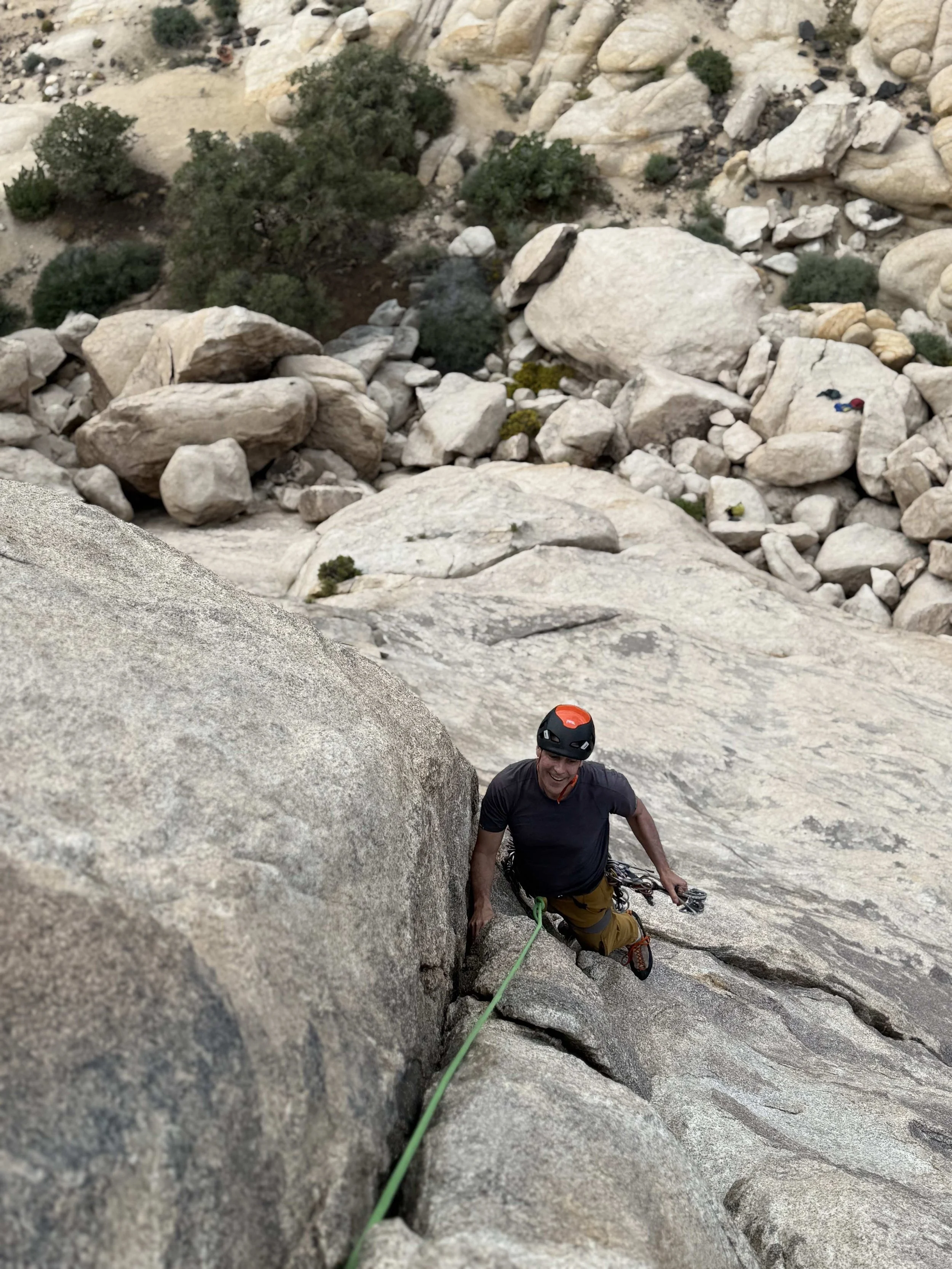
A guided day with Summit isn't a sightseeing tour in harnesses. You'll leave with a foundation of real climbing skills — things that carry forward if you want to keep climbing, and things that make every move more enjoyable right now.
Footwork
The single most important skill in climbing — and the one most beginners neglect because they're focused on their hands. Your guide will teach you to place your feet precisely, use the front edge of your shoe, and trust the friction that Joshua Tree granite provides. Good footwork makes hard moves easy.
Body Position
Climbing isn't about pulling with your arms — it's about positioning your hips and center of gravity over your feet. Your guide coaches this in real time while you're on the rock. Most climbers notice an immediate improvement when they get their hips where they need to be.
Reading the Rock
Before you touch a route, your guide will teach you to look at it — to identify holds, plan sequences, and anticipate rest positions. This "reading" skill is what separates climbers who flow through routes from those who feel stuck mid-wall.
Managing Fear at Height
Most beginners experience some exposure anxiety on their first climb. Your guide is trained to work with this — normalizing the feeling, teaching breathing techniques, and coaching you through the moments where the mental game is harder than the physical one. Most people discover their comfort zone is bigger than they thought.
The Safety System
You'll understand how the belay system works, how the anchor holds your weight, and why the rope is set up the way it is. This knowledge is foundational — and it means you're not just trusting something you don't understand. You know exactly what's keeping you safe.
Who Is a Beginner Climbing Day Right For?
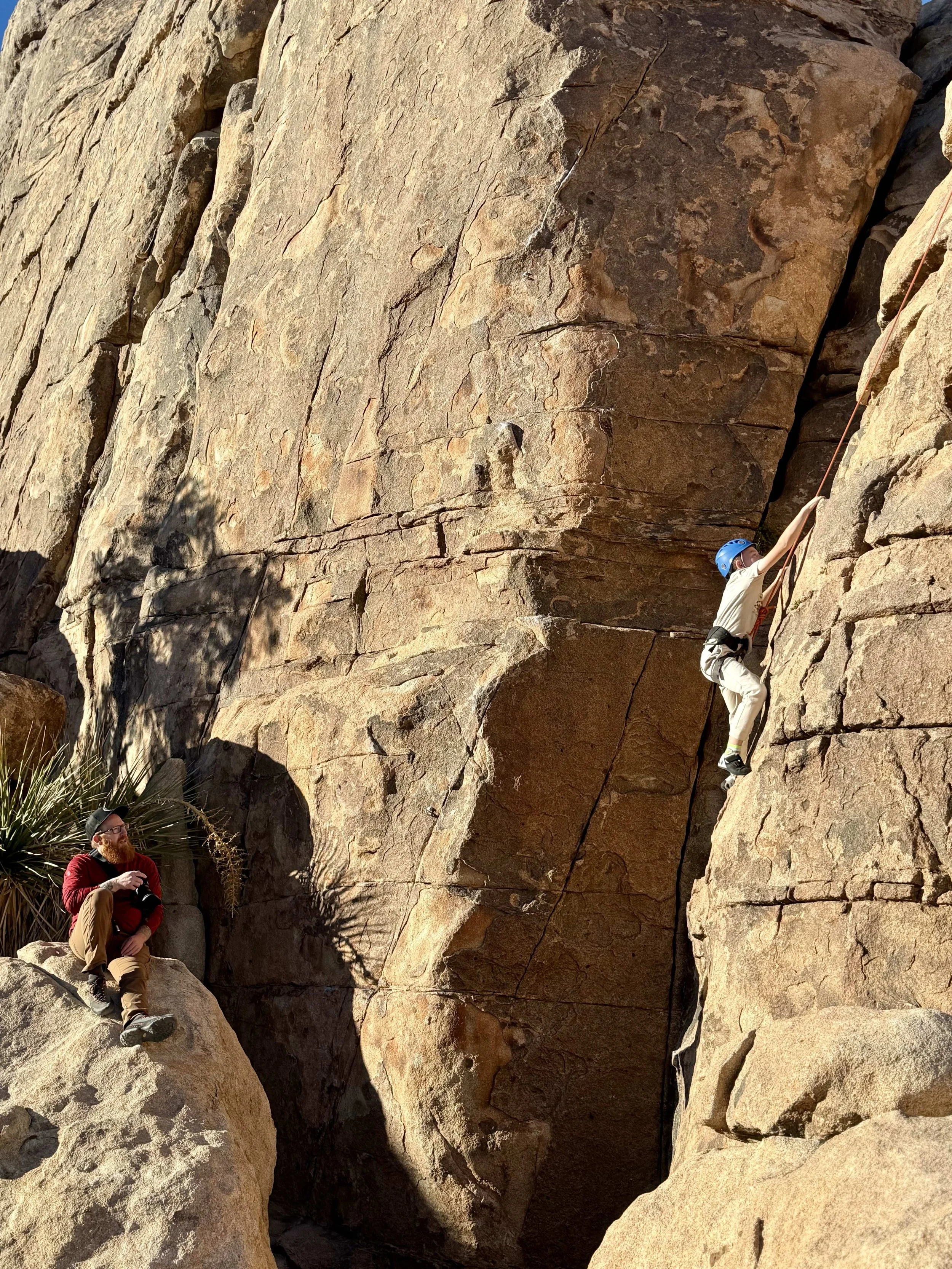
We've guided beginners ranging from eight years old to seventy-two. The range of guests who can have a successful first climbing day is wider than most people expect — because the guide, the route selection, and the rock all do a lot of the work.
This is ideal if you're…
- A complete beginner with zero experience
- Someone who's always wanted to try climbing
- Visiting Joshua Tree and want something memorable
- A family looking for a shared challenge
- Someone who's climbed in a gym and wants real rock
- Moderately fit and comfortable being active
Worth considering if you have…
- A significant fear of heights — talk to us first, it's workable
- Injuries that affect grip or lower body mobility
- Young children under 7 — ask us about minimum ages
- A preference for zero physical challenge
The most common concern we hear from guests before a first climb is "I'm not fit enough." The reality: climbing uses muscles you haven't specifically trained, but the routes we choose for beginners are achievable with normal physical activity in your background. You don't need to be an athlete. You need to be willing to try.

What to Wear and Bring
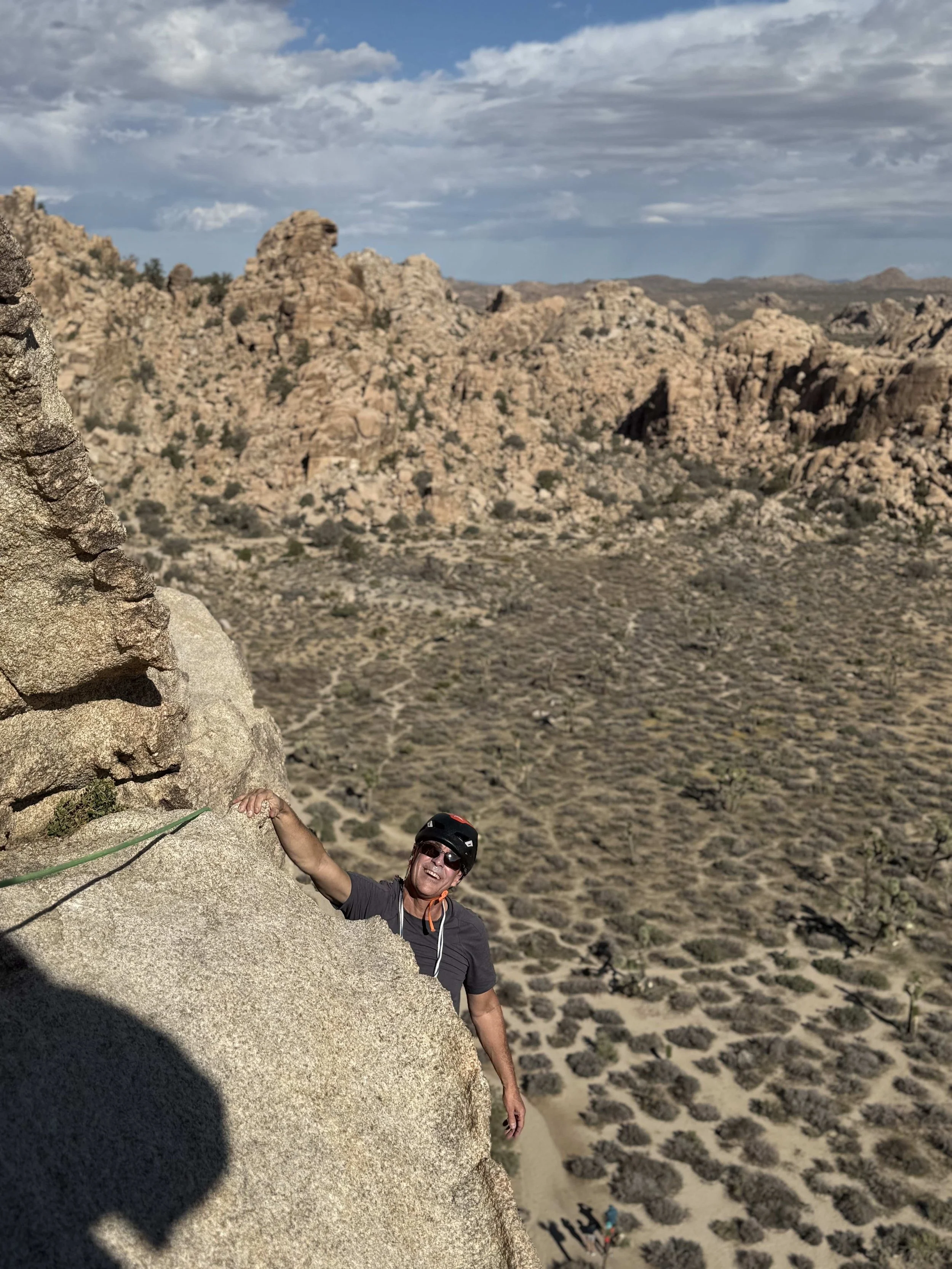
You don't need any climbing gear — we bring everything technical. Here's what actually matters on your end:
Footwear
Closed-toe athletic shoes — trail runners or sneakers work well. We provide climbing shoes. Sandals and flip-flops won't work for the approach.
Clothing
Athletic clothes you can move in. Long pants are helpful — granite is rough and knee contact happens. Avoid jeans and anything too restrictive.
Water
At least 2 liters per person. The desert dehydrates faster than you think, and climbing is active work. More in summer months.
Food & Snacks
A full-day trip needs real fuel. Bring lunch plus snacks. Energy-dense food works well — you'll be more active than a typical hike.
Sun Protection
Sunscreen, sunglasses, and a hat for the approach. Once you're at the wall there's often shade, but the walk in is exposed.
Small Pack
A daypack for water, snacks, and layers. Keep it light — you'll set it down at the base of routes, not carry it up.
Provided by Summit
Climbing harness, climbing shoes (rental), helmet, rope, all technical protection and anchor equipment, and first aid supplies.
Optional Add-On
Let us know if you want to add rappelling to your climbing day — we'll bring the additional equipment. Many guests do both and it makes for an exceptional full day.
Climbing shoes make a meaningful difference, even for beginners. We include rental climbing shoes with every guided trip — don't worry about sourcing your own. If you want to buy your own shoes eventually, ask your guide at the end of the day. They'll know exactly what to recommend for where you're headed.
How We Keep Beginners Safe
Safety in climbing isn't a feeling — it's a system. Here's how that system works on a Summit guided day:
Guide-Managed Anchors
Your guide sets up and manages every anchor. You're on a top-rope system, which means the rope runs from your harness up to an anchor at the top of the route and back down to your guide who manages tension from the ground. A fall — which most beginners don't experience — results in stopping within inches. The system is designed for it.
Route Selection
Your guide chooses every route your group climbs. Routes are selected based on ability, confidence level, and how the group is progressing through the day. You'll never be asked to do something your guide doesn't believe you can handle safely. If a route turns out to be too much mid-climb, your guide brings you down. No pressure, no issue.
Continuous Spotting and Communication
Your guide watches every move you make on the rock — reading your body position, anticipating where you might struggle, and coaching you through it in real time. The belay rope is always managed with full attention. Nothing in the system is passive.
Certifications and Experience
Summit guides hold current certifications from the American Mountain Guides Association (AMGA) or equivalent professional bodies, and carry first aid and wilderness medicine training. We also carry satellite communication devices on all guided trips — because cell service in the park is limited and we don't rely on it.
Best Time of Year for Beginner Climbers in 2026
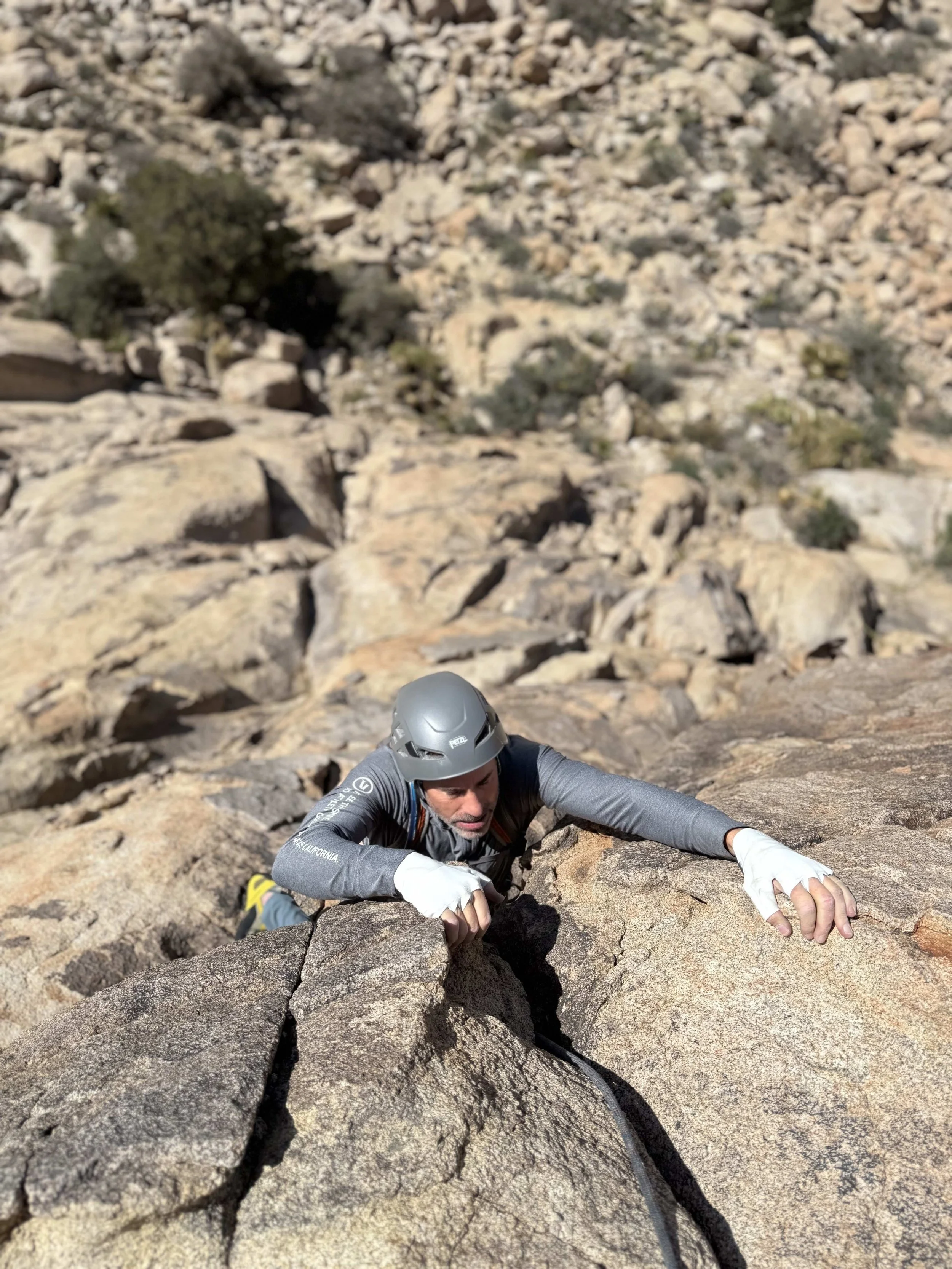
Joshua Tree is a year-round climbing destination, but conditions vary meaningfully by season. For beginners especially, temperature matters — cold fingers and blazing sun both affect how your day goes.
The best all-around time to climb. Warm days, cool mornings, low humidity. The rock is grippy and the conditions are forgiving. Book early — fall fills up fast.
Peak season. Near-perfect temperatures, beautiful light, and the park is at its most alive. Highly popular — book as far in advance as possible, especially for weekends.
Cold but often crystal-clear days with surprisingly good friction. Fewer crowds, peaceful atmosphere. Dress in layers and the conditions can be excellent.
Hot, but manageable with early start times. We begin at first light and wrap up before peak heat. Not ideal for beginners who aren't heat-acclimatized — spring or fall is a better first trip.
Why a Guide Changes Everything for Your First Climb
You can technically go bouldering in Joshua Tree without a guide. You can rent gear, watch videos, and give it a go. But for a first experience with actual roped climbing on real routes, the guide is the difference between a good day and a great one — and sometimes between a safe day and a dangerous one.
You Can't Self-Teach the Safety System
Setting up anchors on real rock, managing a dynamic belay, reading route safety — these are skills that take time and instruction to develop. A beginner who attempts to set this up independently is working with an incomplete picture of a system where the gaps matter. Your guide's job is to manage all of this so you can focus entirely on the climbing.
Route Knowledge Takes Years
Joshua Tree has over 8,000 routes. Knowing which ones are right for beginners, which ones have the best teaching features, and which ones lead to the best views and experiences — that's the accumulated knowledge of years guiding this specific park. An independent visitor with a guidebook gets the description. A guided guest gets the experience the description is trying to approximate.
Coaching Compresses the Learning Curve
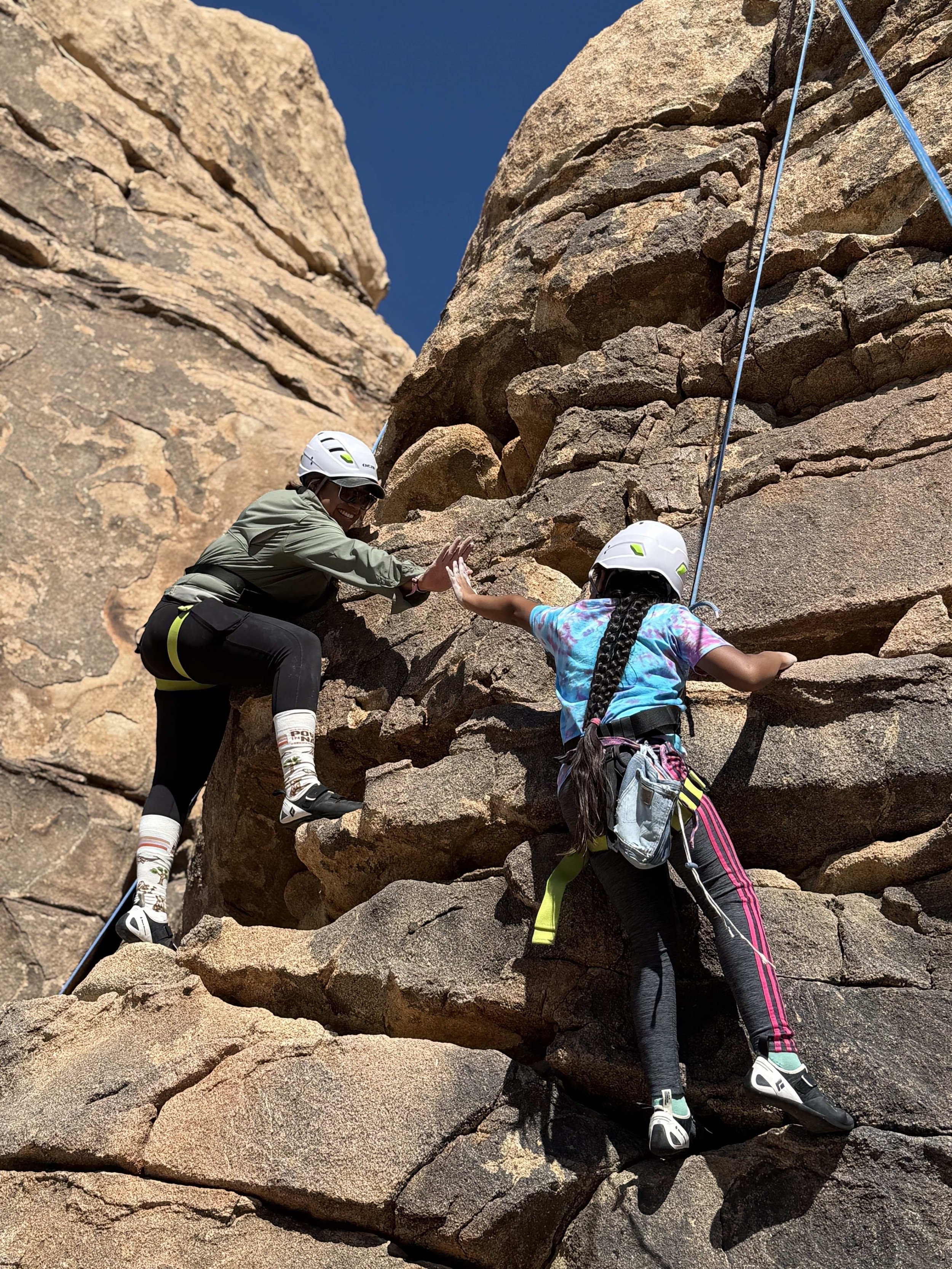
Most people who try climbing independently pick up habits that take months to unlearn. A guide sees your footwork, your hip position, your hand placement in real time and corrects it while you're on the rock. One coached day produces more real skill development than three or four unguided days — because you're getting feedback at the exact moment when it registers.
The Mental Game
First-time climbers almost always hit a moment where their brain and their body disagree about what's happening. An experienced guide knows this moment is coming and knows how to work with it — when to push, when to back off, how to reframe what you're experiencing. That skill alone is worth the day.

Frequently Asked Questions
Do I need any prior climbing experience?
How fit do I need to be?
What if I'm afraid of heights?
What shoes should I bring?
Is it safe for kids?
What's the difference between a half-day and full-day trip?
Can I add rappelling to my climbing day?
How many people can be in my group?
What if it rains?