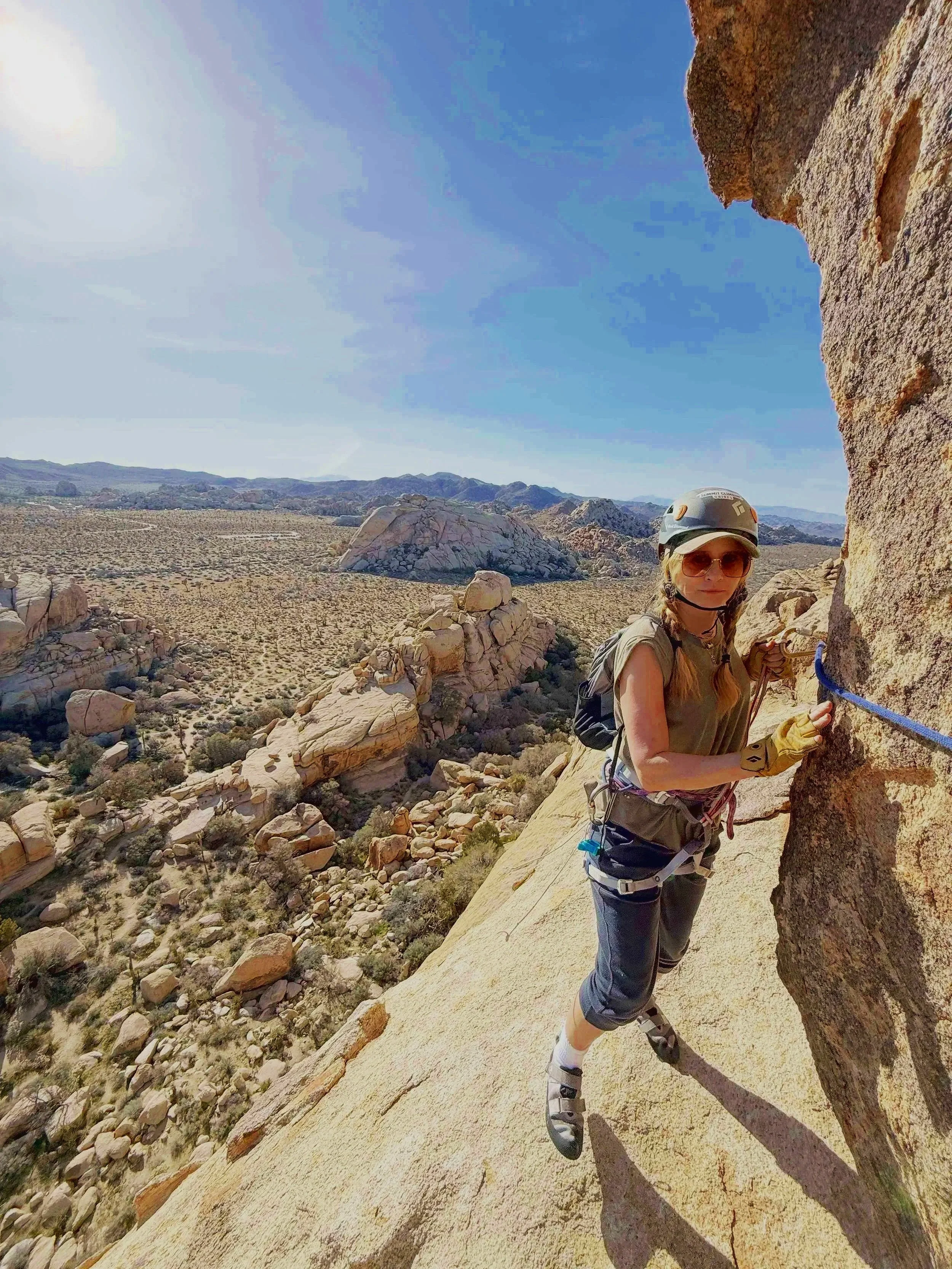
Things to Do in Joshua Tree National Park (2026 Guide)
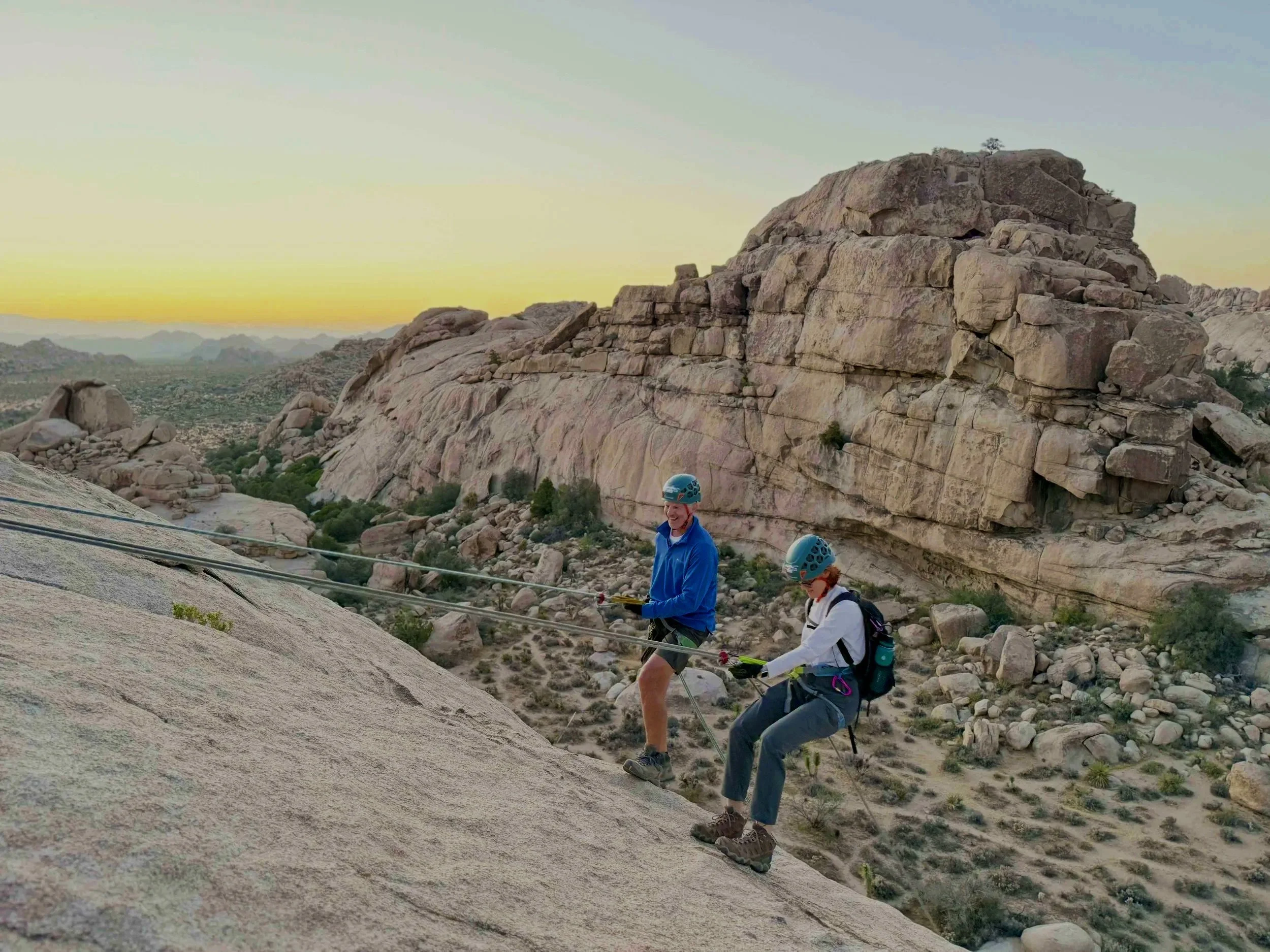
Joshua Tree is one of those places that looks like it was designed to make people feel small in the best possible way. Two deserts converge here — the Mojave and the Colorado — and the result is a landscape unlike anything else in California: surreal boulderscapes, ancient Joshua trees, granite formations that climbers have been obsessing over for seven decades, and skies that make stargazers weep.
Most visitors come with one or two things on their list. The ones who come back — and they always come back — learned that the park has layers that take multiple trips to fully appreciate. This is the guide we wish existed when we first started guiding here. It covers the best of everything: the adventures that require a guide, the ones you can do on your own, the hiking, the food, the stargazing, and the things that make Joshua Tree one of the most visited national parks in the country for good reason.
Rock Climbing
Joshua Tree is one of the most famous rock climbing destinations on Earth. That's not hyperbole — climbers from around the world make pilgrimages here specifically for the monzogranite, a coarse-textured rock that provides exceptional friction and hosts an extraordinary variety of routes. Over 8,000 documented climbs range from single-pitch beginner routes to multi-pitch trad adventures on towering formations.
What makes Joshua Tree particularly special for climbing is the diversity within a relatively small geographic footprint. The Hidden Valley area alone has hundreds of accessible routes. Legendary formations like Intersection Rock, the Blob, and Saddle Rocks have shaped generations of climbers. The rock style — crack climbing, face climbing, friction slab, stemming corners — covers every fundamental technique in the sport.
Guided Rock Climbing
For first-timers and visitors who want to actually experience the climbing rather than spectate, a guided trip is the way in. Your guide sets up all the safety systems, selects routes matched to your ability, and coaches movement in real time. Most people who try climbing for the first time with a guide leave saying they didn't think they could do it — which is exactly the point.
We run private guided rock climbing trips for all experience levels — complete beginners through experienced climbers looking to develop technique. Half-day and full-day options. All gear included.
See Rock Climbing Trips →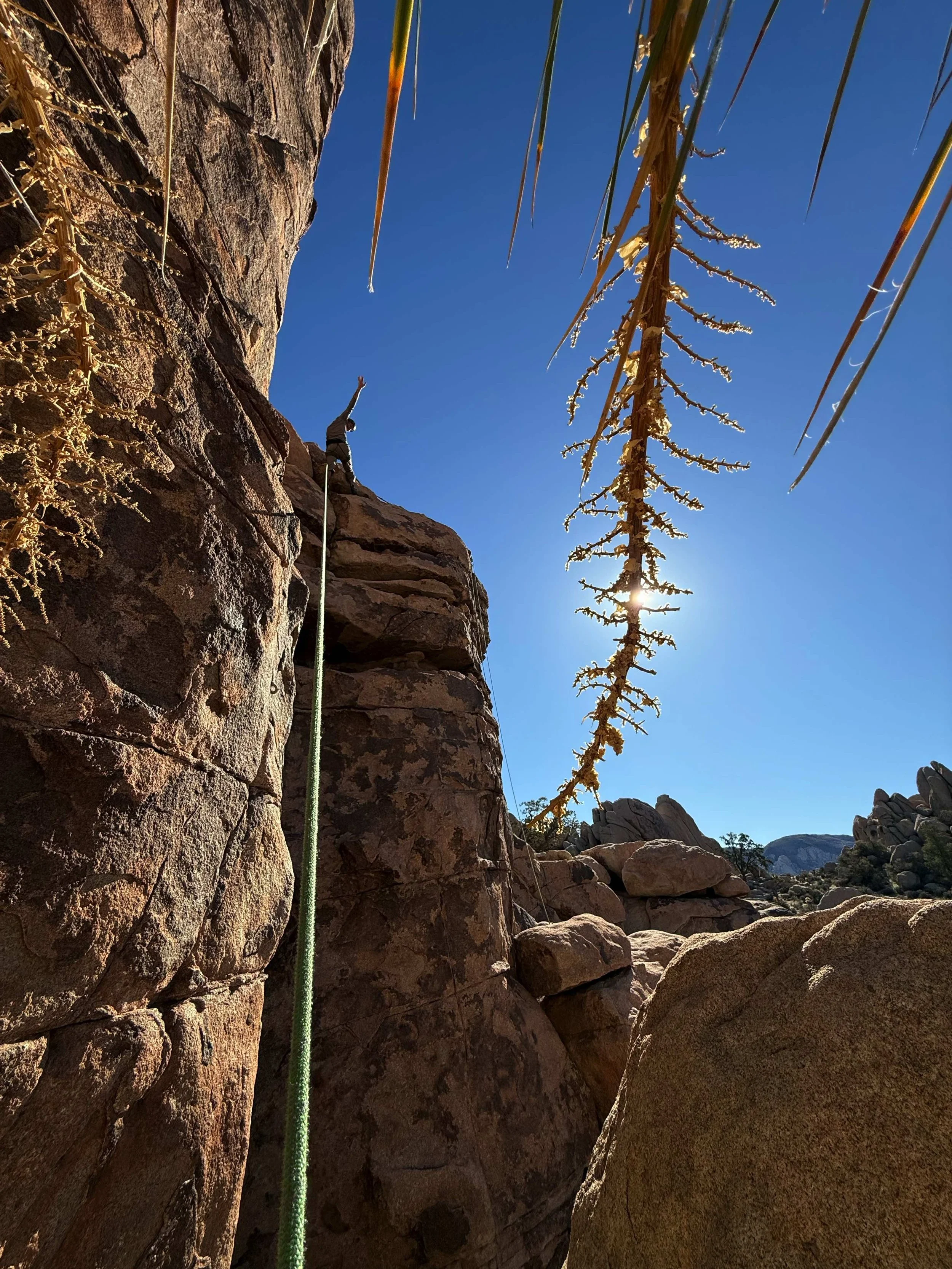
Rappelling
Rappelling — descending a rope face-first down a cliff — is one of those experiences that sounds intimidating until the moment your feet leave the wall and you realize the system has you completely. Joshua Tree's varied terrain makes it an exceptional rappelling destination: from moderate descents perfect for first-timers to dramatic multi-pitch rappels with thousand-foot views over the desert floor.
Unlike rock climbing, rappelling doesn't require you to go up — which makes it a great entry point for people who want vertical terrain without the climbing learning curve. The views you access on a rappel are some of the most dramatic perspectives in the park, and the experience of moving backward down a granite face with the Mojave Desert sprawling below is genuinely unforgettable.
Our guided rappelling trips cover everything from first descents for absolute beginners to multi-pitch backcountry rappels for the adventurous. No experience required. All gear provided.
See Rappelling Trips →
Adventure Scrambling: Hall of Horrors, Chasm of Doom & More
Between hiking and technical climbing exists a category of Joshua Tree experience that most visitors never find on their own: the park's extraordinary network of slot canyons, granite corridors, cave systems, and boulder mazes that reward adventurous movement without requiring ropes or technical skills.
These Adventure Routes — as we call them — are where Joshua Tree gets genuinely weird and wonderful. You're ducking through passages that barely fit a shoulder, stemming between granite walls thirty feet off the ground, moving through darkness on hands and feet, and emerging into chambers that feel like the inside of something ancient. It's exploration in the truest sense.
Hall of Horrors
Despite the name, the Hall of Horrors is one of the most joyful two hours you can spend in the park. Dramatic granite corridors, stemming passages, big holds, and multiple route options make it the best introduction to what Joshua Tree's Adventure Routes offer. Rated S1 on our Summit Squeeze Scale — the most accessible level. Great for all ages and ability levels.
Chasm of Doom
Joshua Tree's most intense unofficial scramble. Near-total darkness, tight belly-crawl sections, and a notorious squeeze called The Coffin make this a genuinely committing adventure. Not suitable for everyone — but for the right guest, it's the most memorable two hours in the park.
The Mad Hatter, The Overlook, The Great Misdirect
A deeper network of multi-cave systems, elevated passages, and hidden corridors that most visitors never find. Summit has exclusive knowledge of these routes and guides small groups through them year-round.
Our Adventure Routes are private guided experiences — we take your group through Joshua Tree's most dramatic hidden terrain. Rated on the Summit Squeeze Scale (S1–S5) so you know exactly what you're getting into before you arrive.
Explore Adventure Routes →

Hiking
Joshua Tree has over 800 miles of maintained roads and trails covering dramatically different terrain across the park's two desert ecosystems. The Mojave Desert in the west — higher elevation, cooler, home to the Joshua trees themselves — transitions to the lower, hotter Colorado Desert in the east. Both are worth exploring on foot.
Best Day Hikes
- Barker Dam Loop (1.3 miles): The most accessible introduction to the park — a short loop to a historic dam with petroglyphs, wildlife, and classic Joshua Tree scenery. Good for all ages.
- Hidden Valley Loop (1 mile): A flat loop through a box canyon surrounded by dramatic rock formations. Excellent people-watching if climbers are active on the walls above.
- Ryan Mountain (3 miles): The best summit hike in the park. 1,000 feet of elevation gain rewards with 360-degree views from the top — the entire park visible on a clear day.
- Skull Rock Nature Trail (1.7 miles): Easy loop featuring Skull Rock — one of the park's most photographed formations — plus good bouldering terrain and nature interpretive signs.
- Fortynine Palms Oasis (3 miles): The most dramatic contrast in the park — a hard climb over exposed ridgeline leads to a hidden fan palm oasis that feels genuinely impossible in the middle of the desert.
- Lost Horse Mine (4 miles): Historical trail to a well-preserved gold mine with excellent views of the Coachella Valley from the ridge.
Hiking tip: Start early, especially spring through fall. Joshua Tree trails have little shade and temperatures can exceed 100°F by midday in summer. Carry more water than you think you need — the dry air disguises dehydration. The NPS recommends a minimum of one liter per hour of hiking in hot conditions.

Bouldering
Joshua Tree is one of the premier bouldering destinations in North America, with thousands of problems across every difficulty level. Bouldering — climbing low to the ground on individual boulders without ropes, with a crash pad for protection — is the most accessible form of climbing: no gear setup, no anchors, no belay partner required.
The Intersection Rock area, the Blob, and countless unnamed formations throughout the park offer bouldering from absolute beginner level up to some of the most technically demanding problems in California. The granite's coarse texture makes even slabs that look impossible feel secure underfoot — which is part of why experienced climbers love Joshua Tree for training.
What you need
Climbing shoes (rentable in Joshua Tree town), a crash pad (rentable locally), and a bouldering guidebook or app like Mountain Project.
Where to start
Intersection Rock, the Blob, and the Geology Tour Road pullouts are the most accessible bouldering areas for visitors new to the park.

Stargazing
Joshua Tree is an International Dark Sky Park — one of the best stargazing locations in the contiguous United States. The combination of high desert elevation, low humidity, and distance from major light pollution creates conditions where the Milky Way is visible to the naked eye on clear nights. If you've never seen a truly dark sky, Joshua Tree is one of the most accessible places in California to experience it.
The best stargazing spots are away from the park's main roads and campgrounds. Keys View — accessible by car — offers an elevated vantage point over the Coachella Valley with the sky above and city lights below. The Cholla Cactus Garden and Skull Rock area are also popular after dark. New moon nights offer the clearest skies; full moon nights are beautiful in their own way, with the rock formations casting dramatic shadows across the desert.
When to go
New moon periods offer the darkest skies. Fall and winter nights are clearest. Summer evenings work too — the park stays warm enough to be comfortable well after sunset.
Gear up
A red-light headlamp (preserves night vision), layers (desert temperatures drop fast after dark), a blanket or camp chair, and a sky map app like SkySafari or Stellarium.
Pro tip: Give your eyes at least 20 minutes to dark-adapt after leaving any artificial light. The difference between your first look at the sky and your sky after 20 minutes of darkness is significant — stars you couldn't see become visible, and the Milky Way develops texture and depth that takes your breath away.
Camping
Camping in Joshua Tree is one of the best ways to experience the park — the morning light on granite boulders, the silence before dawn, and those dark skies are all significantly better when you're waking up inside the park rather than driving in from town. The park has nine campgrounds ranging from developed sites with flush toilets to remote backcountry areas.
The Best Campgrounds
- Hidden Valley Campground: The most famous. Surrounded by boulder formations and within walking distance of the park's best climbing. Fills up fast on weekends — reserve months in advance for spring and fall.
- Jumbo Rocks: The largest campground in the park, set among massive boulder piles that kids and adults alike can't stop exploring. Great for families.
- Ryan Campground: Smaller and quieter, with good access to Ryan Mountain and Horse Heaven trailheads. Horse corrals on-site for equestrian visitors.
- Cottonwood Campground: On the south end of the park in the Colorado Desert — warmer, more remote, excellent for spring wildflower season. Often has availability when the western campgrounds are full.
- Belle & White Tank: First-come, first-served only — an excellent option if you arrive early, and usually quieter than the reservation campgrounds.
Reservation reality: Hidden Valley and Jumbo Rocks reservations for spring weekends sell out within minutes of becoming available on recreation.gov — exactly five months in advance. If you want peak-season camping at a top campground, set a calendar reminder and be ready to book the moment your five-month window opens.
Wildlife & Nature
Joshua Tree isn't just rock and sky — it's a remarkably rich ecosystem that rewards visitors who slow down enough to pay attention. The park sits at the intersection of two desert biomes, and the resulting diversity of plant and animal life is surprising to first-time visitors expecting a barren landscape.
Joshua Trees
The park's namesake tree is actually a member of the agave family — not a true tree at all. Joshua trees grow slowly (about half an inch per year) and can live for hundreds of years. Their distinctive silhouettes — arms reaching in every direction — are most dramatic in the western half of the park in the Mojave Desert zone. The trees bloom with white flowers in spring, typically February through April depending on winter rainfall.
Wildlife to Watch For
- Desert tortoises: The park's most beloved resident. Slow-moving and surprisingly well-camouflaged — look carefully on rocky desert flats, especially in spring and fall mornings.
- Roadrunners: Yes, they're real. Faster than you'd think and often spotted near campgrounds and trailheads.
- Bighorn sheep: Most commonly spotted on rocky ridgelines in the Wonderland of Rocks area. Dawn and dusk are best.
- Coyotes: Heard more often than seen, especially at dawn and dusk. Don't feed them — they're well-established park residents and do better without human food.
- Raptors: Red-tailed hawks and golden eagles are common overhead, especially near rock formations where they nest.
Wildflowers
In good rain years, Joshua Tree's wildflower season (typically February through April) is spectacular — the desert floor covered in brittlebush, desert marigold, phacelia, and Mojave aster. The NPS posts wildflower updates on their website and social media as bloom conditions develop each spring.

Joshua Tree Town, Twentynine Palms & Where to Eat
The town of Joshua Tree — just west of the park's north entrance — has evolved from a roadside gas stop into a legitimate destination in its own right. Galleries, vintage shops, coffee spots, and restaurants have built up around the climbing and art community that's called the area home for decades. It's worth a few hours of exploration alongside your park days.
Food & Coffee
- Natural Sisters Café: The community anchor. Excellent smoothies, bowls, and breakfast — the go-to post-climb fuel stop for guides and guests alike. Outdoor seating with desert views.
- Joshua Tree Saloon: Cold beer, live music on weekends, and the most reliably social spot in town after a long day on the rock. Cash-friendly, unpretentious, exactly what it needs to be.
- Country Kitchen (Twentynine Palms): Classic American diner about 20 minutes east. Massive portions, excellent coffee, and prices that feel like a different era. Worth the drive after a hard day.
- Crossroads Café: Convenient location near the main park entrance, solid breakfast menu, and coffee that's strong enough to get you through a full climbing day.
Shopping & Art
Joshua Tree's art scene is legitimate — the combination of extreme landscape, affordable real estate (historically), and a tight-knit creative community has produced galleries and studios worth seeking out. The main drag of Park Boulevard in Joshua Tree town has a concentration of shops selling everything from vintage clothing to locally made ceramics to climbing gear.
Plan ahead: Many restaurants in Joshua Tree town keep limited hours and some are cash-only. Cell service is spotty inside the park. Download offline maps (Google Maps and Maps.me both work) and check restaurant hours before you leave your hotel.
Best Time to Visit Joshua Tree in 2026
Joshua Tree is a year-round destination with meaningful seasonal variation. Here's the honest breakdown:
Fall — Oct / Nov
The best all-around time. Warm days, cool mornings, low humidity. Crowds thin significantly after mid-October. The best light of the year for photography.
Spring — Mar / May
Peak season with good reason. Perfect temperatures, potential wildflowers, and the park at its most alive. Book everything months in advance — weekends fill completely.
Winter — Dec / Feb
Cold but often crystal clear. The park is at its quietest. Campgrounds and guided trips are available on shorter notice. Dress in layers and you'll have the place mostly to yourself.
Summer — Jun / Sep
Hot. Serious heat advisories are common. Hiking and climbing move to early morning hours only. Stargazing and sunset drives remain excellent. Not recommended for first-time visitors.
On crowds: Spring and fall weekends at Hidden Valley can feel genuinely crowded — hundreds of climbers at popular formations, campgrounds at capacity, parking lots full by 8am. Weekdays in spring and fall give you most of the experience with a fraction of the people. If your schedule is flexible, mid-week visits are significantly better.
Frequently Asked Questions
How many days do you need at Joshua Tree?
Is Joshua Tree worth visiting without being a climber?
What are the entrance fees for Joshua Tree?
Can you hike Joshua Tree without a guide?
Is Joshua Tree safe for kids?
Where should I stay near Joshua Tree?
Do I need a permit for Joshua Tree?
What's the best single day in Joshua Tree?