Keys Ranch Tour: Joshua Tree's Most Fascinating Hidden History

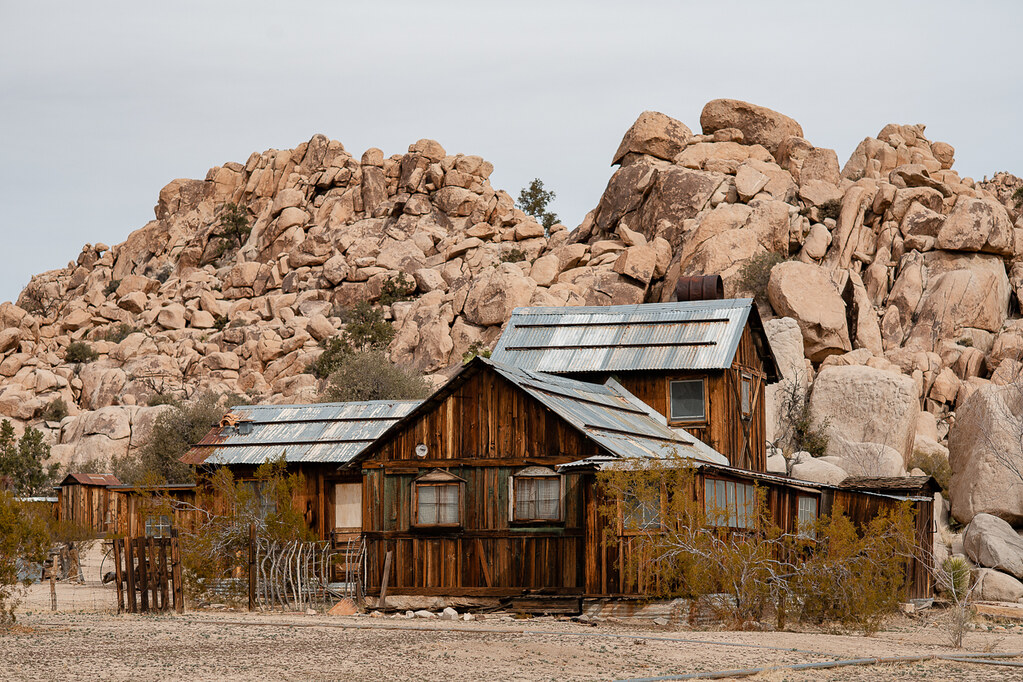
Most visitors to Joshua Tree come for the landscape — the rocks, the Joshua trees, the open sky. Few know that tucked away in a hidden valley in the park's center is one of the most compelling human stories in the entire American Southwest. Keys Ranch is a 150-acre homestead that tells the story of one extraordinary man, his family, and 52 years of desert life that reads more like fiction than history. A working ranch, a mine, a school, and a general store — all built by hand, against every reasonable expectation of success, in the middle of the Mojave desert.
The only way to see it is on a ranger-led tour, and that constraint is part of what makes it special. The site is otherwise closed to the public — you need a reservation, a ranger, and a small group. What you get in return is two hours of unhurried storytelling in a place that hasn't changed much since Bill Keys last walked through it in the 1960s. Rusted vehicles, hand-built structures, mining equipment, and the quiet weight of a life fully lived in a place no one else would have chosen.
If you're interested in history, the American West, or simply want to understand the human dimension of this landscape beyond trail signs and viewpoints, Keys Ranch is the single best experience Joshua Tree National Park has to offer.

What You'll See on the Tour
The tour covers about a dozen structures and artifact clusters across the 0.5-mile route. Your ranger will spend varying amounts of time at each stop depending on the group's interest — here are the highlights that most visitors remember longest.
The Main House
The centerpiece of the ranch is a small stone-and-mortar house that Bill Keys built for his family — modest by any standard, remarkable given where it stands. The interior has been preserved largely as it was when the family lived here, with period furnishings, kitchen equipment, and personal effects. The house served as home to Bill, his wife Frances, and their five children through the 1920s, 30s, and 40s.
The Schoolhouse
Bill Keys built a one-room schoolhouse to educate his children and the children of neighboring homesteaders — the nearest town school was too far to reach daily. The schoolhouse operated for years with Keys' wife Frances as the teacher. It's a detail that captures something essential about the Keys family: whatever the desert lacked, they built themselves.
The Store & Trading Post
At its height, the ranch served as a supply point for miners, prospectors, and travelers passing through the desert. Keys operated a general store and trading post where people could buy supplies, get water, and exchange equipment. The store's preserved interior gives a vivid picture of the ranch's commercial life and Keys' central role in the desert community of his era.
The Stamp Mill & Mine
The Desert Queen Mine was the economic engine of the ranch. Keys worked the mine for decades, processing ore through a stamp mill — equipment that crushed rock to extract gold. The mill machinery still stands, rusted but intact, along with ore carts, winches, and the physical evidence of years of backbreaking work. The mine yielded modestly, but enough to sustain the Keys family operation.
The Vehicle Collection
Scattered across the property are the rusted remains of Keys' vehicle fleet — trucks, a Willy's Jeep, and various pieces of heavy equipment that were used to work the mine and maintain the ranch. None ever left the property; when a vehicle stopped running, Keys cannibalized it for parts or simply left it where it sat. The collection is an accidental outdoor museum of early 20th-century desert mechanics.
The Water System
Water was the keys' most critical resource. Keys engineered an elaborate system of dams, pipes, and storage tanks to collect and distribute water across the property — a feat of practical desert engineering. The remnants of this system, including Keys Lake dam, are still visible on the tour and speak to the ingenuity required simply to survive in this landscape year-round.
Bill Keys: The Man Behind the Ranch
William Frederick Keys arrived in the California desert in the early 1900s as a miner, prospector, and general desert drifter — one of hundreds of men drawn west by the promise of mineral wealth. What made him different was that he stayed. In 1917 he homesteaded 150 acres in what is now the center of Joshua Tree National Park and spent the next 52 years building something out of nothing.
Keys was a skilled mechanic, miner, rancher, and improviser — a man who could fix any engine, route any water, and repair any structure with whatever materials the desert provided. He and his wife Frances raised five children here, sent them to the school he built, and outlasted virtually every other homesteader who tried to make a go of the high desert in that era.
"He was as much a part of this desert as the Joshua trees themselves — stubborn, self-reliant, and impossible to move once he'd put down roots."
But Keys' story is not without its shadows. In 1943 he shot and killed a neighboring rancher named Worth Bagley in a dispute over water rights and a road. Convicted of manslaughter, Keys served five years in San Quentin before being pardoned in 1956 — an outcome largely due to the advocacy of Erle Stanley Gardner, the creator of Perry Mason, who became convinced of Keys' innocence and mounted a public campaign on his behalf. Keys returned to his ranch, continued working, and lived there until his death in 1969 at age 89. The park acquired the property from his family in 1970.
The National Park Service designated Keys Ranch a National Historic Landmark in 1976. It remains one of the best-preserved examples of a California desert homestead in existence — a place where the physical evidence of an entire human life is still visible in the landscape.
Planning Your Visit
Keys Ranch tours are popular and strictly limited in size. The logistics require some advance planning — but the payoff is a genuinely uncrowded, unhurried experience that most visitors find far more meaningful than any self-guided trail in the park.
How to Book
Reservations are required and made exclusively through recreation.gov. Search for "Keys Ranch" under Joshua Tree National Park. Tours sell out weeks in advance during peak season (October–April) — book as early as possible.
Tour Schedule
Tours run Friday, Saturday, and Sunday from October through May. Tours typically depart at 10am. Check recreation.gov for current scheduling as times can vary by season.
Cost
A per-person tour fee applies in addition to the standard park entrance fee. Check recreation.gov for current pricing. The park entrance fee ($35/vehicle) is required separately.
Getting There
The Keys Ranch parking area is located off the dirt road near the Barker Dam trailhead in the Hidden Valley area. A short drive on an unpaved road leads to the staging area where tours depart. High-clearance vehicle recommended but not strictly required.
What to Bring
Water (at least 1 liter per person), sun protection, and comfortable walking shoes. The terrain is flat but exposed. There are no restroom facilities at the ranch — use facilities at the nearby Barker Dam trailhead before departure.
Accessibility
The tour route is relatively flat and unpaved. Visitors with mobility concerns should contact the park in advance — some accommodations may be possible. The site is not fully wheelchair accessible but rangers make reasonable efforts to include all visitors.
Tips for Getting the Most Out of the Tour
- Book the moment reservations open. October and November weekend tours sell out within hours of becoming available on recreation.gov. Set a reminder for the opening date (typically 2–6 months in advance) and book immediately.
- Arrive 10–15 minutes early. Tours depart on time. Latecomers may forfeit their reservation. The drive to the staging area on the dirt access road takes a few minutes from the main park road.
- Ask your ranger questions. Keys Ranch rangers are among the most knowledgeable in the park system. The tour is structured but not rigid — a good question can unlock stories that aren't on the standard script.
- Combine with Barker Dam. The Keys Ranch staging area is adjacent to the Barker Dam trailhead. Arrive early and do the Barker Dam loop (1.3 miles, easy) before your tour — it's one of the best birding spots in the park and a beautiful morning walk.
- Don't touch anything. The ranch is a preserved historic site. Touching structures, sitting on vehicles, or removing any object — even something that looks like trash — is a federal offense. Photograph freely, but keep your hands to yourself.
Go Deeper Into Joshua Tree
Keys Ranch shows you the human history. Summit's guided experiences show you the landscape the way locals know it — the caves, the climbs, and the places most visitors never find.
Book a Guided Experience