Joshua Tree Weekend Itinerary: The Perfect 2-Day Guide

Sunrise at Joshua Tree National Park — golden light over granite boulders and Joshua trees
Joshua Tree Travel Guide

Joshua Tree Weekend Itinerary: The Perfect 2-Day Guide
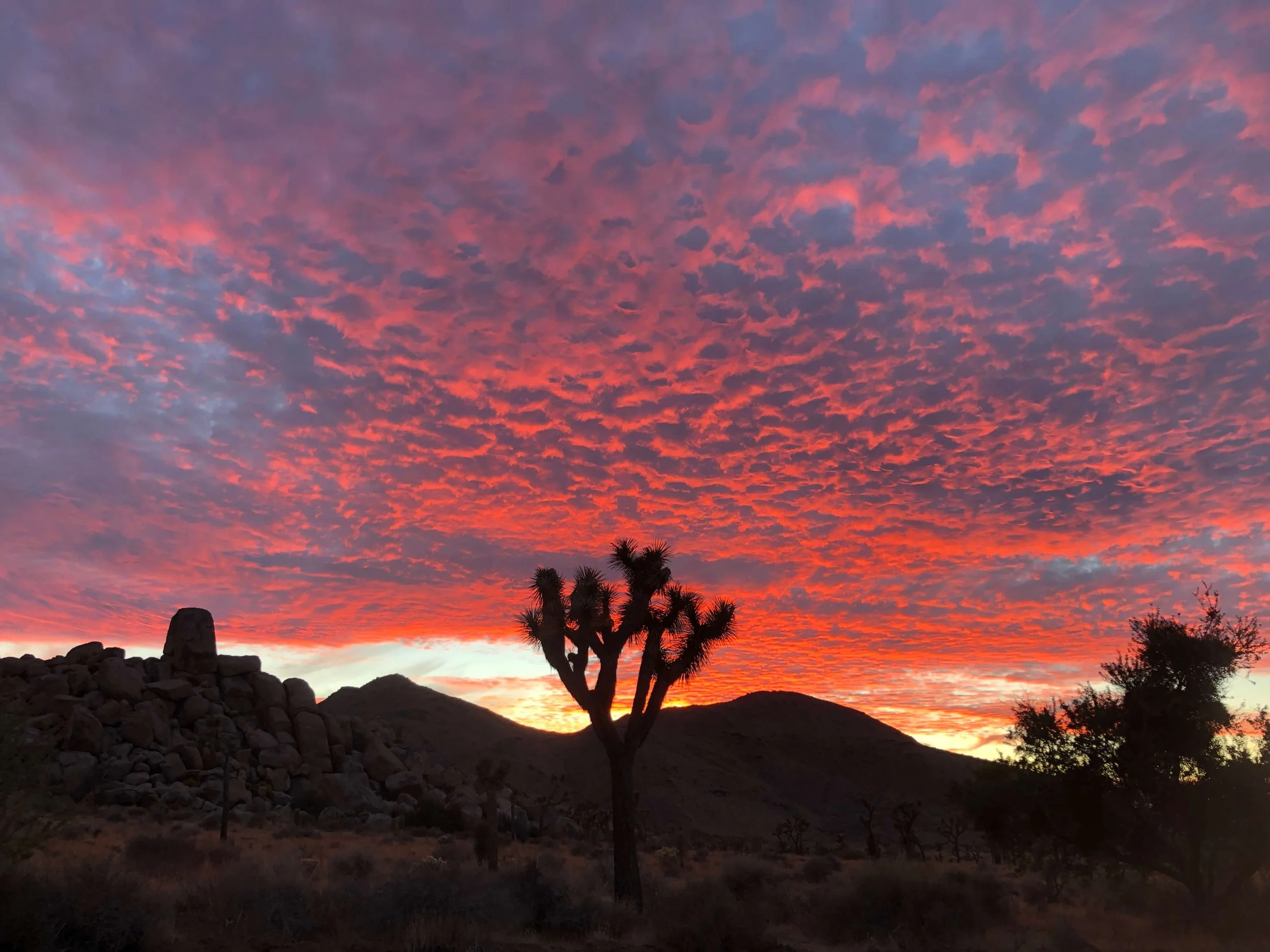
Everything you need to plan an unforgettable 48 hours in Joshua Tree — day by day, hour by hour.

2.5 hrs From LA
3 hrs From San Diego
Oct–Apr Best Season
$35 Entry Fee / Vehicle

How to Use This Guide

Two Days, Done Right

A lot of Joshua Tree itineraries tell you to hike every trail, stop at every overlook, and cover the entire park in 48 hours. That's not this guide. Two days is actually plenty of time to have a genuinely exceptional experience — if you spend it on the right things.

This itinerary is built around what makes Joshua Tree different from every other national park in the country: the scrambling, the boulders, the caves, the rappelling, and that singular light that hits the granite at golden hour. You can do the scenic drives on any visit. The experiences below are the ones people come back for.

Day 1 focuses on arriving, getting oriented, and doing a guided adventure in the afternoon — the single best way to access the park's most memorable terrain. Day 2 is for hiking, exploring on your own, and capping it with stargazing before the drive home. Adjust as needed for your travel style, but this order works.
Before You Go
Book your guided adventure before you leave home — not when you arrive. Popular dates (especially October and April weekends) fill weeks out. Your guided slot determines the rest of your Day 1 schedule, so lock that in first.
1 Day
Arrive, Explore, Rappel
Orientation · Guided Adventure · Sunset at Keys View
Morning
Drive In & Pick Up Supplies
If you're coming from LA or San Diego, aim to leave by 7am — you'll arrive mid-morning with time to breathe before the afternoon. Stop in the town of Joshua Tree (the village, not the park) on the way in. Country Kitchen and The Dez are both solid breakfast spots in the village, or grab something quick at Road Runner Grab N Go if you're keeping it moving. There are also small grocery and gear shops here — your last chance to fill up on water, snacks, and sunscreen before you're inside the park.
Fill up on gas in town — there are no services inside the park
Late AM
Hidden Valley & First Impressions
Enter through the west entrance (Joshua Tree village side) and head straight to Hidden Valley. It's a one-mile loop through a natural rock enclosure that gives you an immediate feel for the park — the scale of the boulders, the texture of the granite, the way the Joshua trees fill in every gap between them. This is also where you'll see some of the most famous rock climbing routes in the country, with climbers on the walls on any weekend morning from October through April.
Park at the Hidden Valley Campground day-use area — the main lot fills fast on weekends
Afternoon
Guided Adventure — Rappelling or Cave Tour
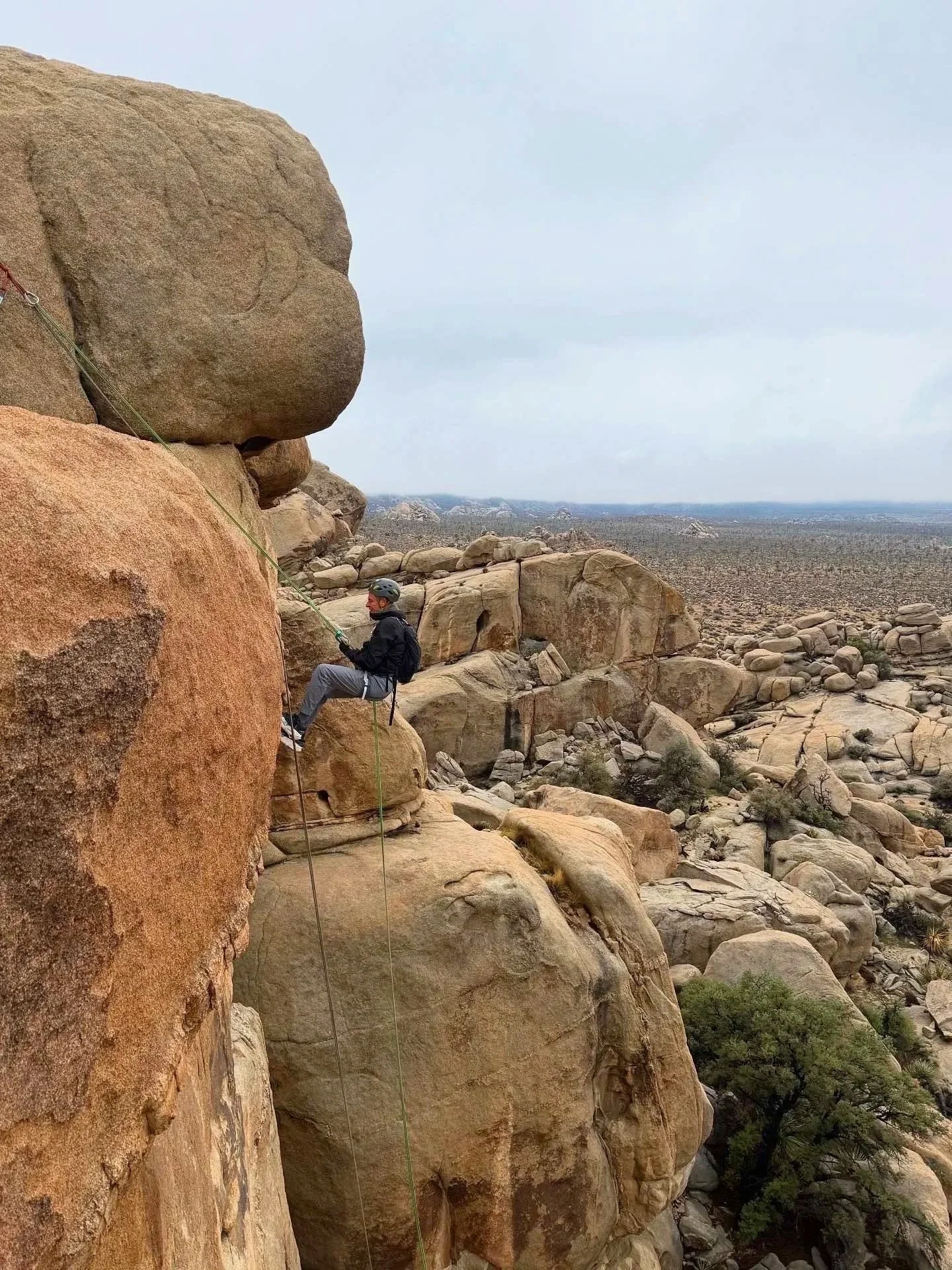
This is the centerpiece of your Day 1. A guided rappelling or cave adventure takes you into terrain you simply cannot access safely on your own — backcountry rappels off 40-foot faces, cave passages through boulder formations, scrambling routes with vertical exposure. No experience is necessary; Summit guides handle all the technical setup and safety systems. The half-day window (typically early afternoon) is perfect for first-time visitors who want to cover the park during the morning and then go deep in the afternoon.
Wear closed-toe shoes and bring at least 2 liters of water per person
Sunset
Keys View for Golden Hour
After your guided session, drive up to Keys View — a short paved walk from the parking lot leads you to one of the best panoramic views in the entire park. From 5,185 feet you can see the Coachella Valley, the Salton Sea, and on clear days, the mountains of Mexico. The late-afternoon light on the desert floor from this vantage point is extraordinary. Bring a layer — it gets noticeably cooler up here once the sun drops.
Arrive 30–45 minutes before sunset to claim a spot at the railing
Evening
Dinner & Settle In
Head back into Joshua Tree village for dinner. Crossroads Cafe is a reliable local spot, Sam's Indian offers something different if you want to mix it up, and the Joshua Tree Saloon is always a solid choice for a casual end-of-day meal. After dinner, if you're camping inside the park, head back to your site — light pollution is minimal and the stars will already be emerging. If you're staying in town, a short drive back into the park after dinner is worth it just for the night sky alone.
Campfire rules vary by site — check current fire restrictions before you go
Rappelling in Joshua Tree National Park with Summit Climbing Guides
A guided rappelling session is the single best way to experience Joshua Tree's terrain on your first visit
2 Day
Hike, Roam, Stargaze
Sunrise · Boulder Scrambling · Skull Rock · Night Sky
Sunrise
Early Rise — Worth Every Minute
Set your alarm. Sunrise at Joshua Tree is genuinely one of those experiences people describe differently after they've seen it — the granite turns amber before the sky is even fully light, and for about 20 minutes the park looks unlike anywhere else on earth. If you're camping, just step outside. If you're staying in town, a 30-minute drive in the dark is a small price to pay. The Cholla Cactus Garden and the rock formations near Skull Rock are particularly good sunrise spots on the park's eastern side.
Bring a headlamp and a warm layer — it's cold before the sun comes up
Morning
Skull Rock Nature Trail
The Skull Rock Loop is 1.7 miles and one of the most rewarding short hikes in the park. It winds through dense boulder formations with natural caves, rock basins carved by erosion, and the famous Skull Rock itself — a formation that actually looks like what it's named after, which is surprisingly rare for named rocks. Do this trail in the morning before the parking area fills up. From here you can also access the Jumbo Rocks area, which is worth wandering through even without a formal trail.
The parking lot is at mile marker 22 on Park Blvd — look for the signs for Skull Rock
Midday
Boulder Hopping & Lunch
The middle of the day is best spent in the shade or doing slower exploration between the rock formations. The granite boulder fields are extraordinary to scramble through at your own pace — no trail required, just pick a direction and see where the rocks take you. Bring your lunch and find a granite shelf with a view. This is the part of Joshua Tree that most visitors miss because they're following the paved road: the quiet interior of the boulder formations, where you can climb to a perch 30 feet off the ground and see nothing but desert in every direction.
Stay hydrated — desert air pulls moisture from your body even when it doesn't feel hot
Afternoon
Barker Dam Loop
The Barker Dam Trail is a 1.3-mile loop that's easy enough to do even on tired legs and offers some of the best boulder scenery in the park. The dam itself is a small historic water structure from the early 1900s, but the real draw is the terrain around it — the rocks here are some of the most photogenic in the entire park, and the light in the late afternoon turns everything gold. This is a reliable great hike at any time of year and a worthy final trail for your weekend.
The trailhead is a few miles north of Hidden Valley off Keys Road
Night
Stargazing Before You Leave
If your drive home allows for a late departure, do not skip this. Joshua Tree is an International Dark Sky Park, and on a clear night the Milky Way is visible to the naked eye — a band of light crossing the entire sky. You don't need any equipment. Just pull off the road into any designated pullout, turn off your headlights, give your eyes 15 minutes to adjust, and look up. Astronomy enthusiasts and casual visitors alike are consistently floored by it. This is the part of the trip that most people say they weren't expecting.
New moon nights are the best — check a moon phase calendar before you plan your weekend
Group boulder hopping through Joshua Tree National Park granite formations Exploring caves and granite corridors in Joshua Tree National Park

Where to Sleep

Accommodation Options

There's no lodging inside the park itself, but the surrounding towns — Joshua Tree village to the west and Twentynine Palms to the north — have good options at every budget and comfort level.

Best Experience
Camping Inside the Park

Nothing beats waking up inside Joshua Tree. The park has nine campgrounds, with Jumbo Rocks being one of the best for its boulder setting and central location. Reservations open 6 months in advance and fill immediately for October and spring weekends — book the day the reservation window opens on recreation.gov.

$25–$35 / Night
Most Popular
Vacation Rental in Joshua Tree Village

The town of Joshua Tree has a strong vacation rental market — everything from simple desert cabins to design-forward properties with outdoor soaking tubs and fire pits. Staying in town puts you 5–10 minutes from the west entrance and gives you access to the village restaurants and coffee shops in the morning.

$150–$400 / Night
Budget Pick
Twentynine Palms

The town of Twentynine Palms on the north side of the park has more traditional motel-style accommodations at lower price points. It's a 20-minute drive to the north entrance and puts you close to the eastern areas of the park covered on Day 2. Less trendy than Joshua Tree village, but perfectly functional as a base.

$80–$160 / Night

Where to Eat

Food & Drink Near the Park

The park itself has no food services — everything is in the surrounding towns. The dining scene is small and casual, which fits the vibe perfectly after a day of scrambling around in the desert.

Breakfast
Country Kitchen / The Dez / Road Runner
All three are in Joshua Tree village and great for a morning meal before heading into the park. Country Kitchen and The Dez are sit-down spots; Road Runner Grab N Go is perfect if you're keeping it moving.
Lunch
Crossroads Cafe
A solid mid-day stop in Joshua Tree village. Good food, relaxed atmosphere, and a good place to recharge between morning and afternoon activities.
Dinner
Sam's Indian / Crossroads Cafe
Sam's Indian is a local favorite for something a little different after a day in the desert. Crossroads Cafe is equally reliable for dinner if you want to keep it simple.
Drinks & Late Night
Joshua Tree Saloon
The Saloon is the go-to for drinks and a casual dinner after a big day. A Joshua Tree institution on the main strip — lively on weekend evenings and a great way to cap the trip.

What to Bring

Weekend Packing List

Joshua Tree's dry desert air and variable temperatures mean what you pack matters. This covers the essentials for a comfortable, well-prepared weekend.

Water & Food
  • 2–3 liters of water per person per day minimum
  • Electrolyte packets or sports drink mix
  • High-energy snacks: nuts, bars, fruit
  • Packed lunch for Day 2 in the park
  • Extra water in the car — always
Clothing
  • Lightweight layers — mornings and evenings get cold
  • Warm jacket for stargazing and sunrise
  • Closed-toe shoes — required for any guided activity
  • Moisture-wicking base layer
  • Hat with a brim for sun protection
Sun & Safety
  • SPF 50 sunscreen — reapply every 2 hours
  • Sunglasses with UV protection
  • Headlamp or flashlight for sunrise and stargazing
  • First-aid kit basics
  • Charged phone + portable battery
Camping Add-Ons
  • Sleeping bag rated to at least 30°F
  • Sleeping pad or air mattress
  • Warm hat and gloves for cold nights
  • Camp chairs and a small table
  • Check current fire restrictions before packing a camp stove

Common Questions

Weekend Itinerary FAQ

Is two days enough time for Joshua Tree?

Two days is genuinely enough to have an excellent experience — especially if you spend one of those afternoons on a guided adventure rather than just driving the park road. You won't see everything (you never do), but you'll see the best of it. If you have more time, a third day lets you explore the eastern side of the park at a slower pace and catches any trails you didn't get to on Day 2.

Do I need to be in shape or experienced for the guided activities?

No experience is required for any of Summit's guided adventures. The guides handle all technical systems — you show up, follow instructions, and trust the gear. Physical fitness helps but isn't a strict requirement. Most participants are regular people, not climbers or outdoor athletes. If someone in your group has mobility limitations or specific concerns, reach out to Summit directly before booking — they'll tell you honestly what the right fit is.

Where should I enter the park — west or north?

For this itinerary, enter through the west entrance (at Joshua Tree village) on Day 1 — it puts you closest to Hidden Valley and Keys View. On Day 2, you're moving toward the eastern side of the park (Skull Rock, Barker Dam), so you can loop through or enter from the north via Twentynine Palms if that's where you're staying. Either entrance is fine; the park road connects them across the middle.

What if I'm visiting in summer?

This itinerary works year-round with adjustments for summer: shift everything earlier, starting activities at sunrise instead of mid-morning, and plan to be back in shade or indoors by 10am. The cave and corridor adventure is actually an excellent summer activity — it stays naturally cool inside the boulder caves regardless of the surface temperature. Stargazing in summer is outstanding. Just take heat seriously and drink more water than you think you need. For a full seasonal breakdown, see our best time to visit Joshua Tree guide.

Can I get a camping reservation last-minute?

For spring and fall weekends, the honest answer is usually no — the good sites (Jumbo Rocks, Hidden Valley, Ryan) fill months in advance. You can sometimes get lucky with cancellations, which appear on recreation.gov and get snapped up quickly. Black Rock Campground sometimes has more availability. If you can't get an in-park site, a vacation rental in town works just as well for a two-day visit.

How much does the guided adventure cost?

Pricing depends on group size and which experience you book. Summit offers private guided adventures with rates that vary by party size and duration — smaller groups and longer sessions adjust accordingly. Check Summit's current booking page for the most up-to-date pricing. The guided experience is consistently the thing visitors say was the highlight of their trip, so it's worth building the budget around.

Is there cell service in Joshua Tree?

Spotty to none inside much of the park — don't count on it. Download offline maps (Google Maps and AllTrails both have this feature) before you leave and make sure you know where you're going before you lose signal. Save the NPS emergency number (760-367-5500) in your phone before you enter. This is part of what makes the park feel like a genuine escape, but plan accordingly.


Group on a summit ledge in Joshua Tree with Summit Climbing Guides

Make Day 1 Unforgettable

Private guided rappelling, cave adventures, and summit scrambles — the experience that turns a good Joshua Tree trip into a great one.

Book Your Adventure
Next
Next

Best Time to Visit Joshua Tree National Park (Month-by-Month Guide)