Best Time to Visit Joshua Tree National Park (Month-by-Month Guide)
The Short Answer
Joshua Tree Is a Different Desert Depending on When You Go
The same park that's 115°F in August can drop to 25°F on a January night. That range is wider than almost any national park in the country — which means when you go matters more here than almost anywhere else.
The good news: Joshua Tree is worth visiting in almost every month of the year. Even the seasons that aren't ideal for one type of activity are often excellent for another. Summer is brutal at midday but delivers some of the best stargazing in the country. Winter feels empty and cold but is quietly spectacular for photographers and hikers who want the park to themselves.
This guide breaks it all down — season by season, month by month, and activity by activity — so you can plan the trip that actually fits what you want to do.
Season by Season
What to Expect in Each Season
Here's the honest breakdown of what each season actually looks and feels like at Joshua Tree — not just the weather, but what the park experience is really like.
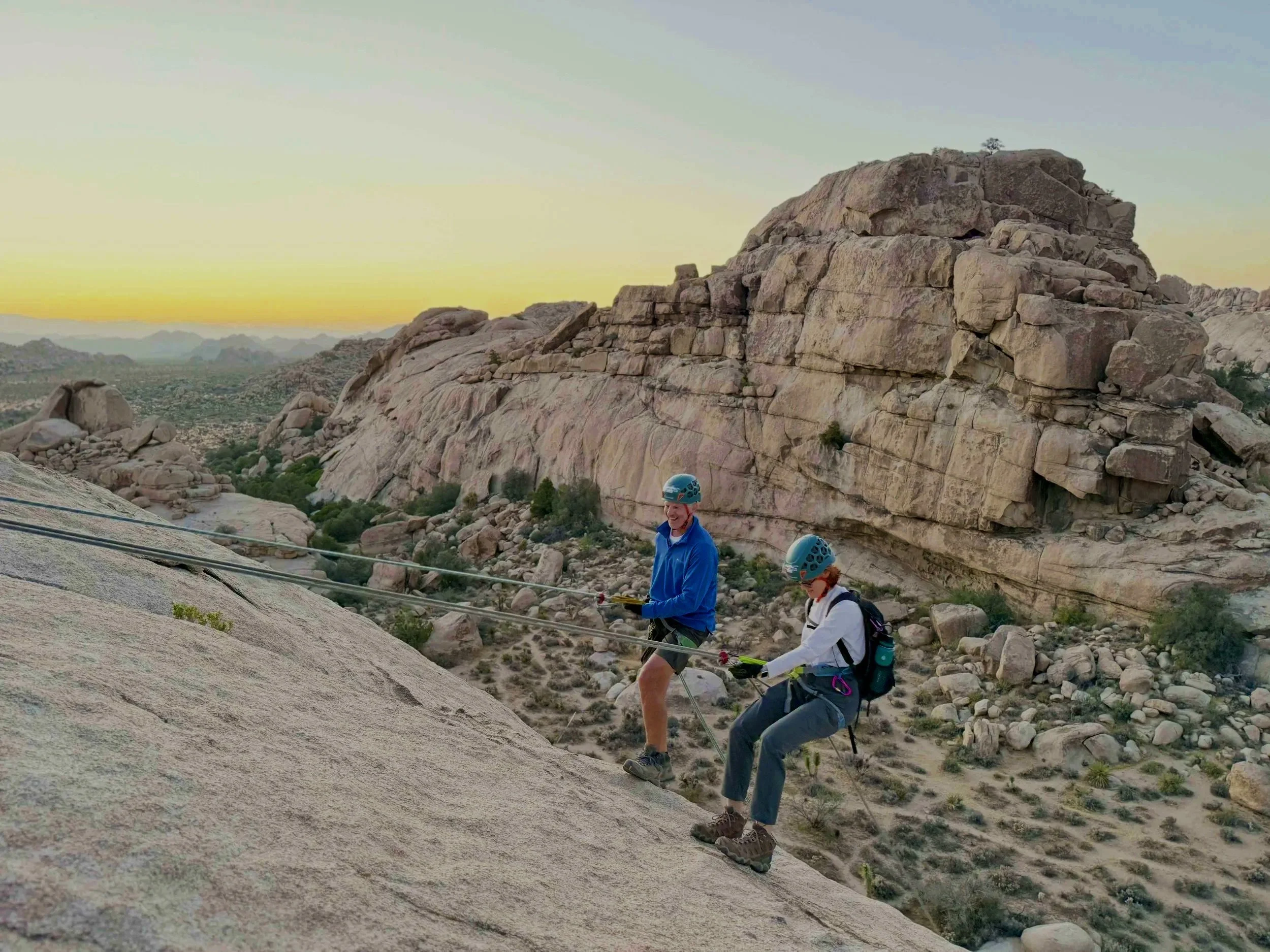
The most popular season for good reason. Daytime temperatures are ideal for hiking, climbing, and rappelling. March and April are the sweet spot — warm enough to be comfortable, cool enough to push hard all day. Wildflowers appear in years with strong winter rainfall. By May, temperatures start climbing and midday gets hot.
Busiest SeasonBrutally hot at midday — genuinely dangerous for strenuous activity between 10am and 4pm. That said, summer mornings (before 9am) and evenings are still enjoyable, and the caves stay naturally cool year-round. Stargazing is outstanding in summer, with warm nights and clear skies. Crowds are dramatically thinner.
Early Morning OnlyUnderrated and undervisited. October is arguably the single best month in the park: temperatures are perfect, the golden afternoon light on the granite is extraordinary, and crowds are a fraction of spring. November is quieter still and offers some of the best conditions for rock climbing as rock temperature drops into the ideal range. September starts warm but cools quickly.
Best Overall ConditionsCold, quiet, and surprisingly beautiful. Daytime temperatures can be quite pleasant for hiking when the sun is out, but mornings and nights drop well below freezing. Snow dusts the higher elevations a few times each winter — a genuinely striking sight with the Joshua trees. This is the best season for solitude and for stargazing in crystal-clear cold air. Rock can be wet or icy after rain, which affects climbing days.
Fewest Crowds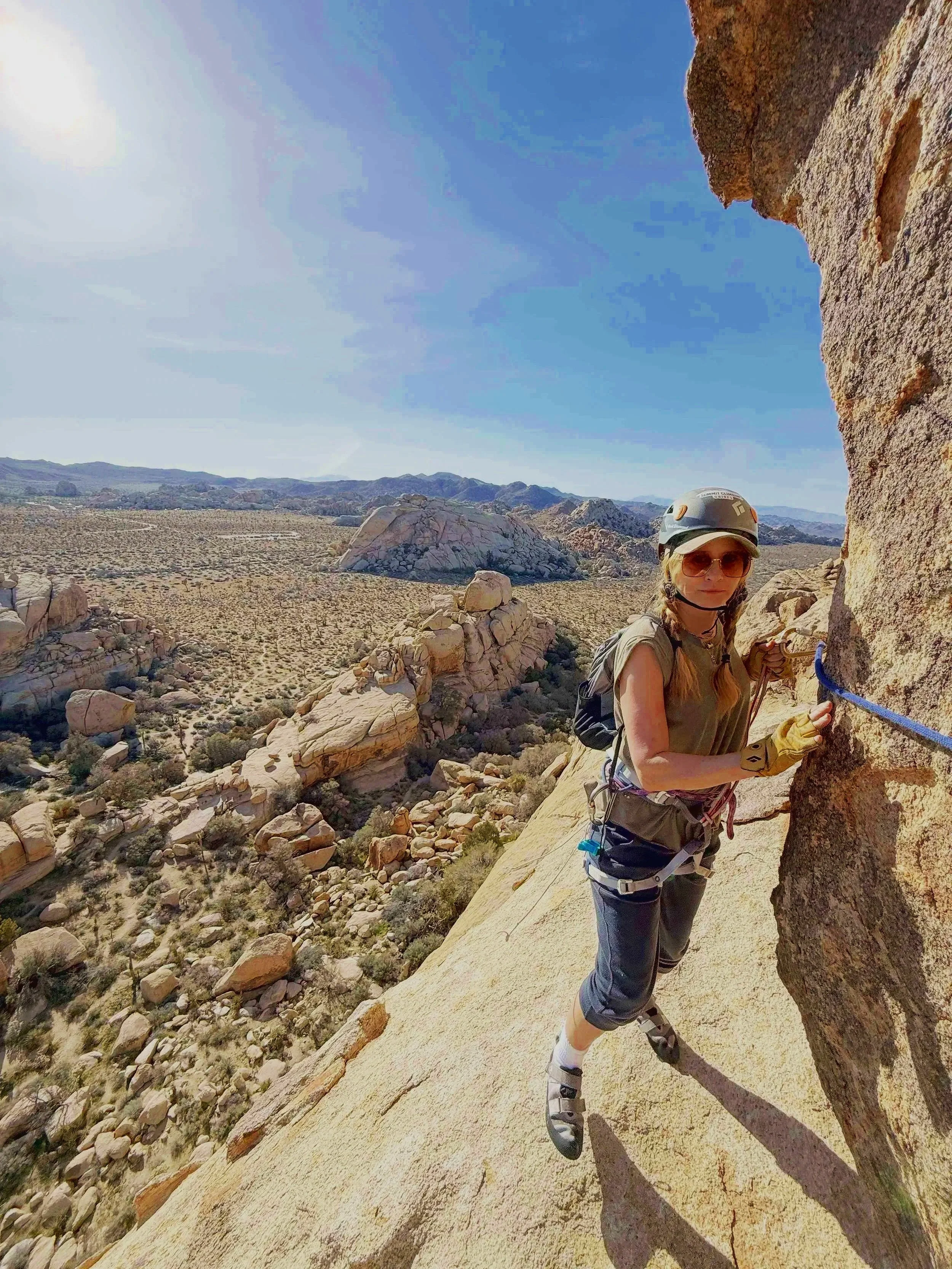
Month by Month
Every Month Rated
A quick reference for planning. Temperatures are average daytime highs; nights can drop 20–30°F below these figures, especially in fall and winter.
Cold nights
Warming up
Prime season
Peak season
Getting warm
Very hot
Peak heat
Hottest month
Cooling down
Best overall
Ideal climbing
Cold, quiet
Plan by Activity
Best Time for Each Activity
The right time to visit depends on what you're planning to do. Here's when each major activity hits its peak — and when to avoid it.
The cave passages at Joshua Tree stay naturally cool year-round — it's the one activity that actually works well in summer. While the surface temperature may be 105°F, inside the boulder caves it can feel 20–30 degrees cooler. If you're visiting in summer, a guided cave adventure is genuinely one of the best ways to spend the middle of the day.


Crowds & Planning
What to Know Before You Go
Joshua Tree has become one of the most visited national parks in the country. Here's what that means practically, and how to plan around it.
Spring weekends — particularly in March and April — are consistently the most crowded period. The park's most popular areas (Hidden Valley, Skull Rock, Keys View) can feel genuinely packed on Saturday and Sunday afternoons. If you're visiting in spring, weekdays are dramatically better, and arriving before 8am makes a significant difference.
Fall is increasingly the smarter choice for first-time visitors who want great weather without the spring crowds. October weekends are busy, but nothing like April — and October weekdays can feel almost empty compared to the spring rush.
A few other crowd-related things worth knowing: the western entrance (at Joshua Tree village) is significantly more trafficked than the northern entrance (at Twentynine Palms) or the south entrance (via I-10). If you're flexible on which side of the park you explore, entering from the north or east on busy days gives you a much calmer experience at the gate and in the initial areas.
For guided activities with Summit, bookings are limited by guide availability and group size — not park permits — so that reservation process is separate and handled directly through Summit's booking system.
What to Pack
Gear by Season
Joshua Tree's temperature swings mean what you pack depends heavily on when you go. Here's what each season actually needs.
- Lightweight layers — mornings are cool, afternoons warm
- SPF 50 and a hat — desert sun is intense
- 2–3 liters of water per person minimum
- Closed-toe shoes for any guided activity
- Light jacket for evenings
- Allergy medication if sensitive (pollen can be high)
- 4+ liters of water per person — this is serious
- SPF 50, wide-brim hat, sun protective clothing
- Electrolyte packets — dehydration risk is real
- Light, breathable clothing that covers skin
- Start activities before 8am — plan to be done by 10am
- Blanket or mat for evening stargazing
- Layers — temperatures vary 25–30°F between morning and afternoon
- Real jacket for evenings in October and November
- 2–3 liters of water — still dry desert
- SPF 50 — sun is still intense even as temps drop
- Closed-toe shoes or trail runners for scrambling
- Warm layer for stargazing — nights get cold fast
- Insulated jacket — mornings can be below freezing
- Warm base layers and mid-layer fleece
- Gloves and a beanie for early mornings and evenings
- Still bring water — dry air means dehydration even in cold
- Check forecast — rock can be wet or icy after rain
- Sleeping bag rated to 20°F if camping
Common Questions
Joshua Tree Timing FAQ
Is October really better than April for a first visit?
For most people, yes. The temperatures are nearly identical, the landscape is equally beautiful, and the crowds are noticeably lighter than peak spring. The main thing April has that October doesn't is the possibility of wildflowers — but those only appear in years with strong winter rainfall, which is not guaranteed. If you're flexible and haven't been before, October is the move.
Does it snow in Joshua Tree?
Yes, occasionally — and it's spectacular when it does. The higher elevations of the park (Keys View sits at about 5,000 feet) can see snow a few times each winter, usually in January and February. It rarely sticks more than a day or two, but waking up to snow on the Joshua trees is one of those rare park experiences that photos don't do justice. It's not something you can reliably plan for, but if it happens during your visit, count yourself lucky.
Can you really not visit in summer?
You can — you just have to plan around the heat. The window for outdoor exertion is genuinely narrow: roughly 5am to 9am, and again after about 5pm. The midday hours (10am–4pm) in July and August are not safe for strenuous hiking or climbing, full stop. That said, summer has real advantages: dramatically smaller crowds, excellent stargazing, and the cave adventures (which stay cool inside regardless of surface temperature) are a genuinely smart summer activity. The Hall of Horrors and Caves & Corridors adventures in particular are a great summer call — shaded granite keeps the interiors 15–20 degrees cooler than the surface. If you're going in summer, book a morning cave tour and plan to be back at your rental by noon.
When are wildflowers at Joshua Tree?
Typically late February through April, peaking in March in most years. The catch is that wildflower blooms depend heavily on winter rainfall — in dry years, they're sparse or absent entirely. In good years (when the Mojave gets substantial winter rain), the desert floor can be absolutely covered in blooms. The NPS Desert Wildflower Hotline and social media are the best real-time sources if wildflowers are a priority for your visit.
What's the best time for stargazing at Joshua Tree?
Joshua Tree is an International Dark Sky Park, which means light pollution is minimal and the Milky Way is visible most nights. The absolute best conditions for stargazing are new moon nights (when there's no moonlight washing out the sky) from October through February — cold, dry air, minimal atmospheric haze, and long nights. Summer stargazing is excellent too, particularly for Milky Way visibility, but you'll be up later to wait for full darkness. Most nights of the year are good — the main enemy is clouds and the moon, not the season.
When is Joshua Tree least crowded?
January and February are the quietest months in absolute terms — and weekday mornings in those months can feel remarkably empty for a national park this popular. Late September and early October offer a good balance of low crowds and comfortable weather before the fall visitor season builds. If a truly uncrowded experience is the priority, any weekday in winter (December through February) will deliver it.
How far in advance should I book a guided adventure?
For spring (March–May), booking 4–6 weeks out is recommended — Saturday slots fill the fastest. For fall (October–November), 2–3 weeks is usually sufficient, though weekend spots in October go quickly as the season builds. Summer and winter weekdays can often be booked with shorter notice. Whenever you're planning a specific weekend, earlier is always better — once a date is full, it's full.