Joshua Tree Photography Guide: The Best Spots, Light & Tips (2026)
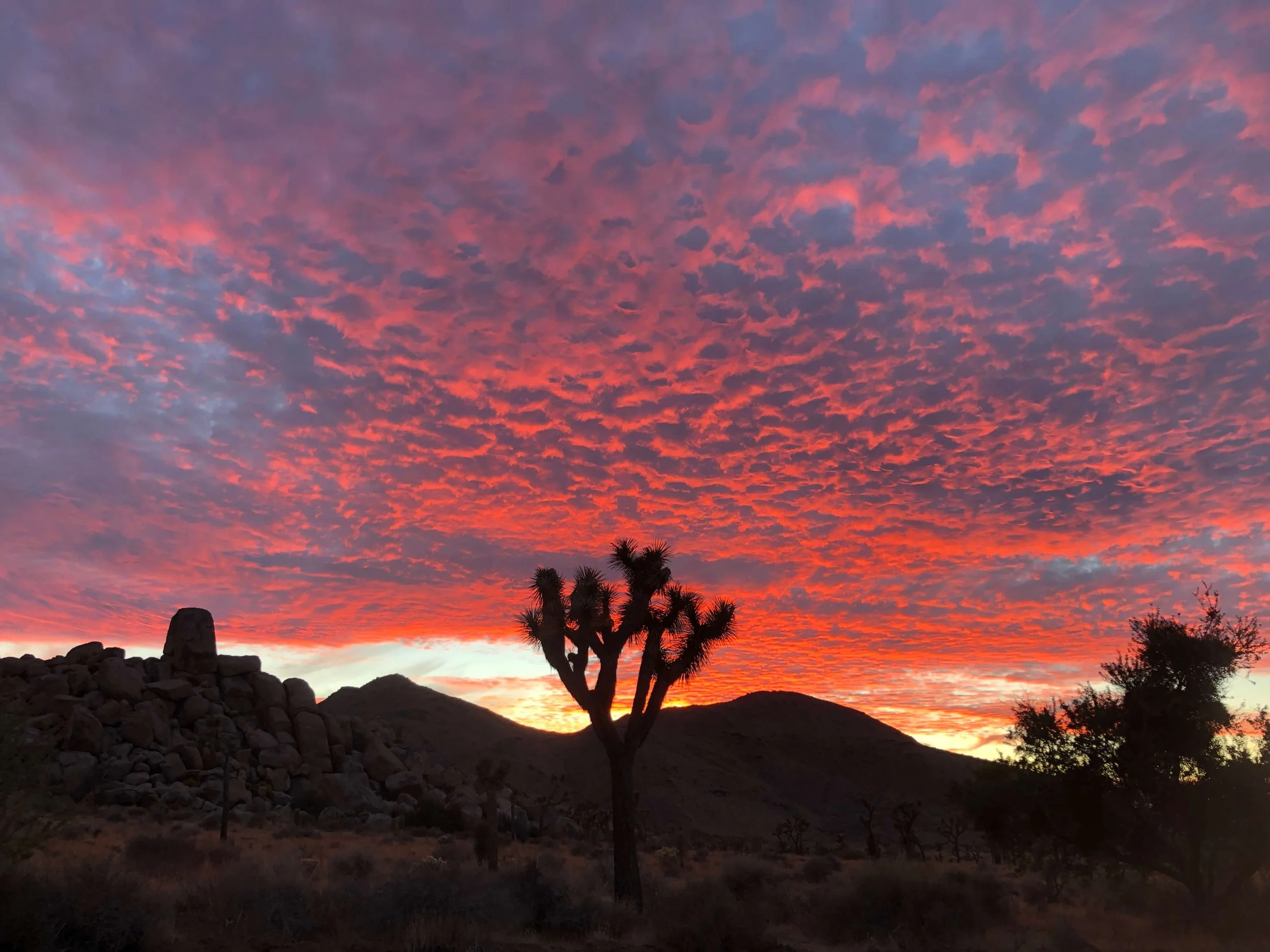
Sunrise at Joshua Tree — the park's golden light is reason enough to set a 4:30am alarm
Why Joshua Tree Is a Photographer's Paradise
Joshua Tree sits at the collision of two desert ecosystems — the high Mojave and the low Colorado — where alien-looking yucca palms punctuate fields of rounded granite monoliths that glow orange at sunrise and turn deep purple at dusk. The light here is extraordinary. At low angles, the sky's orange-to-pink gradient mirrors the warm tones of the rock, creating a natural color palette that's almost impossible to shoot badly.
There are no power lines, no billboards, and almost no infrastructure visible in most of the park's 800,000 acres. At sunrise, you can stand in any direction and have a clean, unobstructed composition. The flora is unlike anything in North America — Joshua trees can live over 500 years and no two are the same shape, giving every frame a unique silhouette. Whether you're shooting a mirrorless full-frame or your phone, Joshua Tree hands you the composition. You just have to show up — preferably early.
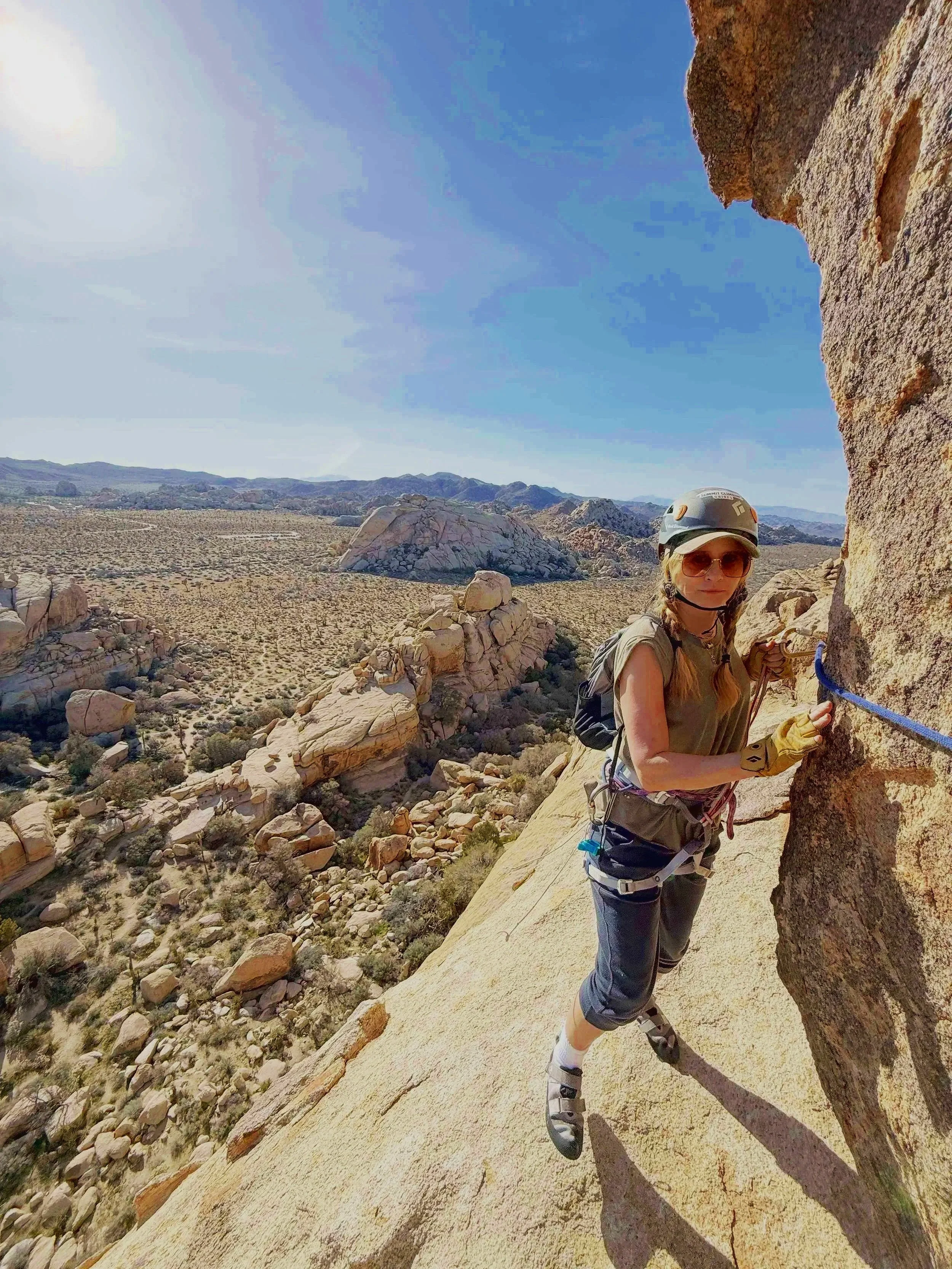
Joshua Tree's scale only becomes clear once you're standing in it — wide-angle lenses barely do it justice
The Best Photography Spots in Joshua Tree
The park covers 1,234 square miles, but most of the iconic photography happens in a handful of specific areas. Each has its own character, its own best time of day, and its own photographic strengths.
The park's highest accessible overlook at 5,185 feet. On clear days you can see the Salton Sea, Mt. San Jacinto, and into Mexico. The valley below fills with shadow at sunset while distant peaks stay lit — one of the most dramatic compositions in the park.
A sheltered meadow ringed by towering granite walls. Morning light filters through the rock corridors and creates dramatic shadows. The boulders here are covered in colorful lichen — excellent for close-up detail work as well as wide compositions.
A short hike leads to a small reservoir surrounded by boulders and ancient petroglyphs. After winter rains, the still water reflects the surrounding rock faces in perfect mirror images. Bighorn sheep are occasionally spotted here at dawn.
One of the park's most recognizable formations — a massive boulder weathered into two deep eye sockets. Best photographed at sunrise when warm light catches the socket shadows at the right angle. The trailhead is roadside and easy to reach in the dark.
At sunrise, backlit cholla spines glow like halos of gold light — one of the most photographed sunrise scenes in any national park. Arrive 30 minutes before first light to stake a clean position before other photographers arrive.
A sprawling field of massive rounded boulders just off Pinto Basin Road. The campground here is ideal for night sky photography — you can walk a short distance from your tent to find a completely clear horizon in every direction.


Guided summit hikes like South Astro Ridge and Idyllwild Dome put you at vantage points most visitors never reach
Golden Hour & Sunrise Photography
The best light in Joshua Tree is concentrated in two windows: the 45 minutes after sunrise and the 45 minutes before sunset. At these angles, the low sun rakes across the faces of the granite boulders, revealing every crack, crystal, and shadow. The warm color temperature of early and late light saturates the desert's existing palette of orange, rust, and gold.
For sunrise, east-facing slopes catch the light first. Position yourself at Cholla Cactus Garden, Skull Rock, or any open east-facing boulder field. For sunset, Keys View is the classic choice — the valley drops 4,000 feet below you and fills with shadow as the peaks in the distance stay brilliantly lit. The "blue hour" 20–30 minutes before sunrise is equally worth shooting: the sky transitions through deep indigo to violet before the first orange appears on the horizon.
Rappelling at sunset is a different kind of experience entirely — and one of the most dramatic photographs you can get in the park. The combination of an active human figure, a 60-foot drop, and a sky turning from gold to deep pink produces images that are genuinely difficult to replicate anywhere else in California.
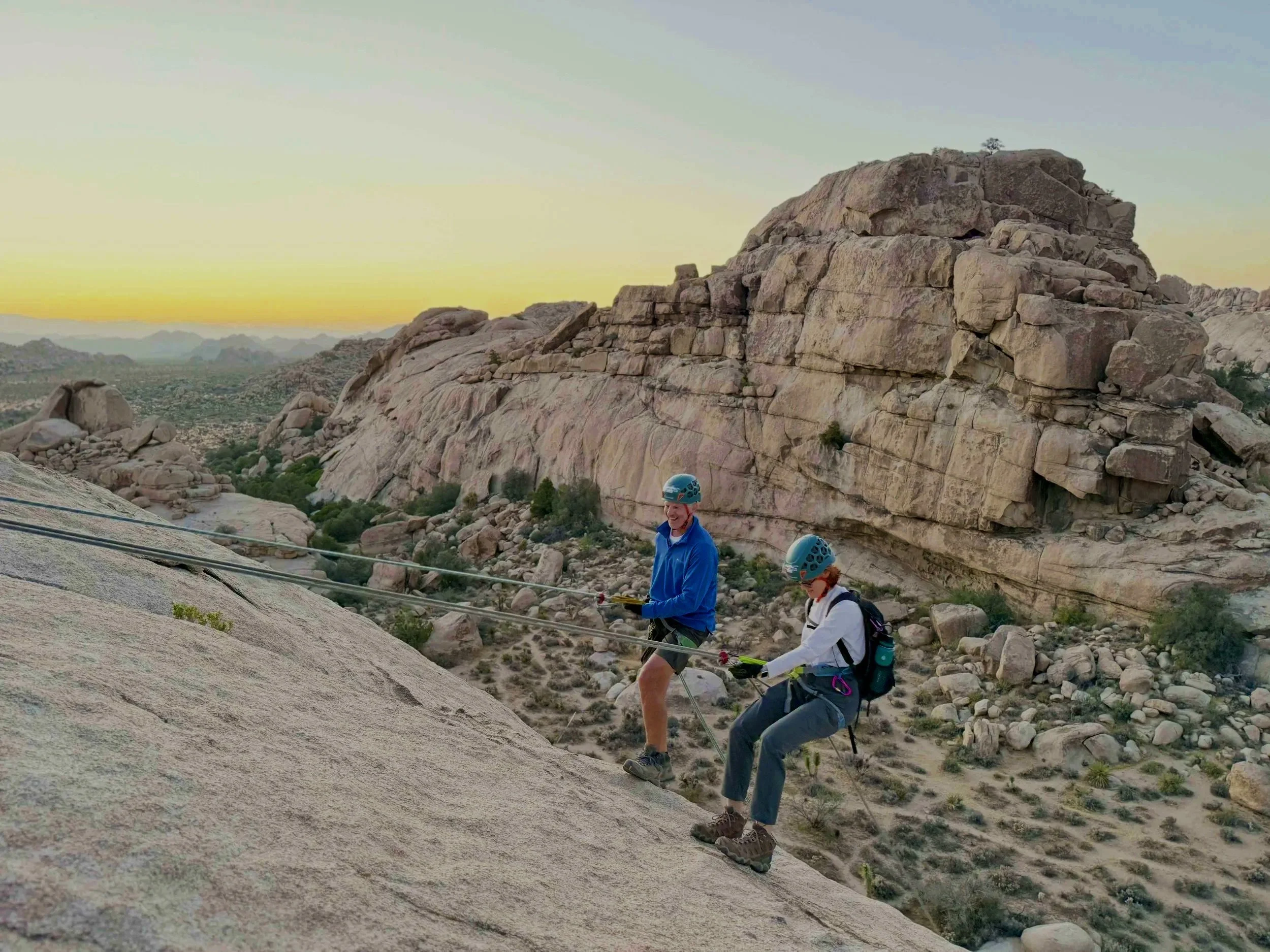
Sunset rappelling — golden hour light in Joshua Tree produces color no filter can replicate
Milky Way & Night Sky Photography
Joshua Tree holds a Gold Tier International Dark Sky Park designation — one of the darkest accessible skies in Southern California. On moonless nights from late winter through summer, the Milky Way's galactic core rises in the southeastern sky and arches overhead in a dense, visible band. The park sits far enough from Palm Springs and Twentynine Palms that artificial glow on the western and northern horizons is minimal.
The best foreground for Milky Way shots is a silhouetted Joshua tree or rock formation — the alien shapes of the yucca palms are immediately recognizable and create an otherworldly context for a sky full of stars. Set up your composition at last light so you know your framing before full darkness. Use live view at high ISO to focus on a bright star, then adjust ISO back down once focus is confirmed.
The galactic core is highest and brightest from March through October, with peak positioning in June and July. Plan your shoot during the new moon window — three or four nights on either side of a new moon eliminates most sky glow from the moon itself. Apps like PhotoPills and Stellarium let you preview the exact sky position for any date, time, and location in the park.
Dusk and the blue hour are underrated — the transition from last light to the first stars is its own reward
Rock Formations & Desert Geology
Joshua Tree's rocks are monzogranite — formed roughly 100 million years ago deep underground, then exposed by millions of years of erosion, uplift, and weathering. The rounded shapes aren't smoothed by water but by a process called exfoliation: curved sheets of rock peel away as subsurface pressure releases over geologic time. The result is smooth domes, rounded boulders, and stacked formations that look impossibly balanced.
Up close, the granite's texture is extraordinary. Visible crystals of quartz, feldspar, and hornblende range from white to pink to near-black. Patches of orange, yellow, and grey lichen coat the sun-facing surfaces. Shadows collect in the cracks and form natural leading lines. Macro photography on rock faces reveals a miniature world most visitors walk past without noticing.
From a distance, the contrast between pale granite and deep blue sky — especially at midday — creates a classic high-contrast desert composition. A circular polarizing filter deepens the blue, cuts glare from the rock surfaces, and makes lichen colors pop in a way that's difficult to replicate in post-processing.
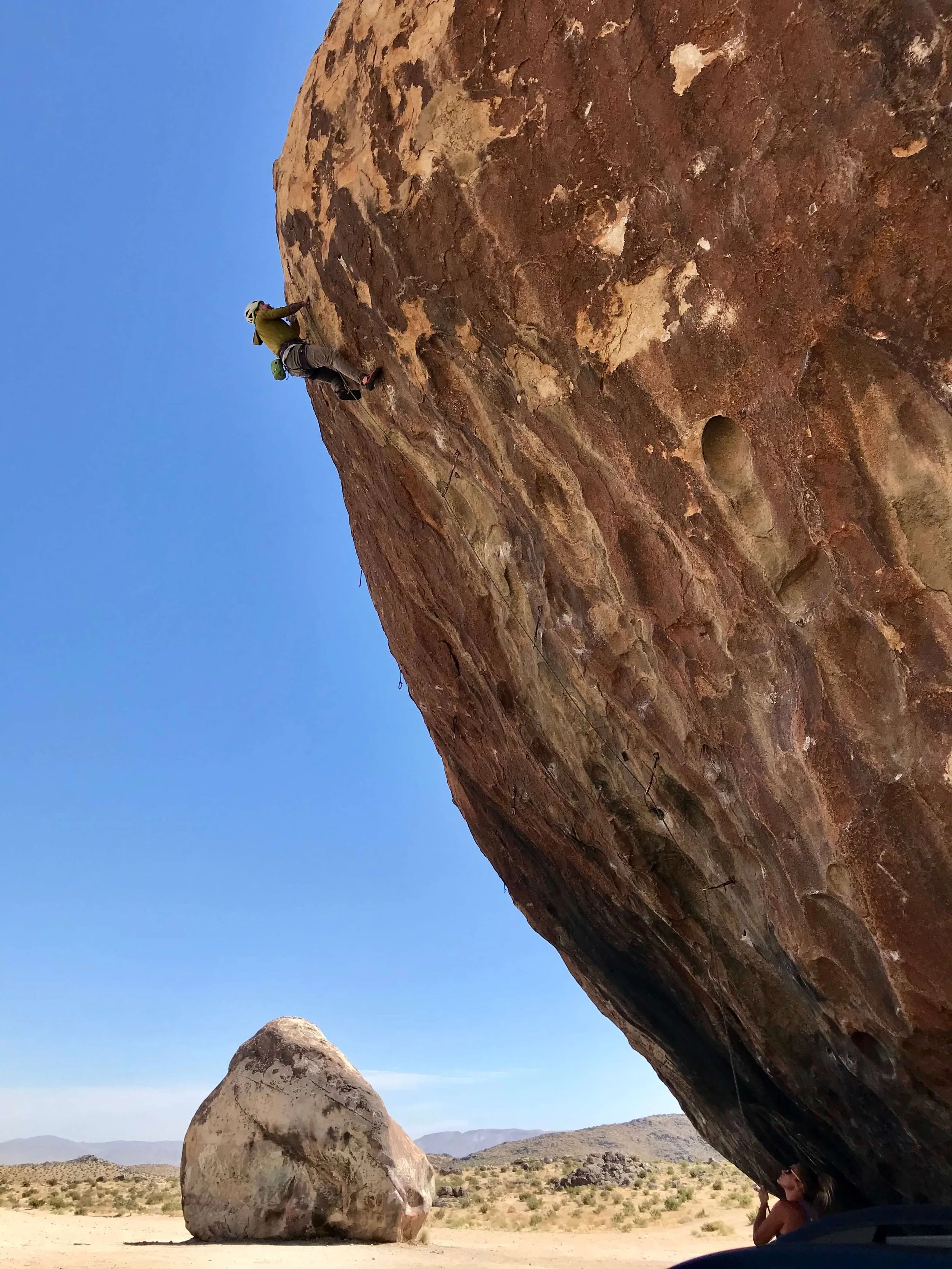
Joshua Tree's monzogranite was formed underground 100 million years ago — it only looks like sculpture
The Human Element: Scale, Drama & Story
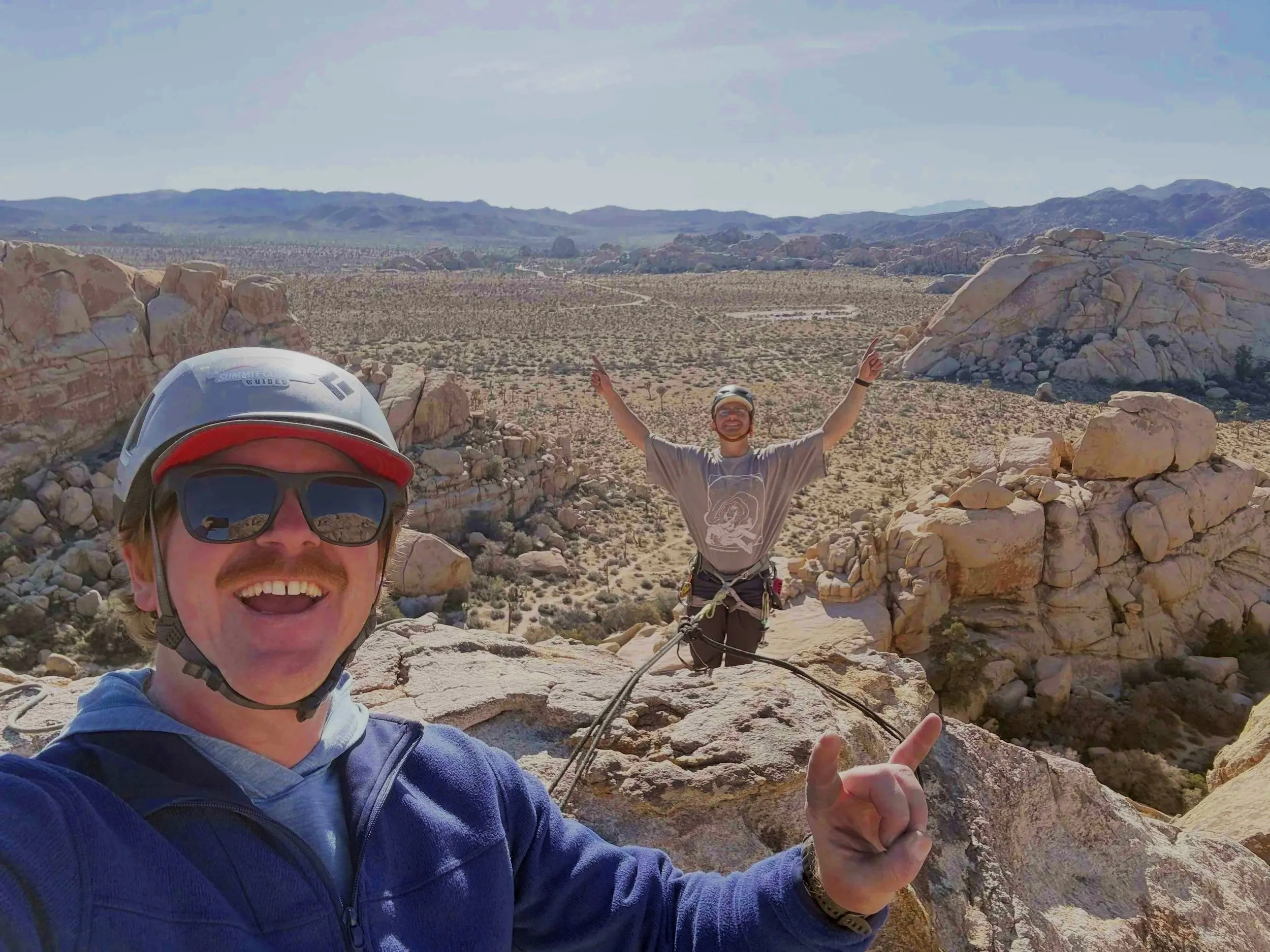
One of the most powerful compositional choices in landscape photography is adding a human figure. In Joshua Tree, where boulders can tower 50 to 100 feet and rock faces stretch across entire hillsides, a person in the frame communicates scale in a way that purely geological shots never quite achieve. The viewer needs a reference point — and a human being is the most immediate one there is.
Climbers and rappellers provide natural motion, tension, and narrative. A rappeller descending a crack system tells a story instantly: skill, exposure, consequence, beauty. A climber's silhouette against an open sky on a summit ridge creates a sense of aspiration that even the most stunning landscape alone can't deliver. The ropes add graphic lines; the helmets and harnesses add color; the expressions of concentration and exhilaration are genuinely candid in a way that posed portraits rarely are.
"The best photos I've ever taken in Joshua Tree weren't pure landscapes — they had people in them. The geology is the backdrop. The humans are the story."
On a guided Summit adventure, you'll have natural human subjects moving through dramatic terrain all day. The light catches ropes, harnesses, and helmets in ways that add texture and color to every frame. You don't need to direct anyone — you just need to be ready when the moment happens.

A single figure changes everything — scale, story, and a reason to care about the frame
Joshua Trees, Wildlife & Desert Flora
The Joshua tree itself (Yucca brevifolia) is one of the most distinctive plants on Earth. Each one is uniquely shaped by decades of branching growth — no two are alike, and they can live well over 500 years. They're monocots, related to asparagus, which means they're technically not trees at all. Their shaggy, spiked silhouettes are unmistakable against a blue sky or a pink sunset — and they make natural single-subject portraits that work at almost any focal length.
Wildlife photography is most productive in the first two hours after sunrise, when the desert cools from overnight temperatures and animals emerge to feed. Common subjects include desert cottontails, coyotes (spotted most often near water sources at dawn), roadrunners (quick — burst mode helps), and a diverse bird population that includes ravens, scrub jays, and occasional golden eagles soaring on thermals above the higher elevations.
The park's reptile population is photogenic and often approachable. Chuckwallas, side-blotched lizards, and western fence lizards are active in warmer months. Get low to their level — a ground-level perspective with a shallow depth of field creates a more intimate portrait than shooting down from standing height.
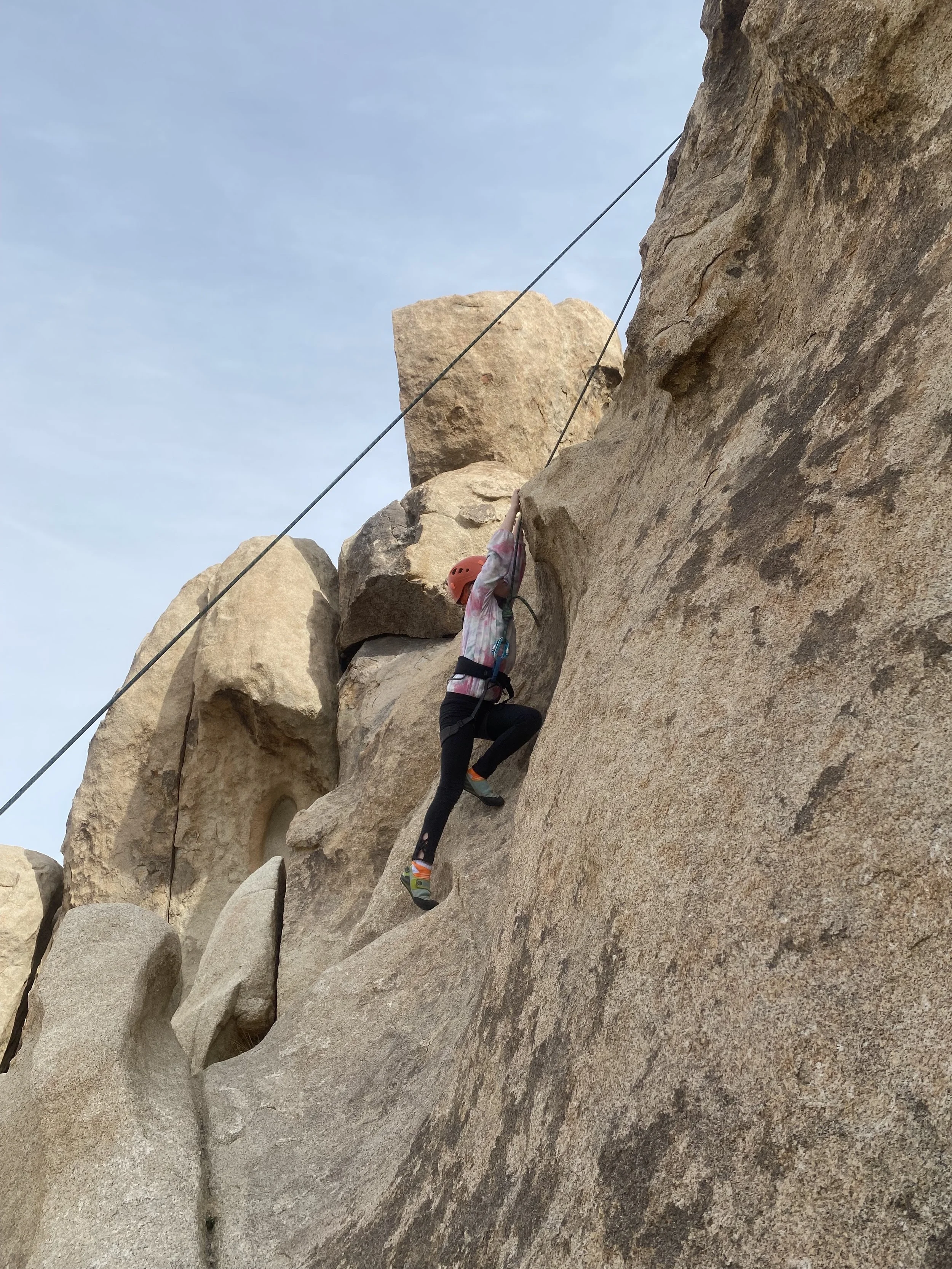
Move slowly, stay low, and Joshua Tree's resident lizards will let you get surprisingly close
Camera Gear & Pro Tips for Desert Photography
Joshua Tree's environment is harder on equipment than most photographers expect. Wind-blown sand and fine dust get into lens barrels, sensor chambers, and card slots. Temperature swings are extreme — a 90°F afternoon can be followed by a 40°F night. Here's how to prepare your kit:
Any mirrorless or DSLR works well. Weather-sealed bodies are worth having — afternoon dust storms do blow through the park. Modern smartphone cameras are genuinely capable for daytime landscape work.
Wide-angle (16–35mm) for landscapes and night sky. Telephoto (70–200mm) for wildlife, rock detail, and distant formation compression. A 50mm prime is a great all-rounder for the human element.
Essential for Milky Way and blue hour work. Carbon fiber is lighter for hiking. Bring a remote shutter release or use the camera's self-timer to eliminate shake during long exposures.
Circular polarizer for midday work — deepens skies and cuts glare on the rock. A UV filter protects your front element from wind-blown grit. ND filters open up creative long-exposure options.
A sensor blower, microfiber cloths, and lens wipes are mandatory. Clean your sensor and front element before every serious session — dust shows prominently in open blue skies and takes time to remove in post.
Cold nights drain batteries fast — bring at least two spares for a multi-day trip. Sand is hard on memory cards; bring more storage than you expect to need and back up nightly when shooting across multiple days.
A few pro tips worth keeping: arrive 30–45 minutes before sunrise to set your composition while it's still dark. Shoot RAW to preserve maximum latitude in post. Check the weather forecast — storm light in Joshua Tree, when it arrives, produces frames unlike anything else you'll capture in the Mojave.
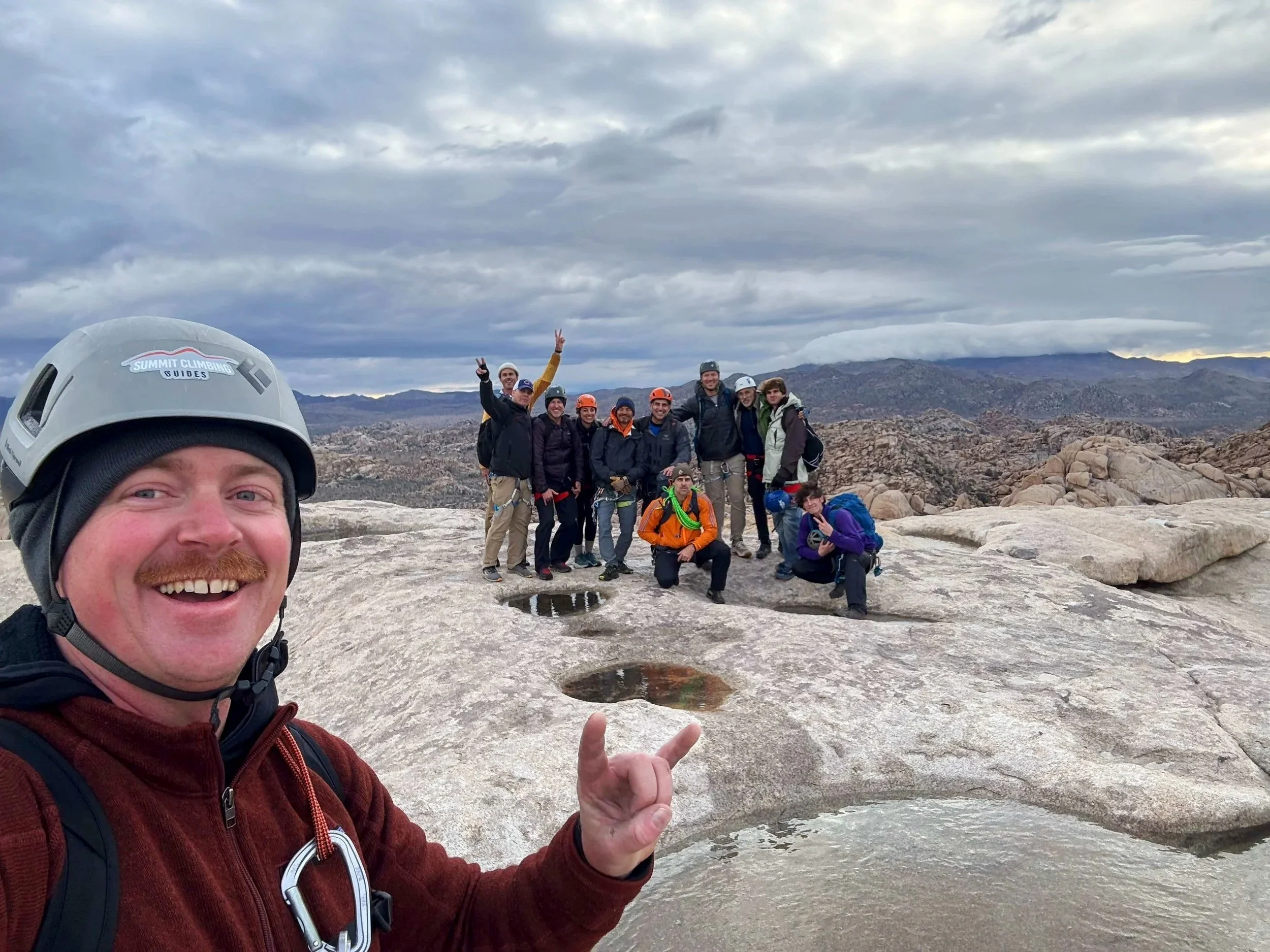
The views from any summit in Joshua Tree reward every early alarm and every tough step to get there
Frequently Asked Questions
Do you need a permit to photograph in Joshua Tree?
No photography permit is required for personal or non-commercial photography in Joshua Tree National Park. You'll need the standard park entry fee ($35 per vehicle as of 2026, or an America the Beautiful annual pass). Commercial photography and film production do require a permit from the park's permitting office — check the National Park Service website for current requirements before a commercial shoot.
What is the best time of year for photography in Joshua Tree?
October through April offers the most favorable overall conditions: cooler temperatures, lower crowds, clearer air, and the possibility of dramatic clouds and storm light. Spring (March–April) adds desert wildflowers to the lower elevations, creating foreground color that's rare in the Mojave. Summer is hot and crowded, though night sky photography peaks in June–July when the galactic core is highest overhead.
What is the best time of day to photograph in Joshua Tree?
Sunrise is the single best time — crowds are minimal, the air is clearest, and low-angle light creates the most dramatic shadows and textures on the formations. The golden hour at sunset runs a close second. Midday shooting is challenging due to harsh overhead light, though it works well in shaded canyons and for high-contrast black-and-white work on rock surfaces. The blue hour (20–30 minutes before and after sunrise and sunset) is underused and consistently beautiful.
Is Joshua Tree good for Milky Way photography?
Yes — Joshua Tree holds a Gold Tier International Dark Sky Park designation, making it one of the best Milky Way locations accessible from Los Angeles and San Diego. The galactic core is visible from late February through October, with peak positioning in June and July. Shoot during new moon windows for maximum sky darkness. Joshua trees and granite boulders make iconic foreground subjects that pair perfectly with a star-filled sky.
Can I photograph at night inside the park?
Yes. Joshua Tree National Park is open 24 hours and there are no restrictions on photography at night. Camping inside the park gives you on-site access for blue hour, pre-dawn golden light, and Milky Way windows without a long drive in the dark. The Jumbo Rocks campground in particular sits in an excellent position for night sky photography with clear horizons in nearly every direction.
What camera settings should I use for Joshua Tree landscape photography?
For golden hour landscapes: f/8–f/11 for maximum depth of field, ISO 100–400, shutter speed set by your meter. For night sky: f/2.8 or wider, ISO 1600–6400, exposures of 15–25 seconds. Shoot in RAW — desert skies benefit from the wider dynamic range that RAW preserves over JPEG, and the warm-to-cool color gradient at sunrise and dusk gives you far more editing latitude in RAW format.
How do I get elevated perspectives and unique vantage points?
The best elevated photography in Joshua Tree requires hiking or climbing. Summits like Quail Mountain (the park's highest at 5,813 ft), Ryan Mountain, and the Wonderland of Rocks ridgelines give you views no roadside pullout can match. A guided rock climbing or scrambling session with Summit puts you on terrain that dramatically expands your photographic vantage points — positions that fewer than 1% of park visitors ever reach.
Can I book a photography-focused guided adventure?
Summit Climbing Guides doesn't offer dedicated photography tours, but our guided rock climbing, rappelling, and scrambling adventures are natural photography expeditions — you'll spend all day in dramatic terrain with active human subjects and elevated vantage points that only climbers access. Many guests bring cameras and shoot throughout the day. If photography is a priority, mention it when you book and we'll factor scenic positions and timing into the day wherever possible.
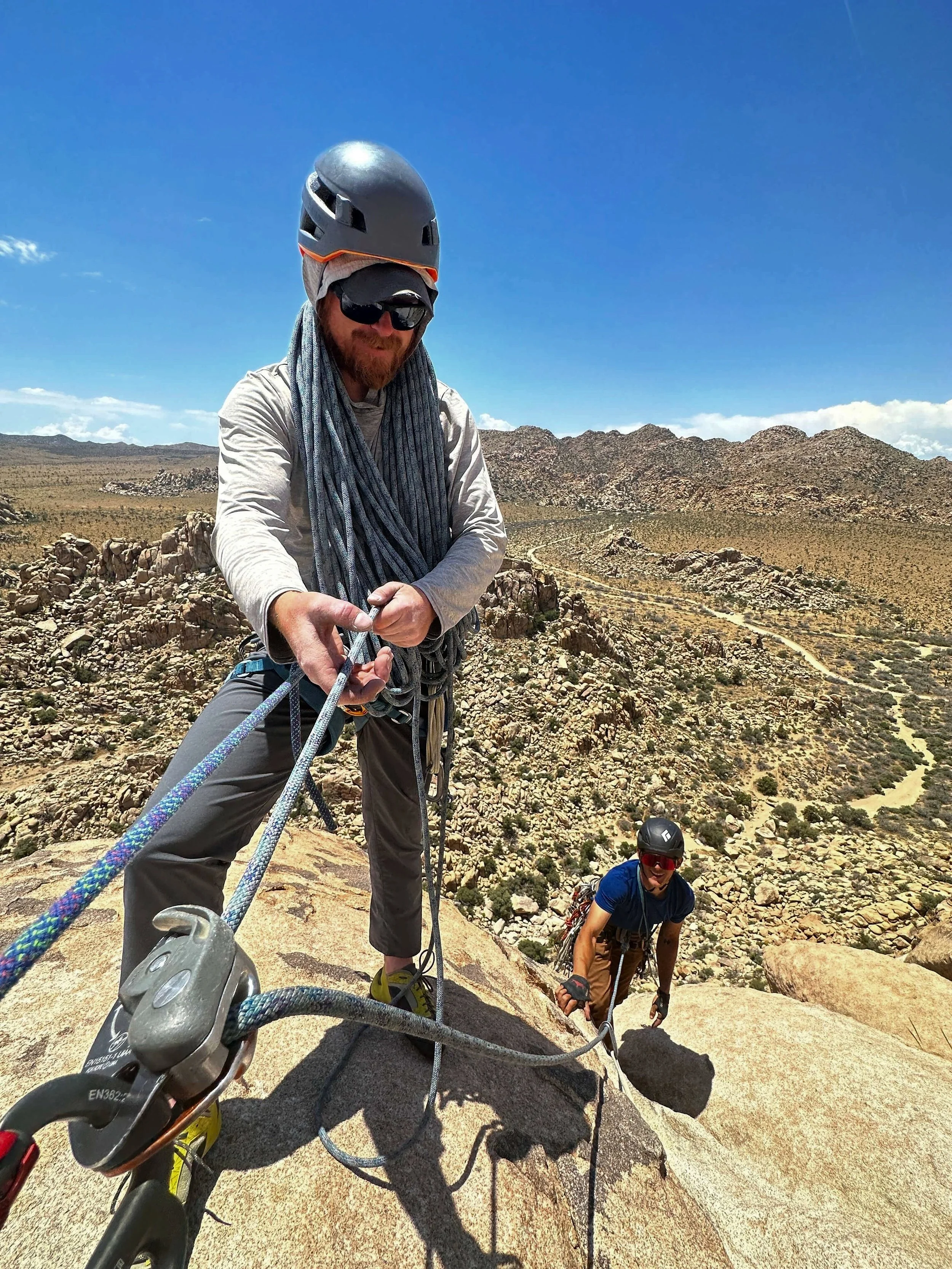
See the Park from the Top
The best photography vantage points in Joshua Tree can't be reached from a parking lot. Our guided climbs and scrambles put you on summits and ledges that fewer than 1% of park visitors ever see.
Book a Guided Adventure