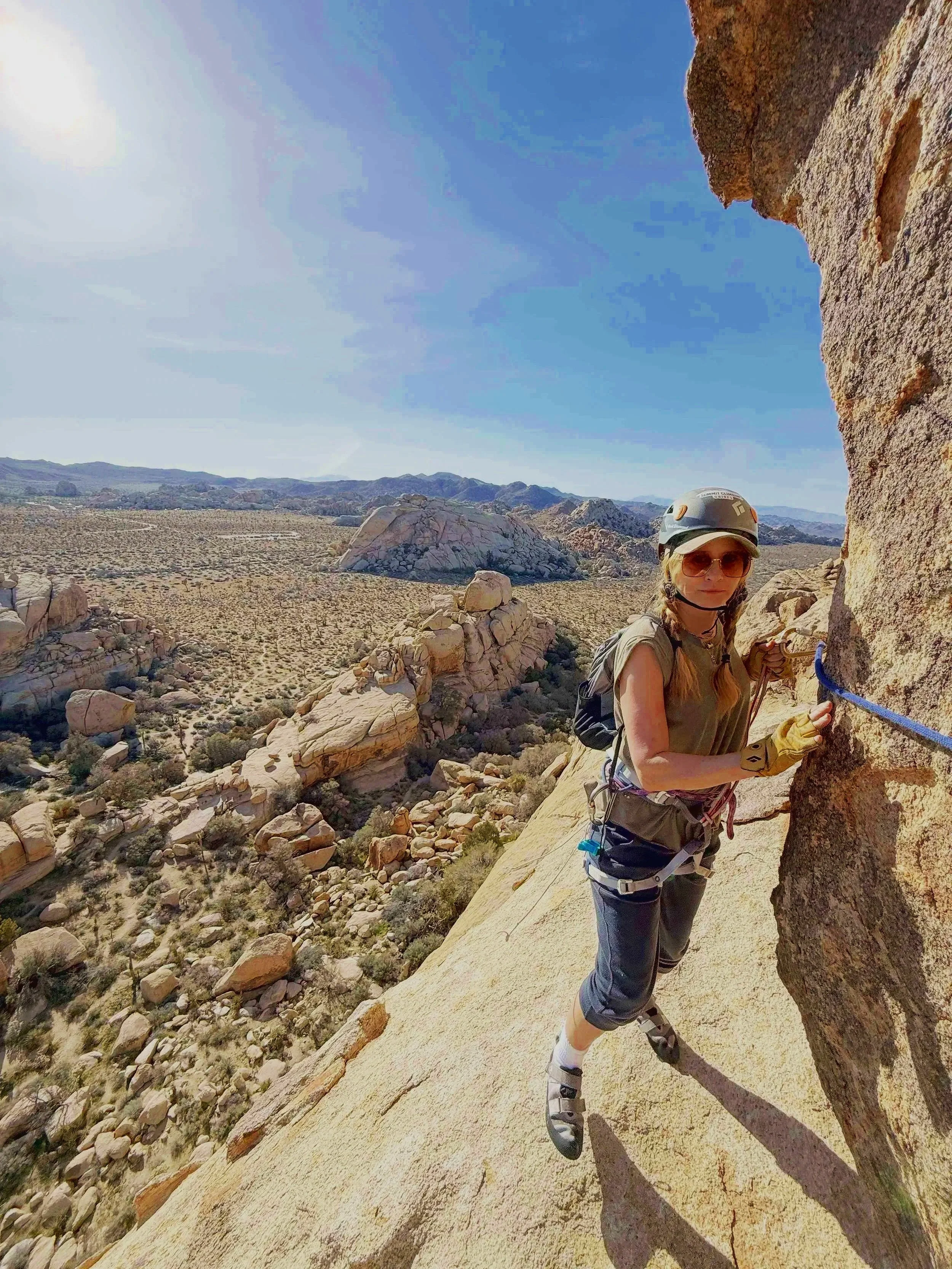
Joshua Tree Corporate Team Building: Outdoor Adventures That Actually Work

Every team has done the escape room. The ropes course. The catered lunch with the trust fall that nobody believed in. Joshua Tree is different — and the difference is visible by the time your group reaches the top of their first rappel.
Something changes when a team faces a real challenge together in a place this extraordinary. Not a simulated challenge. Not a manufactured one. The kind where you're actually on the edge of something — literally — and the people next to you are the reason you made it. That's what Joshua Tree's terrain does for teams. And it's what two hours on a guided adventure with Summit can do for yours.
- Why Joshua Tree for Corporate Team Building?
- The Activities: What We Offer for Corporate Groups
- Why Outdoor Adventure Works Better Than Conventional Team Building
- How Summit Structures a Corporate Team Building Day
- Who This Is Right For
- Logistics: Getting There, Group Size, Timing
- Best Time of Year
- Frequently Asked Questions
- Plan Your Corporate Day
Why Joshua Tree for Corporate Team Building?
There's no shortage of corporate team building options in Southern California. What's rare is one that teams actually remember a year later — one that changes something about how a group of people relates to each other. Joshua Tree is that option.
The Distance from Normal Is the Point
Most team building happens in conference rooms, meeting spaces, or rented venues that still smell like work. Joshua Tree is 800,000 acres of desert wilderness — the single most effective way to get your team genuinely away from their desks and into a shared experience. The park's scale, silence, and visual drama do something to people that no indoor activity can replicate. Teams arrive as coworkers. They leave as people who did something together that neither one of them could have done alone.
The Terrain Creates Genuine Challenge
Joshua Tree's monzogranite formations — the same rock that draws climbers from around the world — create natural challenges that work for teams at any experience level. Rappelling a granite face, scrambling through a corridor of stacked boulders, or reaching a backcountry summit together: these are experiences with real weight. The challenge is calibrated by your guide, but it's never manufactured. Everyone on your team will know they earned it.
It's Two Hours from LA
For Southern California-based companies, Joshua Tree is one of the most accessible genuine wilderness experiences in the country. Two to two and a half hours from Los Angeles, 40 minutes from Palm Springs — close enough for a full-day trip, far enough to feel like you've actually gone somewhere.
The Activities: What Summit Offers for Corporate Groups
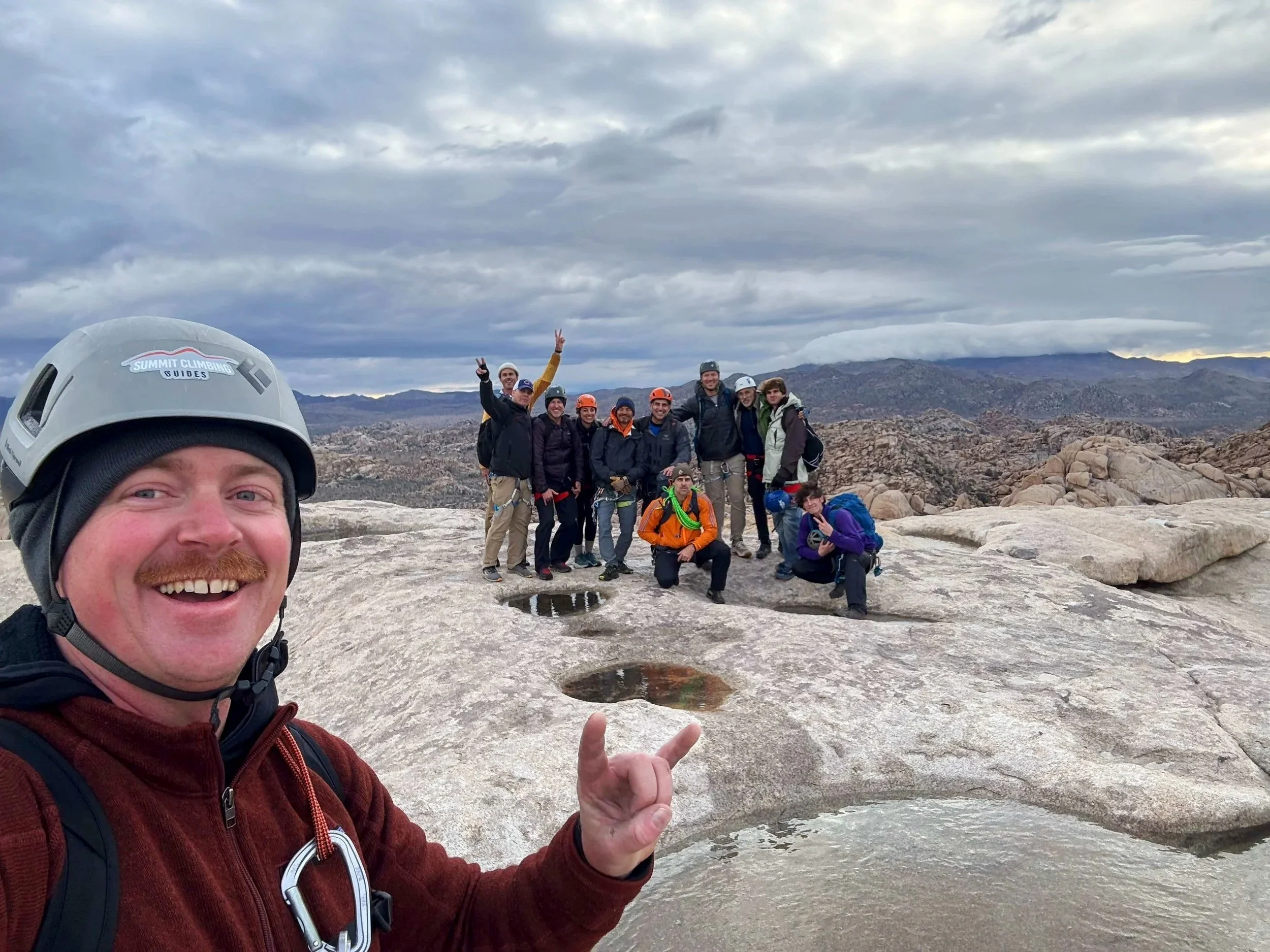
We run four core activities for corporate groups, each calibrated to different team sizes, fitness levels, and what kind of experience you want your group to walk away with.
Rappelling
Descending a granite face with a desert panorama below. The activity that produces the most memorable team moments — and the best photos. Accessible to all fitness levels, no prior experience needed. Individual challenge, collective energy.
Hall of Horrors Scramble
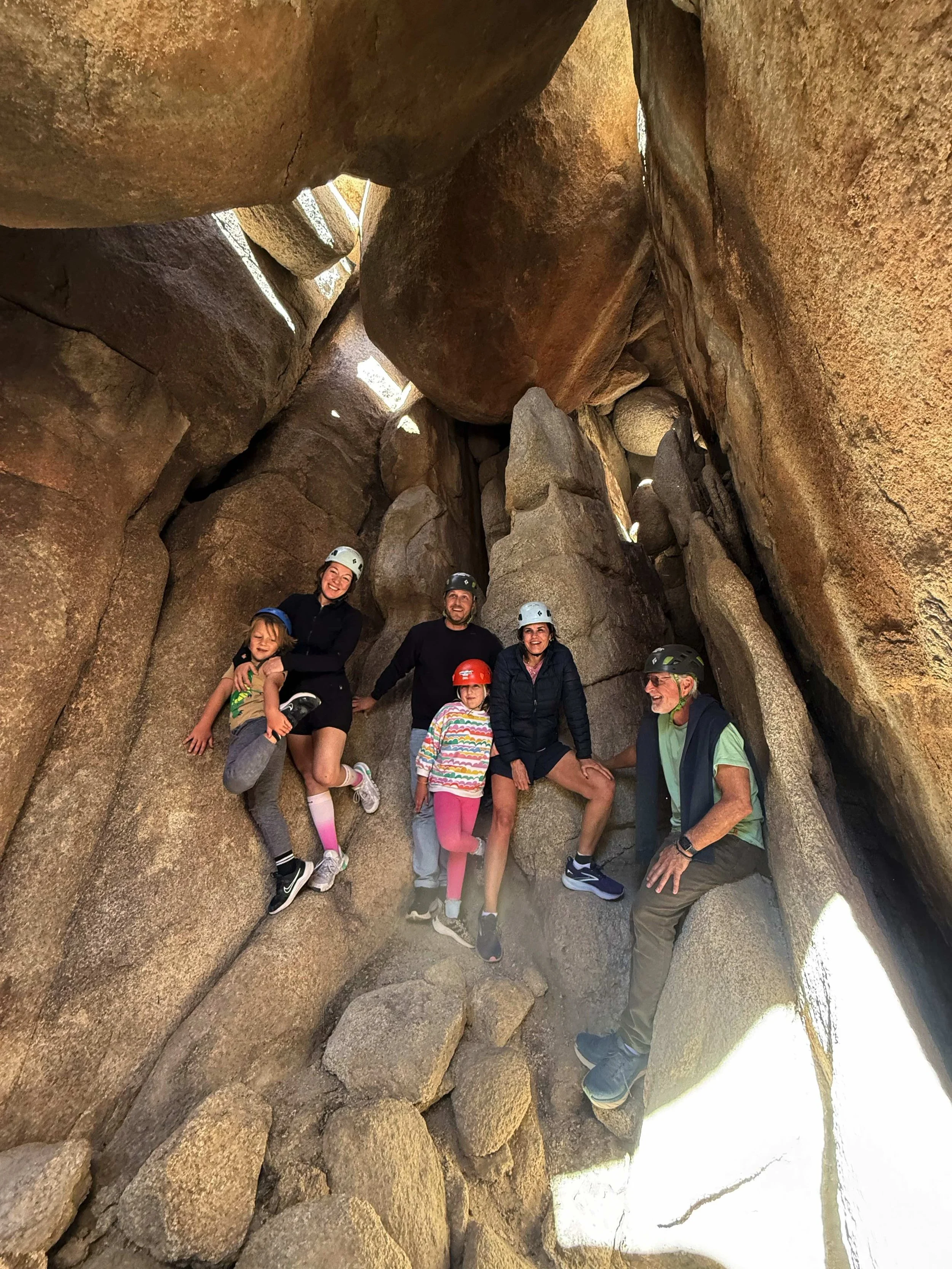
No ropes, no technical gear. Movement through dramatic granite corridors and slot passages that teams navigate together. Works for every age and fitness level — the widest possible group participation.
Guided Rock Climbing
Ascending real granite routes with a certified guide managing the belay. More skill-intensive than rappelling, higher physical demand. Best for teams that want genuine progression and a technical challenge.
Caves & Corridors
Underground passages, near-total darkness, tight slots that require teamwork to navigate. The most immersive and unusual experience we offer — high novelty, high engagement, very high debrief material.
Most corporate groups choose one activity for the full team. For larger groups or full-day programs, we can run two activities in parallel with dedicated guides for each group — a great option for teams that want to split by interest or challenge preference.

Why Outdoor Adventure Works Better Than Conventional Team Building
The research on outdoor adventure team building is consistent: shared physical challenge in novel environments produces stronger interpersonal bonds than structured group activities, games, or workshops. Here's why it works — and why Joshua Tree specifically accelerates it.
Hierarchy Flattens on the Rock
The VP rappelling for the first time looks exactly like the junior analyst rappelling for the first time. Shared vulnerability is a great equalizer — and it opens conversations that never happen in a conference room. Teams consistently tell us that the moments on the rock produced more honest communication than months of structured meetings.
Real Stakes Produce Real Trust
The trust built on a genuine challenge is different from trust built in a simulated one. When someone encourages you at the edge of a rappel — when they wait at the bottom and cheer when you make it down — that interaction carries weight that manufactured scenarios don't. It becomes a reference point your team can actually return to.
New Information About Each Other
A day in Joshua Tree shows you things about your colleagues that two years of Zoom calls won't. How someone responds to a challenge they didn't expect. Who encourages the nervous team member. Who surprises everyone — including themselves. This new information changes how people see each other back in the office.
The Memory Stays
Most corporate team building produces no durable memory. A Joshua Tree rappelling day produces one — a shared reference point that teams use for years. "Remember when Marcus wouldn't let go of the rope for five minutes?" That story gets told. Repeatedly. In ways that reinforce the team identity long after the day is over.
The most common feedback we get from corporate groups isn't about the activity itself — it's about what they learned about each other. Every team has people who surprise everyone. Joshua Tree has a way of finding them.
How Summit Structures a Corporate Team Building Day
Every corporate day with Summit is private — just your team and your guides. No strangers, no merged groups, no waiting in line. Here's what a typical day looks like:
Pre-Trip Planning
We work with you before the day to understand your team size, fitness range, goals, and any constraints. Corporate groups often have a mix of ages, fitness levels, and comfort zones — our job is to design an experience that works for everyone while still delivering real challenge. We'll recommend the right activity or combination of activities and handle all the logistics.
The Arrival
Your team meets your guide(s) at a designated park entrance. The drive in is already different — the landscape starts working on people before the activity even begins. Your guide introduces the day, sets expectations, and gets a read on the group.
The Activity
Whether it's rappelling, scrambling, climbing, or a combination, your guide manages all the technical aspects — anchor setup, equipment, safety systems, and coaching. Your team focuses entirely on the experience. Guides are trained to read groups and adjust pacing, difficulty, and encouragement in real time. No one gets left behind; no one who's ready gets held back.
The Debrief Moment
Some of the best conversations happen naturally at the end of a guided adventure — at the base of the rappel, on the summit, or on the walk back to the cars. We don't run a formal structured debrief unless you want one, but we can work with your team leads to build one in. The material is always there.

Who This Is Right For
Corporate team building at Joshua Tree works across a wide range of industries and team types. The common thread: teams that want something real, not another event that looks good on a planning deck and gets forgotten by Monday.
The activities work best for teams where at least some members are comfortable being physically active. We've run corporate days with desk-job teams who never hike and had everyone succeed — but the day works best when the group comes in willing to move. The Hall of Horrors scramble is our most universally accessible option for mixed-fitness corporate groups.
Group sizes from 6 to 30 work well. Smaller groups get deeply personal experiences; larger groups get divided into teams of 6–8 with dedicated guides, which creates natural sub-team dynamics that can be interesting in their own right.

Logistics: Getting There, Group Size, and Timing
Getting There
Joshua Tree National Park is approximately 2 to 2.5 hours from Los Angeles via I-10 East, 3 hours from San Diego, and 40 minutes from Palm Springs. Most corporate groups drive in convoy — carpooling makes sense both logistically and socially, as the drive itself becomes part of the team experience. Palm Springs also has a regional airport with daily service from LAX, SFO, and other major hubs, making it a viable option for teams flying in.
Group Size and Guide Ratios
Our standard ratio for guided corporate activities is one guide per 6–8 participants. For a team of 12, that means two guides running parallel activities or a single guide managing a half-day for the full group. Larger teams (20–30 people) work well split into sub-groups with dedicated guides — this structure also creates natural intra-team competition that many groups enjoy.
Day Trip vs. Overnight
Many companies do Joshua Tree as a day trip from LA. For teams that want more time together, an overnight adds a second activity day and opens up stargazing — one of the best natural experiences in Southern California and an unexpectedly powerful group moment after dark. The Joshua Tree and Yucca Valley area has strong vacation rental options for groups of any size.
What to Tell Your Team
Closed-toe shoes, athletic clothing, water, sunscreen, and a hat. No experience needed. Everything technical is provided. The most important prep is setting expectations: this is a real outdoor adventure, not a staged one — and that's the point.
Best Time of Year for Corporate Team Building at Joshua Tree
The prime corporate team building window is October through April — comfortable temperatures, excellent conditions, and the park at its most accessible. For a full month-by-month breakdown, see our best time to visit Joshua Tree guide.
Fall (October – November)
Our most popular corporate booking window. Temperatures are ideal, afternoon light is extraordinary, and the park is past its summer heat without the spring crowds. Book 4–6 weeks in advance for fall dates.
Winter (December – February)
Cold mornings, often brilliant mid-day conditions. Crowds are minimal and the park has a quiet drama that summer doesn't produce. Teams that do it in winter tend to remember the crisp air and open trails as part of the experience. Dress in layers.
Spring (March – May)
Peak season. Near-perfect temperatures, possible wildflowers, and the park at maximum beauty. The most popular booking window — plan 6–8 weeks in advance for spring corporate dates, especially weekends.
Summer (June – September)
Hot but manageable with very early start times. We begin at first light and wrap before peak heat. The Hall of Horrors and Caves & Corridors stay significantly cooler inside the rock. Summer corporate days require more logistics planning — we'll walk you through it.
Frequently Asked Questions
How large a group can Summit accommodate for corporate team building?
Does anyone need prior experience?
How far is Joshua Tree from Los Angeles?
What activities are available for corporate groups?
Is this suitable for people who aren't physically active?
Can we combine a team building activity with a company lunch or debrief?
What is the best time of year?
How do we book a corporate team building day?