Chasm of Doom Joshua Tree: The Complete 2026 Guide
Near the Hidden Valley Nature trail sits a hidden granite corridor that most Joshua Tree visitors walk right past — and those who find it never forget it. The Chasm of Doom is Joshua Tree National Park's most infamous unofficial scramble: no trail markers, no park service signage, just 100 yards of slot canyon that packs in chimneying, belly crawls, and a legendary squeeze called The Coffin. We've guided thousands of people through this place, and the reaction on the other side is always the same — big grins, dusty clothes, and 'can we do it again?'
This guide goes beyond the basic forum directions you've probably already found. We cover the full main route, the safety details most sources skip, and the exclusive Chasm of Doom extensions that Summit Climbing Guides developed for 2026 — routes no independent hiker can access. Whether you're a first-timer deciding if the squeeze is worth it, or an experienced scrambler ready for a real half-day challenge, this is the guide you need.
Table of Contents
What Is the Chasm of Doom? A Hidden Joshua Tree Gem
How to Find the Chasm of Doom: Step-by-Step Directions
Exclusive to Summit: The Great Chasm — 2026 Extensions
Essential Gear Checklist for the Chasm of Doom
Chasm of Doom Difficulty: Is It Right for You?
Safety, Weather, and Park Regulations
How Long Does the Chasm of Doom Take?
Chasm of Doom vs. Other Joshua Tree Scrambles
Frequently Asked Questions About the Chasm of Doom
Final Tips for a Successful Chasm of Doom Adventure
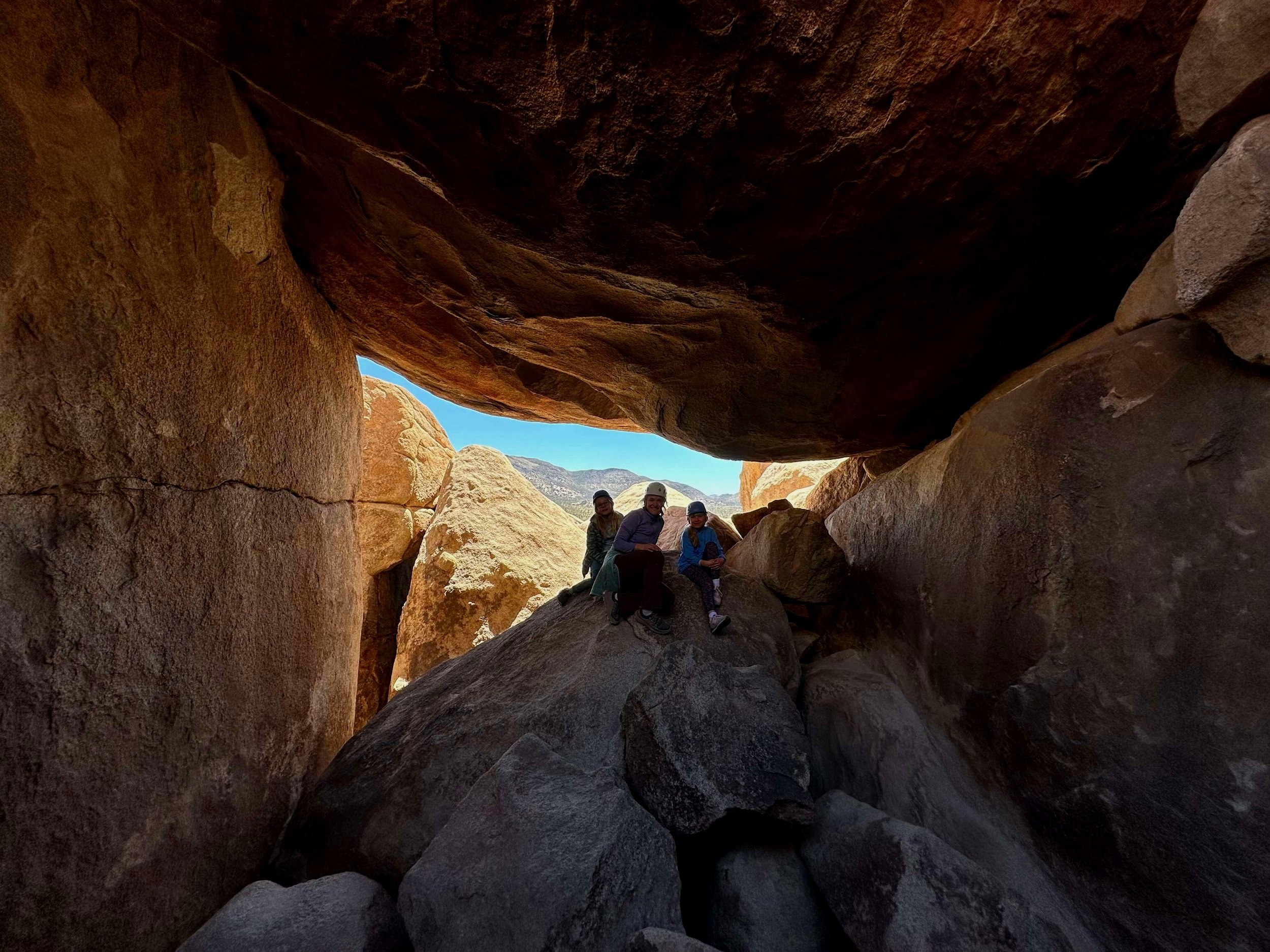
Rest before The Coffin
What Is the Chasm of Doom? A Hidden Joshua Tree Gem
The Chasm of Doom is an unofficial, unmaintained route tucked in near the Hidden Valley area of Joshua Tree National Park. No trail, no signage — the NPS won't point you to it, and that's exactly what makes it so appealing.
The full outing runs about a 1/4 mile with 200 feet of elevation gain. The chasm itself is only about 100 yards long, but don't let that fool you — that stretch takes most parties close to an hour to work through. Inside you're chimneying between granite walls, crawling on your belly through passages where the ceiling scrapes your helmet, and eventually facing The Coffin: the tightest squeeze on the route and the move that defines the whole experience.
It exists purely through word of mouth, GPS tracks on AllTrails, and the kind of desert scrambling community that keeps the best stuff to themselves. That secret-hike reputation is exactly why it draws adventure seekers — and why preparation and accurate information are everything. Do not fully trust the AllTrails app. It is not accurate and will take you to places in which you may feel very uncomfortable navigating. Please go with someone who has done it, or hire a local expert. We have rescues from this route all the time. Please, please beware the risks involved with this route.
How to Find the Chasm of Doom: Step-by-Step Directions
Starting Point: Hidden Valley Parking Lot
Start at the Hidden Valley picnic area — one of the most popular spots in the park. Walk toward the rock-encircled picnic tables and find the second table on the right as you face the valley. Turn north and look for a large bush tucked against the rock face. That's your entrance. No sign, no cairn, nothing official. The gap hides behind that bush, and most visitors walk right past it.
Navigating the Approach
Slip behind the bush and the approach starts immediately — a moderate scramble over boulders and through a wash. The terrain funnels you downward into a dark cleft in the rock. Sand on the surface makes some footholds tricky even when dry. Take your time. Rushing the approach is how ankles get twisted before the real fun even starts.
The Main Route: Key Features and Squeezes
Inside the chasm, the world narrows. Daylight fades fast. You're chimneying between walls so tight your chest and back scrape at the same time. You're dropping to your belly to crawl through gaps where your helmet scrapes the ceiling. Then comes The Coffin.
Turn sideways. Exhale. Shimmy through a gap that feels absolutely impossible — and come out the other side. It's as much a mental challenge as a physical one, and it's the moment we hear about most from guests after the fact. Beyond The Coffin, the route opens slightly before demanding more chimneying and a final scramble out to daylight.
AllTrails shows an average moving time of 57 minutes, but with stops, photos, and waiting for partners at the squeezes, budget two and a half hours total.

Post Coffin rest.
Exclusive to Summit: The Great Chasm — 2026 Extensions
Here's where it gets really exciting. For 2026, Summit Climbing Guides has scouted, and established exclusive extensions to the original Chasm of Doom route — what we call The Great Chasm. These are additions no independent hiker/climber can access, and no other operator in Joshua Tree has done this.
The extensions include:
Longer technical passages weaving deeper into the Hidden Vally rock formations
Alternative chimney routes requiring advanced stemming, jamming, crawling techniques
Many more exit points that drops you onto a remote granite slab with a panoramic view of the park
The full expanded route becomes a real half-day expedition — not a quick scramble. Summit is the only guide service running these routes, as we are the ones who have discovered and designed these features. When you book with us, you're not just getting directions to a hidden slot canyon. You're getting a route that doesn't exist on any public map, forum, or GPS track.
Ready to take on The Great Chasm? Book your guided Chasm of Doom adventure → summitclimbingguides.com/book-now
Essential Gear Checklist for the Chasm of Doom
Clothing: Long pants and a long-sleeved shirt are non-negotiable, regardless of how hot the parking lot feels. The granite is abrasive and you'll be pressing your body against it constantly. Shorts leave skin exposed to the kind of rock rash that stings for days.
Footwear: High-grip hiking shoes or approach shoes with sticky rubber. Running shoes don't have the edging capability you need for chimneying. Sandals are a hard no.
Headlamp: Mandatory. Even at midday, the chasm gets dark enough that you can't see your handholds or footholds without light. Bring backup batteries.
Water: Bring enough for the full two to three hours. There's zero water on the route, and the dry desert air dehydrates faster than you expect.
No backpack: Leave it in the car. Bulky packs snag in tight squeezes and make The Coffin nearly impossible. Use a slim waist pack or load your pockets with essentials.
Chasm of Doom Difficulty: Is It Right for You?
Physical and Technical Demands
The Chasm of Doom is a Class 3 scramble with sections pushing into Class 4 chimneying. You need upper body strength to pull through vertical constrictions and core stability to stem across gaps. This isn't a hike — it's a full-body negotiation with the rock. If you have limited mobility, recent joint injuries, or concerns about fitting through tight spaces, talk to us before booking. The Coffin has a minimum clearance that some larger-framed hikers may find impassable.
The Mental Challenge: Claustrophobia and Darkness
The physical demands are only half of it. The Chasm of Doom is psychologically intense. Confined walls, near-total darkness, and the inability to turn back once committed can trigger claustrophobia in people who've never experienced it before. The Coffin is the most common trigger point. If you're anxious about tight spaces, go with a partner you trust, keep your headlamp on bright, and practice slow, deliberate breathing. Panic is the real danger in a confined space — not the rock itself.
Who Should Skip This Route
Solo first-timers are strongly discouraged by every credible source on this route. Without a partner, a stuck situation becomes a solo emergency with no easy resolution. Anyone uncomfortable crawling on rough rock in near-total darkness, or without proper lighting and offline navigation, should choose a different Joshua Tree adventure — or book a guided trip so you have support with you in there.
Safety, Weather, and Park Regulations
Best Seasons for the Chasm of Doom in 2026
All year long! Great for warmer months as it stays quite cool inside the caves and corridors, and there is minimal sun exposure. Cooler months can be chilly, but, you work hard through the routes, so you tend to stay quite warm.
Emergency Preparedness
There is no cell service inside the chasm or on much of the approach. If someone gets injured or stuck, your phone is useless for calling help. Carry a satellite messenger or personal locator beacon if you have one. If a member of your party becomes wedged in a tight section, stay calm, remove any loose gear that may be snagging, and work slowly. Don't pull aggressively on a stuck person. If extraction isn't possible, send one person out to find signal and contact the nearest ranger station.
Joshua Tree National Park emergency dispatch: (909) 383-5651 — program it into your phone before you lose signal.
Legal Status and Permits
The Chasm of Doom is unofficial and unmaintained. The NPS doesn't mark it, endorse it, or routinely patrol it. No permit is required for the hike itself, but no ranger is coming to check on you either — hikers assume all risk. Summit's guided tours operate under permits that include liability coverage, emergency communication protocols, and guides trained in wilderness first aid.
How Long Does the Chasm of Doom Take? Timing Your Trip
The chasm itself takes roughly an hour despite being only 100 yards long. The full outing — approach from Hidden Valley, the technical route through the chasm, and the return loop — runs two to three hours depending on group size and experience. That number doesn't account for photo stops, rest breaks, or waiting for partners to clear tight squeezes.
Groups of three or more should budget closer to three hours. Summit's exclusive Great Chasm extensions add significant distance and difficulty, turning the adventure into a true half-day outing.
Chasm of Doom vs. Other Joshua Tree Scrambles
Joshua Tree has excellent scrambles, but most are marked and maintained. Ryan Mountain gives you switchbacks and a summit view. Barker Dam is an easy loop with historical interest. The Chasm of Doom sits in a completely different category — the most technical unofficial route in the park, demanding skills no marked trail requires.
Summit's Great Chasm extensions widen that gap even further. What was already the park's most intense hidden route becomes a multi-hour expedition with features that exist nowhere on any public map or GPS track. If you're ready to test yourself beyond the standard Joshua Tree checklist, this is where you do it.
Frequently Asked Questions About the Chasm of Doom
Where exactly is the Chasm of Doom in Joshua Tree?
The Chasm of Doom is located near the Hidden Valley parking lot in Joshua Tree National Park. The entrance is behind the second picnic table on the right as you face the valley, tucked behind a large bush — no official marker of any kind.
Is the Chasm of Doom dangerous?
Yes, it carries real risk. The route involves tight squeezes, near-total darkness, no cell service, and terrain that's difficult to self-rescue from. Claustrophobia is a genuine factor. Going with a guide dramatically reduces that risk.
Do I need a guide for the Chasm of Doom?
A guide isn't required for the main route, but Summit's guided tours offer exclusive access to the 2026 Great Chasm extensions, professional safety support, and emergency communication equipment that independent hikers don't have. Visit summitclimbingguides.com/chasm-of-doom for tour details.
What is The Coffin?
The Coffin is the tightest squeeze on the route — a gap so narrow you must turn sideways, exhale, and shimmy through with granite pressing against your chest and back simultaneously. It's the defining moment of the Chasm of Doom experience and the section most people talk about afterward.
Can I do the Chasm of Doom at night?
Yes — Summit offers night hike expeditions that are genuinely wild. Do not attempt a night run without a guide and redundant light sources. Full darkness inside an already-dark slot canyon with a single headlamp is a serious situation.
What makes Summit's Chasm of Doom experience different from going on my own?
We're the only company that has developed new routes to add to The Great Chasm — four exclusive extensions that make the route significantly longer and more technical. No independent hiker can access these sections. You also get guides trained in wilderness first aid and satellite communication on every trip.
Is the Chasm of Doom suitable for beginners?
It is accessible when guided. A professional guide manages navigation, pacing, safety technique, and can read your comfort level in real time. Solo or first-time attempts without a guide are strongly discouraged.
Final Tips for a Successful Chasm of Doom Adventure
Never go solo on your first visit. Download offline maps before you leave the parking lot — your signal will disappear fast. Wear old clothes. You will get dirty, scraped, and covered in granite dust, and that is exactly how it should be.
If you want to skip the guesswork, avoid the growing crowds now finding the main route, and access the only expanded version of the Chasm of Doom on the planet, book a guided adventure with Summit Climbing Guides. The chasm is waiting — and in 2026, there's more of it than ever.