The most common question we get before a booking isn't about the climbing. It's about everything around it: Where do we meet? What happens first? How hard will it be? Will I feel stupid if I can't do it? What if I freeze up?
This page answers all of it. Here's exactly what a day with Summit looks like, from the moment you arrive to the drive home.
4–6
Hours typical trip length
1:4
Max guide-to-client ratio
0
Prior experience required
The Day, Hour by Hour
Arrival
Meet Your Guide at the Trailhead
Your confirmation email includes exact meeting coordinates — not just a park entrance, but a specific pullout or trailhead. Your guide will be there before you. You'll introduce yourselves, run through the day's plan, and ask any questions. This is a good time to mention anything your guide should know: a fear of heights, a bad knee, someone in the group who hasn't slept. They want to know.
First 20 min
Gear Up & Ground School
Your guide fits you with a harness, helmet, and climbing shoes — all included. While you're getting comfortable in the gear, they'll walk through the basics: how to tie in, how the belay system works, what the commands mean. This isn't a lecture. It's a conversation, usually done while walking to the first route. By the time you touch rock, you'll know enough to move safely.
First climb
Your First Route — Easier Than You Think
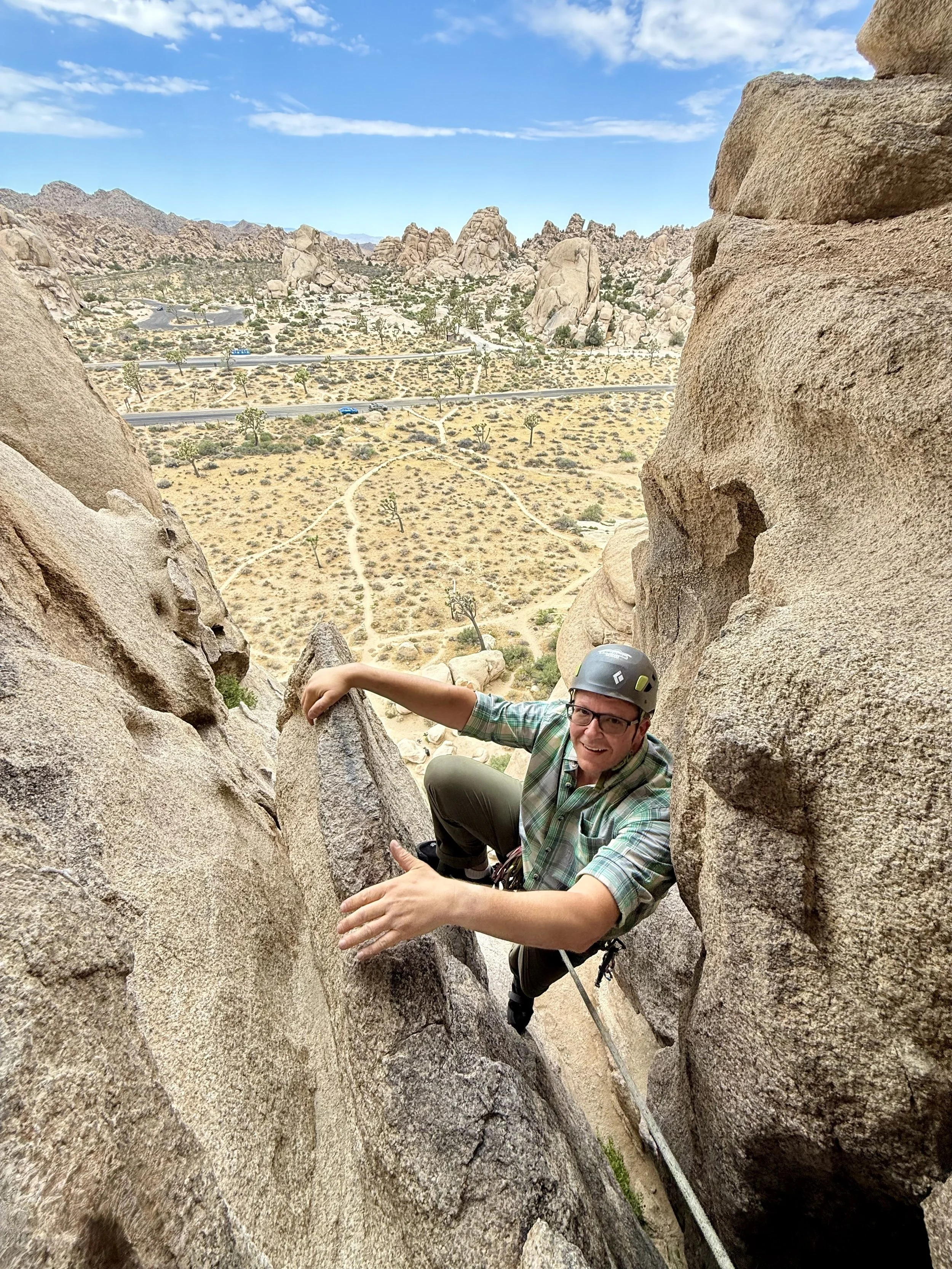
The first route is chosen for you, based on what your guide learned in the first 20 minutes. For most first-timers it'll be a top-rope setup on a 5.5–5.7 — interesting enough to feel real, accessible enough to succeed. Your guide will already be at the top having set the anchor. You'll be on belay before you leave the ground. The goal of the first climb is simple: get your hands on real rock and see what it feels like.
Mid-morning
More Routes, More Terrain
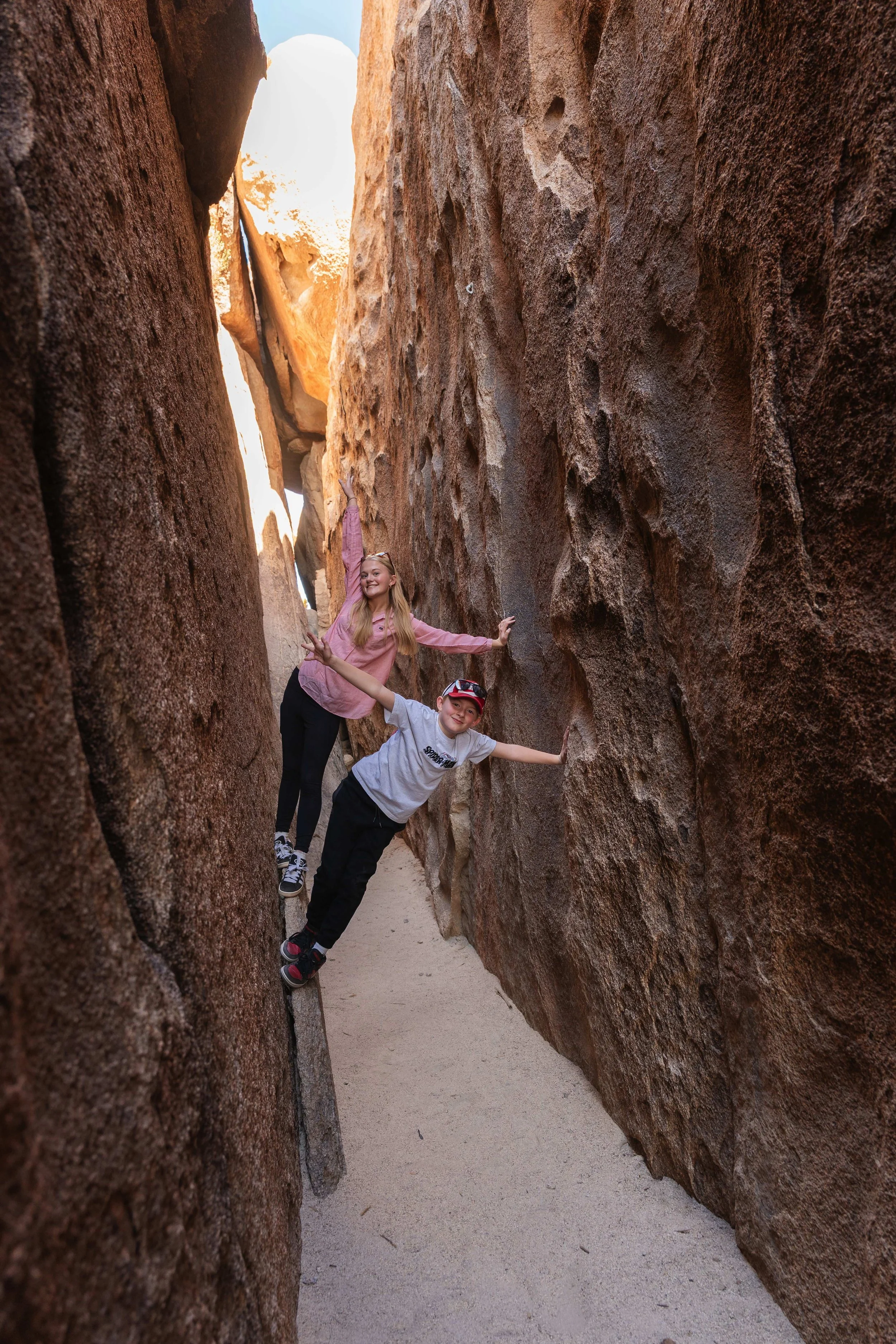
Once everyone has climbed the first route, your guide reads the group. Some people want to do the same route again and try to do it better. Some want harder. Some want to try a crack instead of a face. Your guide adjusts. A typical half-day includes 3–5 routes across 2–3 formations. You'll move through the boulder maze, see parts of the park most visitors never find, and build on each climb.
Mid-trip
Rappelling Down
Most routes end with a rappel — descending the rope from the top of the route back to the ground. For most people, the rappel is the highlight. You back over the edge, your guide talks you through the first move, and then you're descending a vertical granite face with the desert spread out below you. It feels exactly as good as it looks.
Break
Water, Snacks, Stories
At some point mid-trip your guide will call a proper break — find some shade, drink water, eat something. This is also when guides tend to open up about the park: the history of a formation, a route that took them a year to climb, a story about a previous group. These breaks are worth paying attention to.
Final hour
The Last Route
The last route of the day is usually the best one. By now your guide knows what you're capable of and what will feel satisfying. Some groups finish on their hardest climb yet. Some finish on a long multi-pitch with a big summit view. Some finish in a cave system. Your guide has been planning this since the first climb.
Wrap-up
Gear Return, Debrief, Send-Off
Back at the trailhead, you return the gear and your guide gives you a quick debrief: what you did well, what to work on if you keep climbing, and usually a few recommendations for where to go next — routes to try on your own, gyms worth visiting, other objectives in the park. Most groups linger longer than expected. Then everyone drives home considerably more tired and happier than they arrived.
Common Questions
What if I'm scared of heights?
Tell your guide at the start. Height anxiety is the most common thing guides manage — they're very good at it. The approach is always the same: you move at your own pace, you never have to go higher than you want to, and the guide stays with you through every step of the first sequence that feels hard. Most people who arrive nervous leave having rappelled off something they didn't think they could do.
What if someone in my group can't keep up?
Guides calibrate constantly to the whole group. If someone is struggling, the route selection shifts. No one gets left behind on a platform waiting while others climb harder things. If your group has wildly different fitness or experience levels, mention it when you book — your guide can plan for it.
Can I take photos?
Yes. Your guide will hold phones and cameras and get shots of you on the rock that would otherwise be impossible to capture. Ask them to — they're used to it and they're good at it.
The Honest Answer to "Will I Be Good at This?"
Maybe not on the first try. Climbing uses muscles and movement patterns that most people haven't developed, and the first hour usually involves figuring out what your body does naturally and what it doesn't. By the third or fourth route, almost everyone finds a rhythm. The goal of the day isn't to be impressive — it's to finish having experienced something real. That part is guaranteed.
What to Bring
- Water — at least 2 liters per person. More in warm weather.
- Snacks — something with real calories. Climbing is more physical than it looks.
- Sunscreen and a hat — the desert sun is significant even in cooler months.
- Closed-toe shoes — you'll change into climbing shoes, but you need something solid to hike in.
- Layers — mornings in the park can be cold even when afternoons are warm.
- A small daypack — to carry all of the above while you're on the rock.
Everything else — harness, helmet, climbing shoes, rope, rack — is provided. You don't need to bring anything climbing-specific. See the full gear guide →
Ready to book? See available trip dates and options →