Lost Horse Wall Joshua Tree: The Complete Climbing Guide
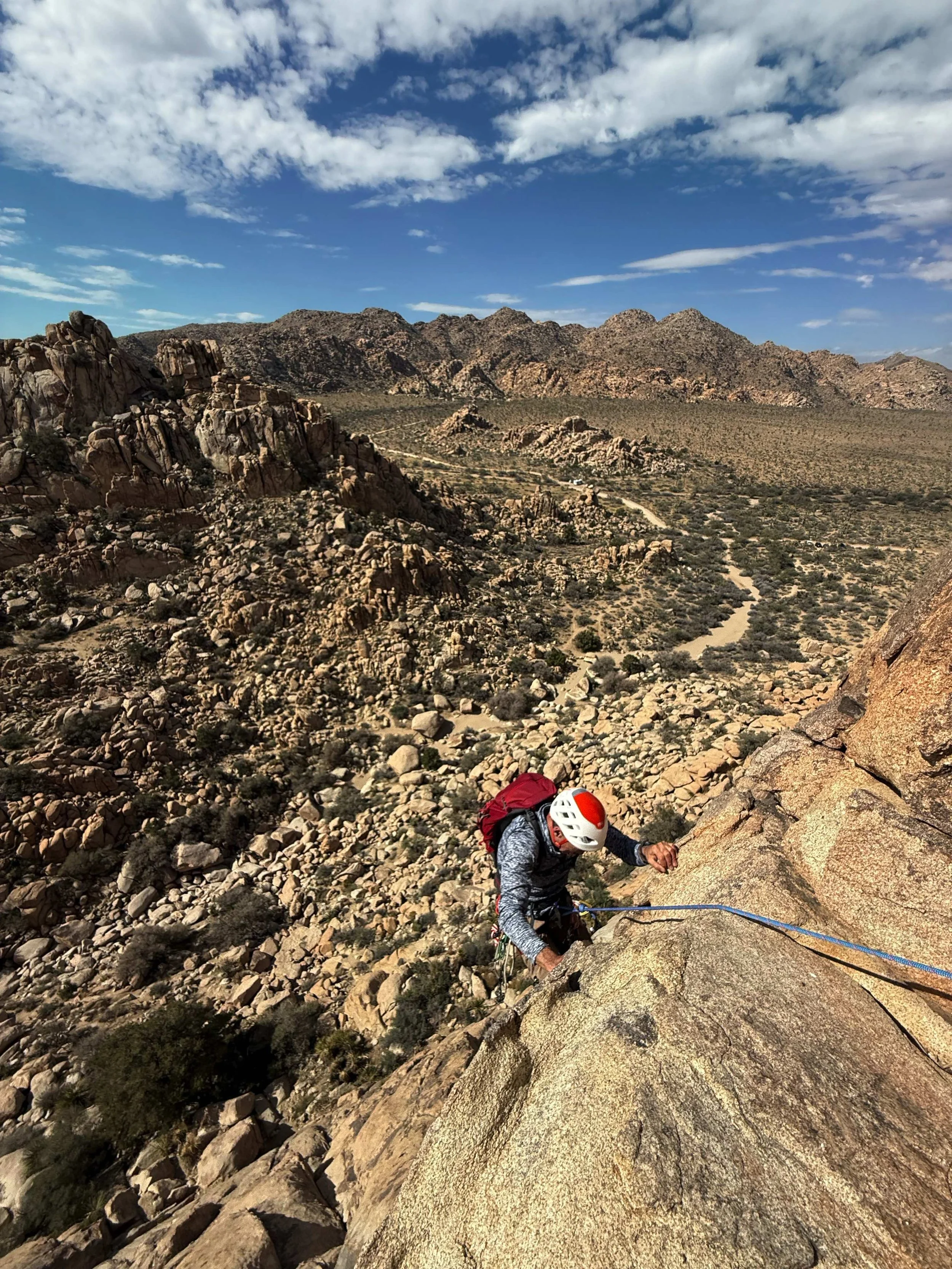
If Intersection Rock is where you learn to climb Joshua Tree granite, Lost Horse Wall is where you fall in love with it. A long southwest-facing cliff just off Lost Horse Road, it holds some of the best multi-pitch trad routes in the park — Dappled Mare, Bird on a Wire, The Swift — and a short 300-yard approach that gets you on rock fast.
If Intersection Rock is where you learn to climb Joshua Tree granite, Lost Horse Wall is where you fall in love with it.
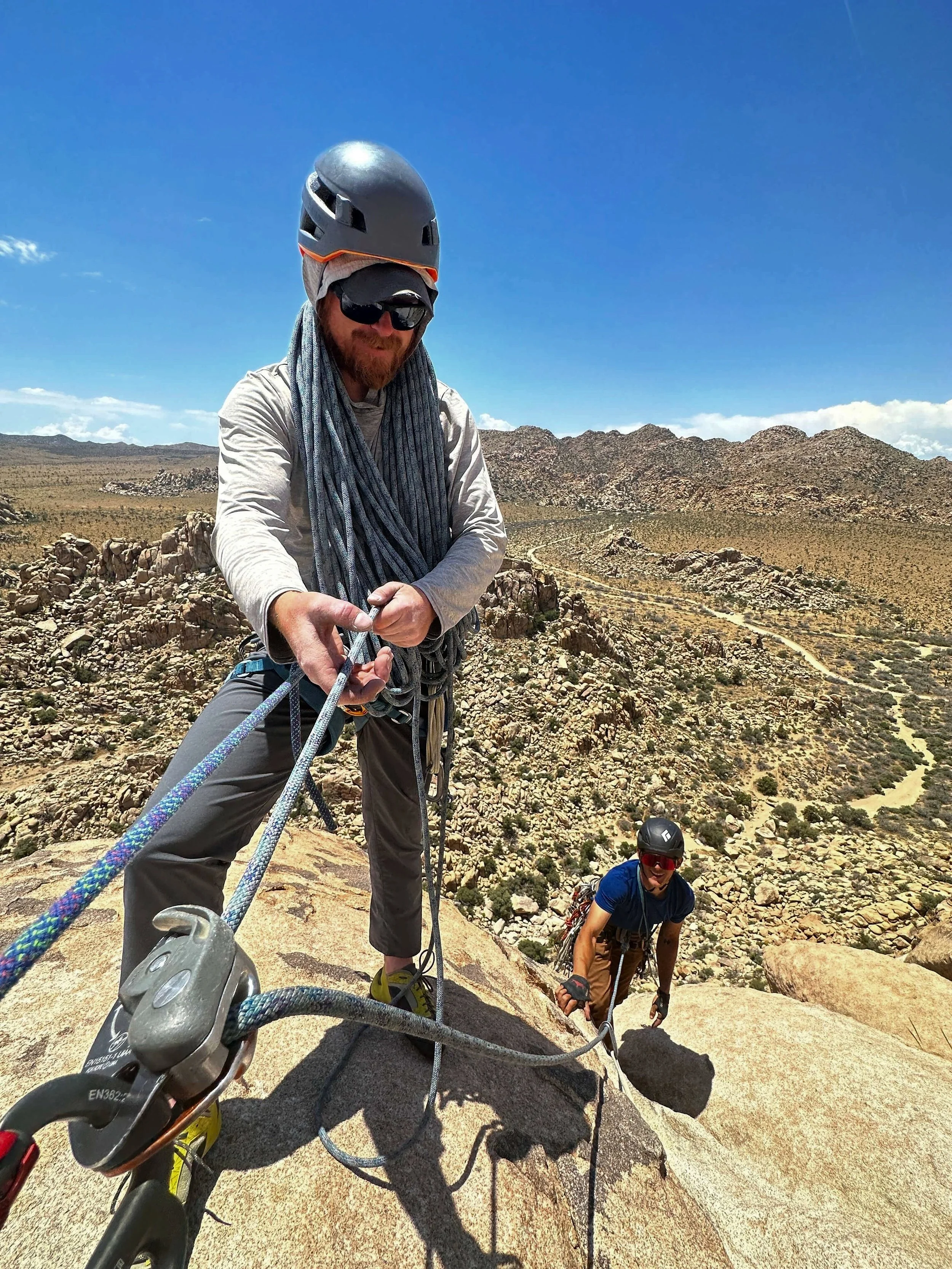
A long southwest-facing cliff tucked just off Lost Horse Road, this wall has some of the best multi-pitch trad routes in the park — sustained, well-featured crack systems that go multiple pitches on solid granite with sweeping desert views from the top. Dappled Mare and Bird on a Wire are legendary in Joshua Tree climbing circles, and for good reason. This guide covers what Lost Horse Wall is, how to get there, the best routes by level, and what a guided day here looks like. For broader context, also read our Joshua Tree rock climbing overview and our best time to climb guide.
What Is Lost Horse Wall?
Lost Horse Wall is a long, continuous granite cliff in the Lost Horse Area of Joshua Tree National Park — one of the park's most respected multi-pitch climbing destinations. The wall faces southwest, catching afternoon sun and staying warm through fall and winter climbing season. It sits about 300 yards from Lost Horse Road, reached via a short walk up a desert wash, making it one of the more accessible big-wall experiences in the park.
What distinguishes Lost Horse Wall from formations like Intersection Rock isn't just the routes — it's the scale. Most of the best lines here go 3–4 pitches, giving you hundreds of feet of sustained climbing on excellent granite with real commitment and real views from the top. The crack systems are varied: finger cracks, hand jams, face climbing, and multi-pitch routefinding all come into play on the longer routes.
With 23 total routes spread across the Left Side and Right Side of the wall, it has enough variety to keep a group busy for a full day — or to bring you back multiple times on different objectives.
Location & Access
Lost Horse Wall is accessed via Lost Horse Road, which branches south from Park Boulevard approximately one mile west of Intersection Rock. Drive about a half mile down Lost Horse Road and look for a small parking pullout on the left (east) side of the road. If that lot is full — it's small and fills quickly on weekends — continue another 200 yards to a larger overflow parking area on the right, just before a gate.
From the main parking pullout, follow a social trail into the wash and walk southeast roughly 300 yards until you're below the wall. A talus slope leads to the base. Total approach time: 5–10 minutes. Descents on most routes are walk-offs to the climber's right (southeast) down boulders and slabs.
A valid park entrance pass is required. See our camping guide if you're making it an overnight trip — Hidden Valley Campground is the closest option, just a few minutes' drive away.
Lost Horse Wall: Quick Facts
| Detail | Info |
|---|---|
| Wall type | Long southwest-facing granite cliff |
| Location | Off Lost Horse Road, ~1 mile SW of Intersection Rock |
| Approach | ~300 yards from parking, via desert wash (5–10 min) |
| Total routes | 23 (Left Side + Right Side) |
| Grade range | 5.7 to 5.11c |
| Climbing style | Traditional multi-pitch crack and face climbing |
| Aspect | Southwest — sunny from midday, excellent in fall/winter |
| Best season | Spring, Fall, Winter (hot in afternoon summer sun) |
| Seasonal closures | Some routes closed mid-Feb to early June for raptor nesting |
| Descent | Walk-off to the right (SE) on most routes |

Classic Routes at Lost Horse Wall
Lost Horse Wall's reputation rests on a handful of multi-pitch classics that deliver exactly what Joshua Tree climbing is known for: quality crack systems, sustained movement, and memorable pitches in a striking desert setting. Here are the routes most worth knowing.
A 3-pitch trad route that serves as one of the best introductions to multi-pitch climbing at Lost Horse Wall. The Swift rewards patient footwork and route-finding with excellent position and views — it's a logical first objective for climbers stepping up from single-pitch terrain. Well-traveled, well-protected, and a great warm-up before tackling Dappled Mare.
Four pitches, three-and-a-half stars, and one of the most beloved routes in Joshua Tree — Dappled Mare is the reason many climbers make the drive out to Lost Horse Wall specifically. The climbing is sustained and varied across all four pitches, the crack systems are beautiful, and the summit position is exceptional. If you're going to do one multi-pitch route at this crag, this is it. Expect company on weekends.
A 3-pitch trad route that steps up the commitment from Dappled Mare without a dramatic grade jump. Mare's Tail rewards good crack technique and careful routefinding with excellent position on the wall and a satisfying summit. A good next objective after you've ticked the 5.8 classics and want to push a step higher.
Three pitches and nearly 500 votes on Mountain Project — Bird on a Wire is as classic as it gets at Lost Horse Wall. The climbing is more technical than Dappled Mare, demanding clean footwork and committed moves on sustained crack terrain. Finishing it puts you high on the wall with views across the Lost Horse Valley. One of the routes that defines what Joshua Tree trad climbing is all about.
The standout hard line on the Left Side of the wall — LA Woman is a sport route at 5.11a with four stars and a reputation that brings strong climbers from across the park. It's a different style from the trad crack classics on the Right Side: more powerful, more sustained face climbing on well-bolted terrain. If you're pushing your grade ceiling and want a hard sport route in an exceptional setting, this is the objective.
Seasonal Raptor Closures
Some routes at Lost Horse Wall are subject to seasonal closures to protect nesting raptors — owls and prairie falcons that use the wall's features as nesting sites. Closures typically run from mid-February through early June, though exact dates vary year to year based on nesting activity. Routes on the Right Side near "Right On" and several on the left are most commonly affected.
Always verify current closures at nps.gov/jotr before your visit. Closures are posted and updated regularly. Violating seasonal closures can result in fines and erodes the climbing community's relationship with the park — please respect them.
The good news: closures lift by summer, and fall and winter — the best climbing seasons anyway — are almost always fully open. If you're visiting October through January, you're unlikely to encounter any active closures.
A Guided Day at Lost Horse Wall
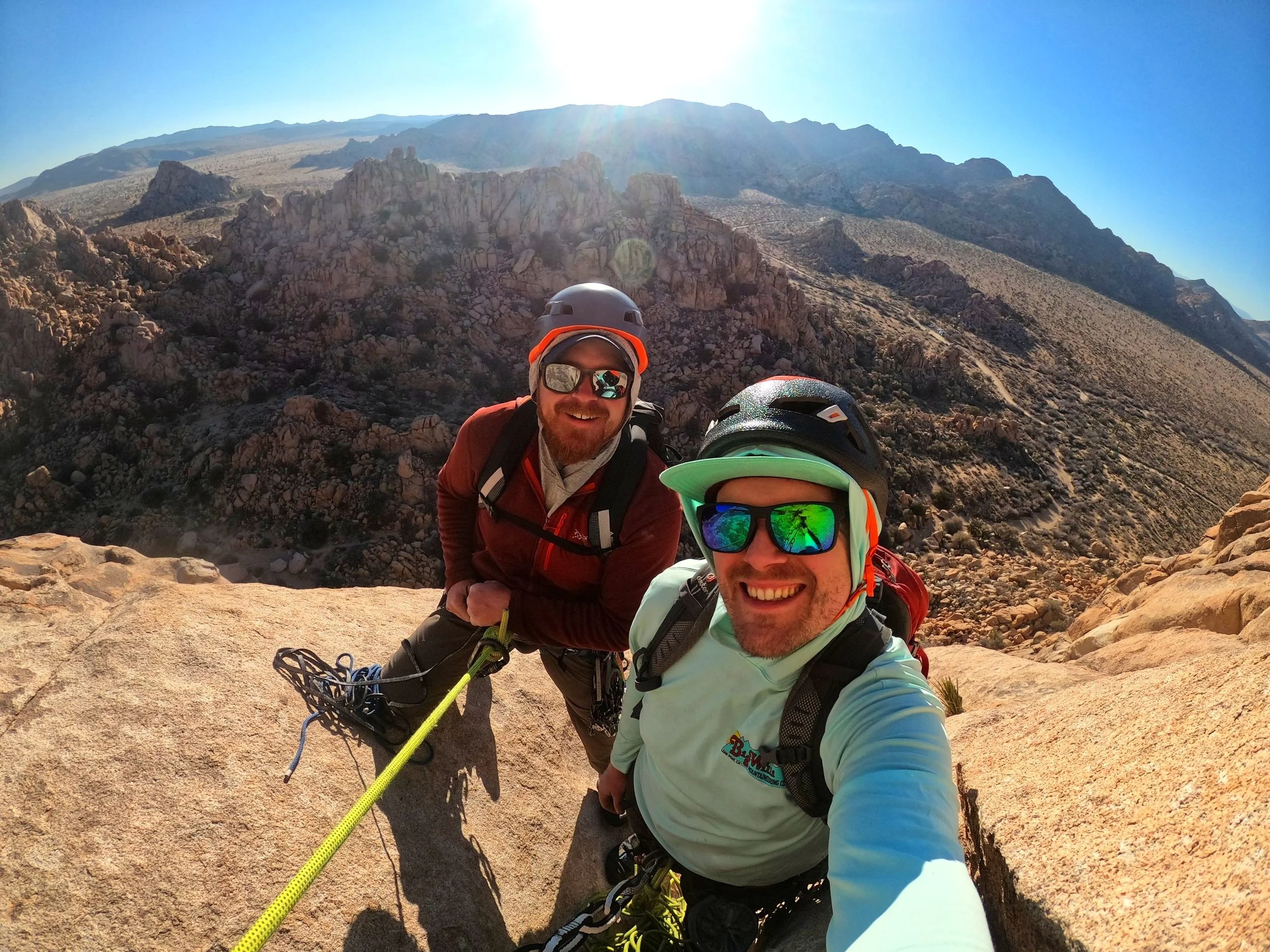
Lost Horse Wall is one of our go-to destinations for clients who are ready to push beyond single-pitch climbing. If you've been on a few guided days at Intersection Rock or similar formations and want to experience what a real multi-pitch climb feels like — this is where we take you next.
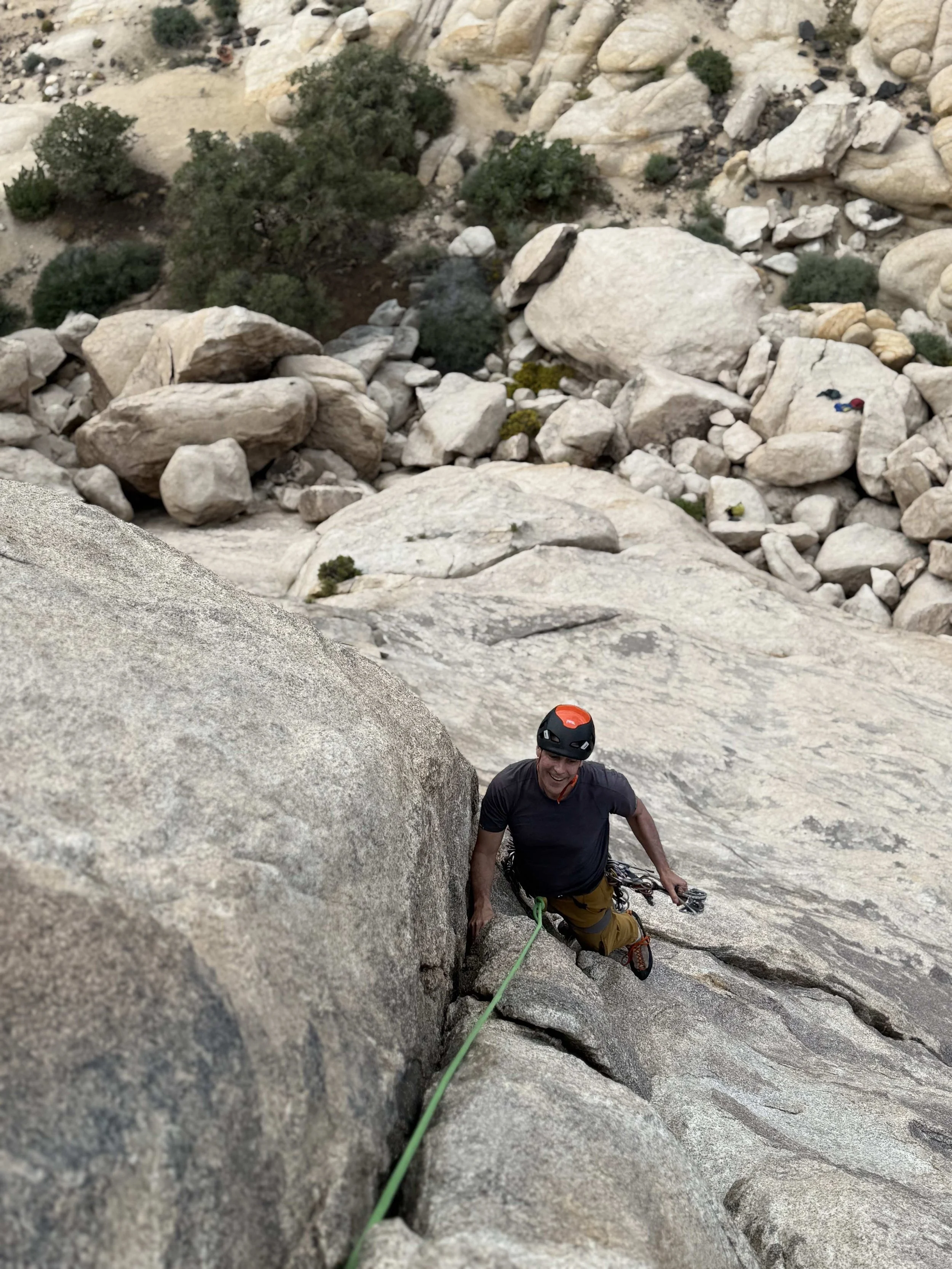
The day starts at the base of the wall. Your guide leads each pitch, managing protection placement, anchor setup, and safety systems while you focus on the climbing. Between pitches, you belay from secure anchors on ledges with views that get progressively bigger as you move up the wall.
For first multi-pitch clients, we typically target Dappled Mare or The Swift — sustained enough to feel real, manageable enough to let you focus on the experience of moving through space on a long route. For more experienced climbers, Bird on a Wire or the harder lines on the Left Side open up the full range of what the wall has to offer.
All technical gear is provided. Book a guided day or contact us to discuss your objectives and which route is the right fit.
Tips for Climbing Lost Horse Wall
What's Nearby
The Lost Horse Area is one of the quieter parts of the park compared to the main Hidden Valley corridor. After your climbing day, the Lost Horse Mine Trail is a 4-mile round trip from the trailhead on Lost Horse Road that takes you to one of Joshua Tree's best-preserved 19th-century gold mines — worth the walk if you have legs left. The trail offers wide views across the Lost Horse Valley and into the broader park landscape.
For more climbing in the area, the Brown Wall and Real Hidden Valley are a short drive back toward the main park road and offer additional single-pitch terrain if you want to round out the day. Intersection Rock is about a mile northeast if you want to start or end the day there instead.
Frequently Asked Questions
What is Lost Horse Wall in Joshua Tree?
Where is Lost Horse Wall located?
What are the classic routes at Lost Horse Wall?
Is Lost Horse Wall good for beginner climbers?
Are there seasonal closures at Lost Horse Wall?
What direction does Lost Horse Wall face?
How long is the approach to Lost Horse Wall?
Does Summit Climbing Guides offer trips to Lost Horse Wall?