Joshua Tree Climbing History: How the Desert Became a World-Class Destination
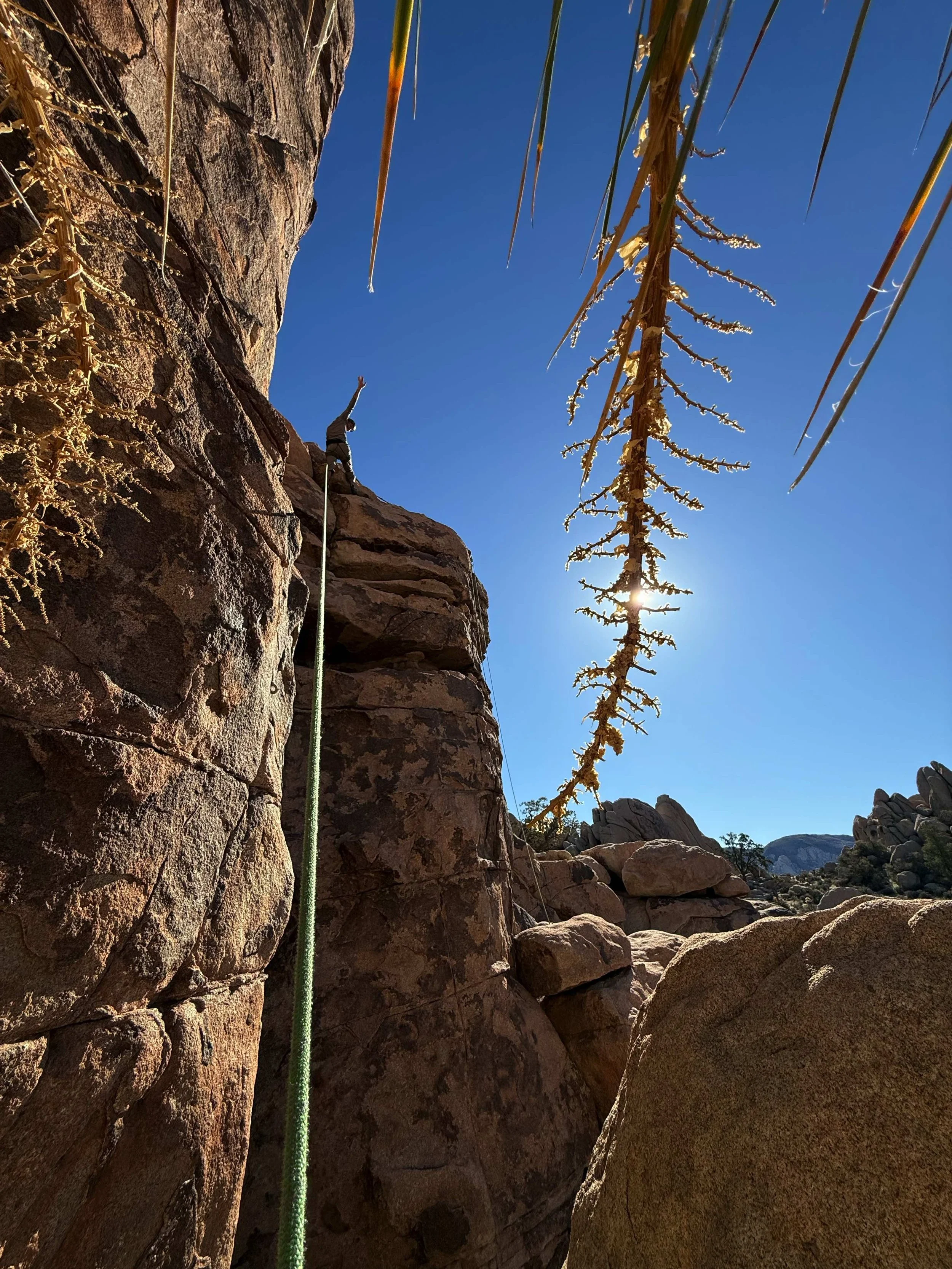
Joshua Tree National Park has over 8,000 documented climbing routes on more than 400 established formations. It is one of the most concentrated crack climbing destinations on the planet, and the site of some of American climbing's most important first ascents. None of that happened by accident.
This is the story of how climbers found this desert, what they did here, and why the ethics they established still define the experience of climbing at Joshua Tree today.
How It Started: The 1930s–1950s
The Climbers Who Defined the Golden Era
One of the greatest free soloists in American climbing history. Bachar pushed Joshua Tree routes to their limit without a rope — a practice that required near-perfect technique and an iron will. His ethics around bolting influenced an entire generation of JT climbers.
A founding member of the Stonemasters — the dominant climbing crew of the 1970s. Long made significant first ascents at Joshua Tree and later became one of climbing's most prolific writers. His guidebooks helped bring the park's routes to a wider audience.
Perhaps more than anyone else, Vogel catalogued what climbers were doing at Joshua Tree. His comprehensive guidebooks — updated across multiple editions — turned the park's informal knowledge into a documented tradition. Much of what's known about JT climbing history comes through his work.
Sorenson was perhaps the most visionary climber of the JT golden era — a route pioneer whose drive and boldness inspired and sometimes alarmed those around him. He died in 1980 in a mountaineering accident in Canada, his full potential unrealized.
The Ethics That Shaped Everything
The No-Bolt Standard on Crack Routes
The most important ethical commitment in Joshua Tree climbing is also the simplest: if a crack exists that can protect a route with removable gear, you don't drill bolts into it. The rock is left unchanged. The protection placed on the way up is removed on the way down.
This isn't a law or a Park Service rule — it's a cultural norm established by the climbers who built this place, and it's enforced by community pressure and reputation. Climbers who violate it are not celebrated. New bolts on established trad routes are occasionally chopped (removed) by other climbers.
The result is a climbing environment that feels honest. The granite is unchanged from when Bachar and Long climbed it in the 1970s. The rock has no agenda. That's what makes it extraordinary.
Classic Routes with Historical Significance
Joshua Tree Today
The climbing community at Joshua Tree has evolved since the golden era, but the ethical foundation holds. The park now attracts climbers from every country and every discipline — trad climbers, boulderers, gym converts making their first outdoor moves, professional athletes on film projects.
What's remarkable is how much the character of the place has been preserved. The routes that Bachar and Long established in the 1970s are largely unchanged. The rock is the same. The silence between moves is the same. The ethics aren't written into law, but they're woven into the culture deeply enough that they've survived fifty years of growing crowds.
That's rare. And it's why Joshua Tree remains one of the places that serious climbers have to visit, not just to tick routes, but to understand where their sport came from.
Want to experience it yourself? Read our beginner's climbing guide or book a guided trip with Summit.
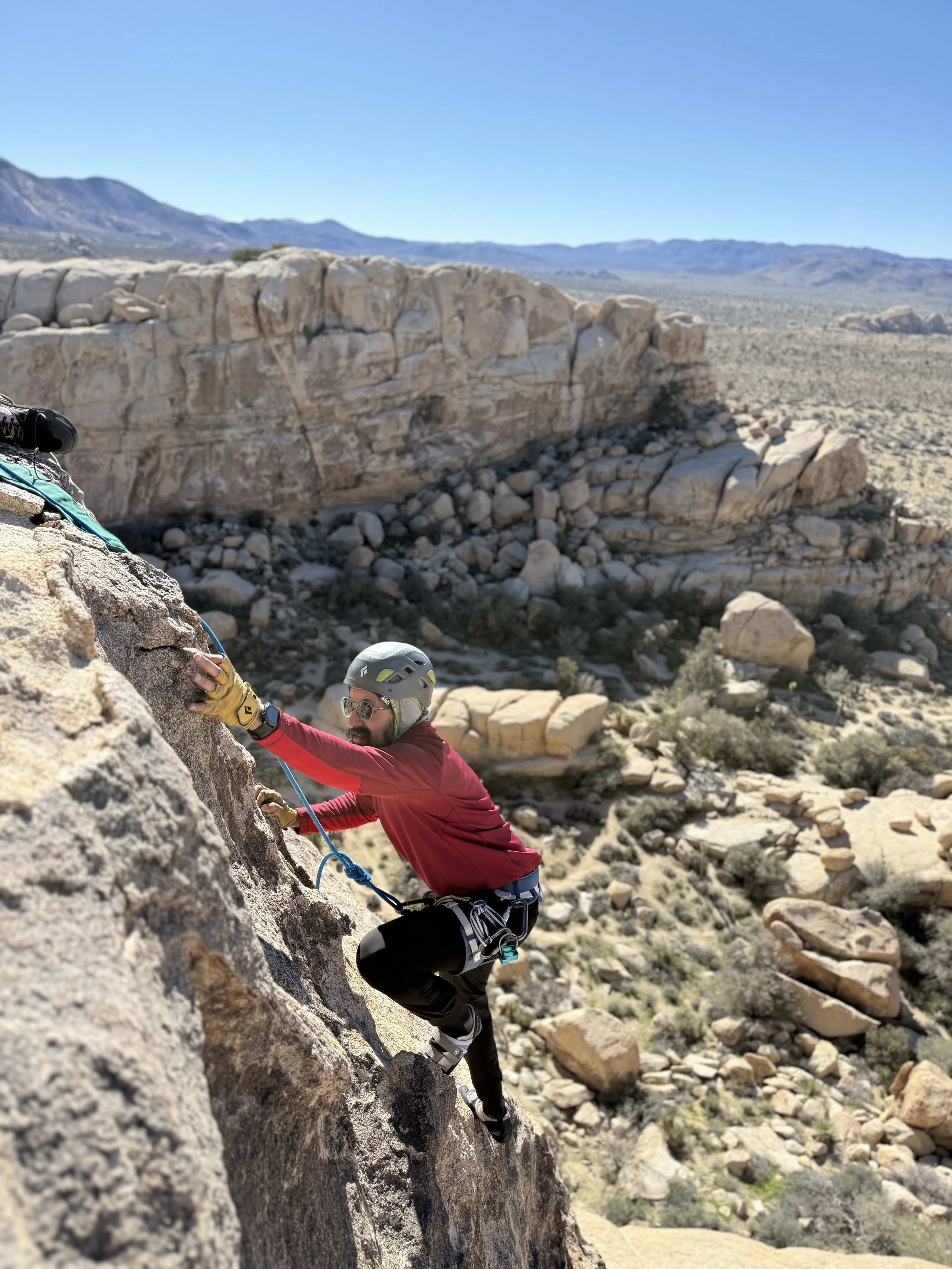
Climb the Same Rock They Did
Summit's guides take you onto the same formations where American climbing's golden era happened. No experience needed — just curiosity.
Book a Guided Climb