Trad vs. Sport vs. Bouldering: Understanding the Three Types of Rock Climbing
If you're new to rock climbing, the terminology can feel like a foreign language. Trad climbing, sport climbing, bouldering, top-rope, lead climbing — it all blurs together fast. And at Joshua Tree specifically, understanding the difference matters, because the park is dominated by one style of climbing in particular.
This guide breaks down the three main disciplines, what distinguishes them, and what you'll actually encounter on a guided trip at Joshua Tree.
The Three Disciplines at a Glance
Trad Climbing
The climber places their own removable gear into cracks as they ascend, creating protection points as they go. When they're done, the gear comes out — the rock is left unchanged. Joshua Tree is one of the premier trad climbing destinations in the world.
Sport Climbing
Pre-drilled bolts are permanently installed in the rock face. The climber clips a rope into these bolts as protection while they climb. Sport climbing is more common in certain areas of Joshua Tree but far less prevalent than trad routes.
Bouldering
Short, powerful sequences close to the ground — no rope required. A crash pad is placed below to cushion falls. Bouldering is extremely popular at Joshua Tree and requires no partner or anchor system.
Trad Climbing: Why Joshua Tree Is Famous for It
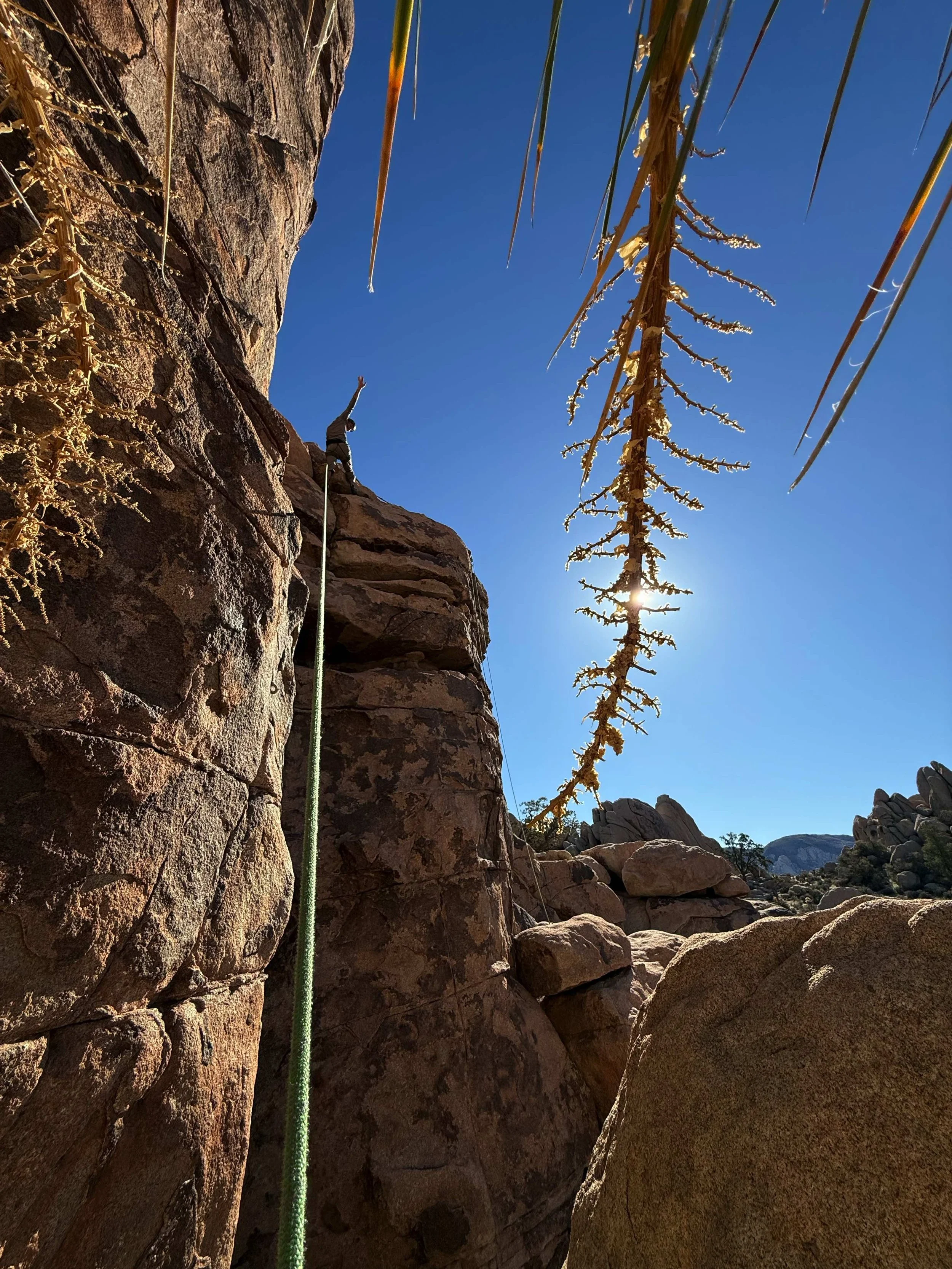
Joshua Tree has one of the highest concentrations of crack climbing in the United States. The park's granite boulders and monzogranite formations split into clean, parallel cracks that are perfectly suited for placing removable protection — the core skill of trad climbing.
Historically, Joshua Tree was a proving ground for American trad climbing. Climbers like John Bachar, John Long, and Randy Vogel put up legendary routes here in the 1970s and 80s that still define the character of the park. The ethics of leaving the rock unbolted — placing and removing your own gear — remain central to JT climbing culture today.
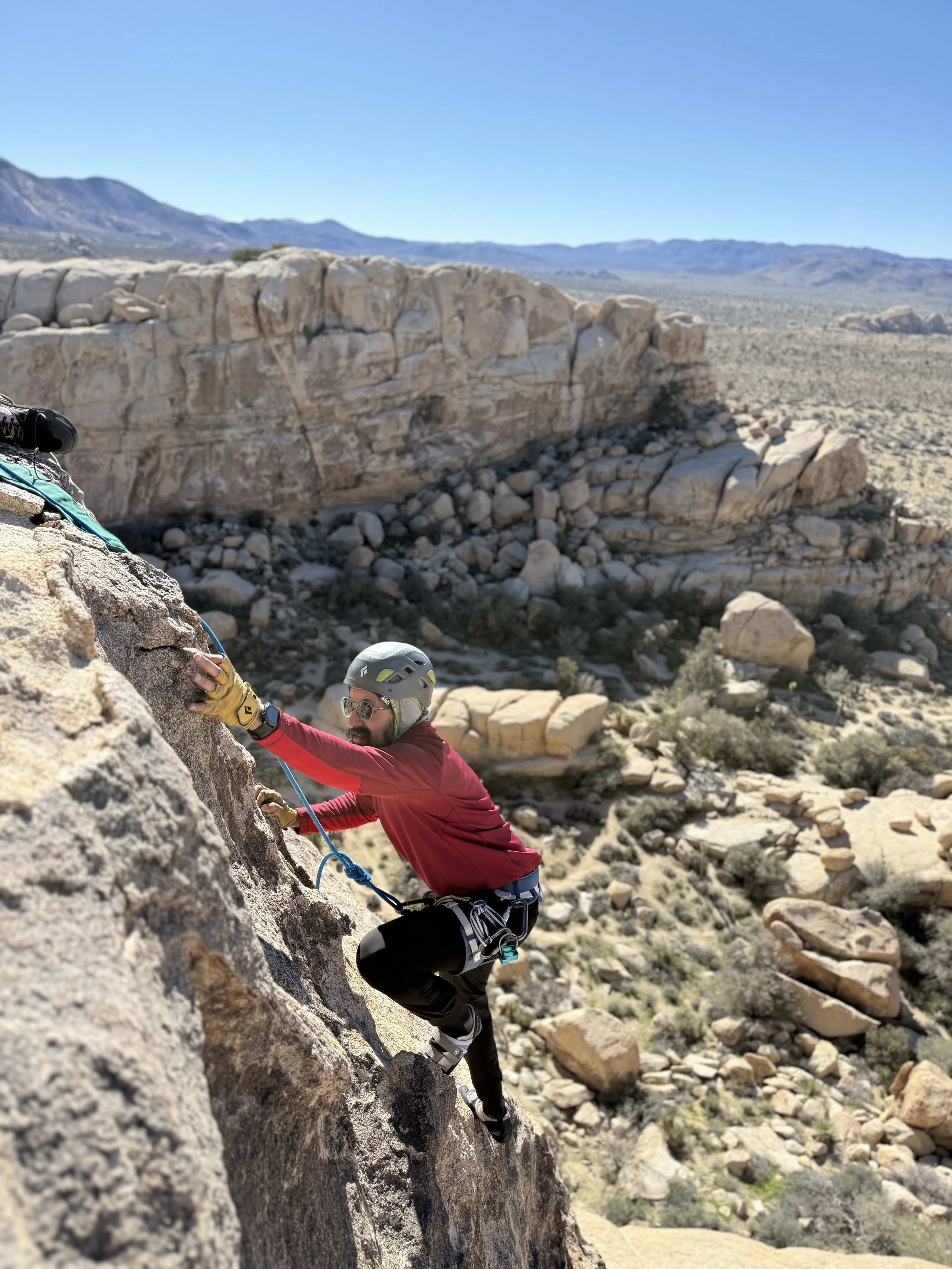
Trad climbing requires significant training before climbing independently. However, on a guided trip, beginners can experience trad-style climbing safely — your guide manages the anchor system while you focus entirely on moving over the rock. No prior experience required.
Sport Climbing at Joshua Tree
Sport climbing exists at Joshua Tree but is much less common than elsewhere in California. Bolting has historically been controversial in the park — many areas have resisted it to preserve the traditional character of the climbing. If you've come from a gym or a sport climbing destination like Red Rocks, the difference in character here is noticeable.
That said, there are sport routes at Joshua Tree, and they offer a legitimate introduction to lead climbing on real rock. Your guide can point you toward appropriate options based on your experience level.
Bouldering at Joshua Tree
Joshua Tree has world-class bouldering — short, intense problems on low rock with a crash pad below. The Wonderland of Rocks and the areas around Twentynine Palms Highway have concentrations of classic problems that draw boulderers from around the world.
Bouldering requires no rope, no partner, and no anchor system — just a crash pad, a pair of climbing shoes, and an understanding of how to fall safely. It's highly accessible for beginners and endlessly deep for experienced climbers chasing hard problems.
How Joshua Tree Compares to Other Climbing Destinations
Joshua Tree vs. Yosemite
Yosemite is big-wall and crack climbing at massive scale. Joshua Tree is crack climbing at human scale — shorter routes, incredible variety, more accessible for beginners. Both are world-class trad destinations but feel completely different.
Joshua Tree vs. Red Rocks
Red Rocks (Las Vegas) leans heavily sport climbing. Joshua Tree is trad-dominant. Red Rocks has longer multi-pitch routes on sandstone; JT has shorter, more technical granite routes with a strong desert bouldering scene.
What You'll Do on a Guided Trip at Joshua Tree
Summit's guided trips are built around what's accessible and rewarding for your group's experience level. Here's what that typically looks like in practice:
- Beginners typically start on top-rope (your guide sets an anchor from above, so you're never falling more than a short distance) on single-pitch routes in the 5.5–5.8 range — challenging enough to feel real, accessible enough to succeed.
- Intermediate climbers can work on lead climbing technique, crack climbing fundamentals, or explore longer routes with more terrain.
- All trips can incorporate rappelling, cave exploration, and boulder scrambling — the full character of what makes Joshua Tree unique.
The discipline — trad, sport, or bouldering — is less important than the experience. Your guide will build the day around what's going to be the most rewarding for your group.
Do I Need to Know What Type of Climbing I Want Before Booking?
No. Most people booking a guided trip for the first time have no idea what trad climbing means — and they don't need to. When you book with Summit, you tell us your group's experience level and what you're hoping to feel by the end of the day. Your guide handles everything else.
If you want to geek out on climbing technique and the history of specific routes, your guide will happily go deep on that. If you just want to get on the rock and have an amazing time, that works too. The knowledge is available — it's not required.
Ready to try it? See available trip options →
Experience Joshua Tree's World-Class Climbing
Private guided trips for all experience levels. No prior climbing experience needed — just show up ready to move.
Book a Guided Climb